
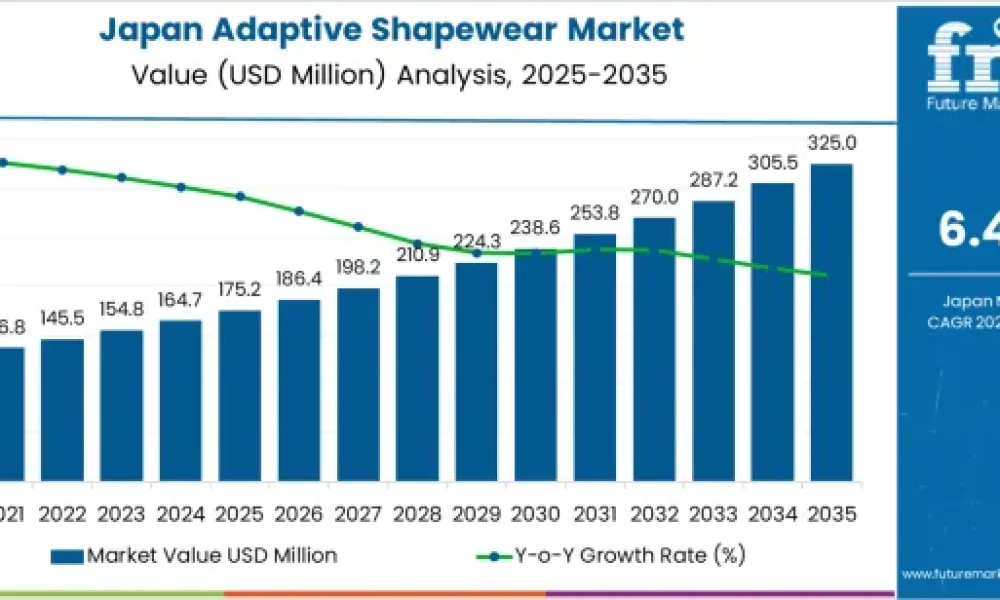
The demand for adaptive shapewear in Japan is expected to grow significantly from USD 175.2 million in 2025 to USD 325 million by 2035. The market is forecasted to expand at a healthy Compound Annual Growth Rate (CAGR) of 6.4%, driven by evolving consumer needs and demographic trends.
Adaptive shapewear is becoming increasingly popular in Japan due to its combination of comfort, style, and functionality. This specialized apparel caters to the aging population, individuals with limited mobility, and those seeking inclusive fashion options. As innovation in fabrics and design continues, adaptive shapewear is set to become a mainstream fashion segment in Japan.
Subscribe for Year-Round Insights → Stay ahead with quarterly and annual data updates : https://www.futuremarketinsights.com/reports/sample/rep-gb-28727
What is Driving the Demand for Adaptive Shapewear in Japan?
- Aging Population
Japan’s super-aged society is a major growth catalyst for adaptive shapewear. Older adults increasingly seek comfortable, easy-to-wear garments that support dignity, mobility, and aesthetic appeal. - Inclusive Fashion Movement
Rising awareness of body positivity and inclusive sizing is pushing brands to innovate adaptive shapewear designed for diverse body types and mobility needs. - Technological Innovations
Advances in fabric technology and wearable features like magnetic closures, stretchy materials, and smart fabrics are enhancing comfort and usability. - Changing Consumer Preferences
Japanese consumers value functional fashion that merges style with wellness, comfort, and ease of use, fueling demand for adaptive shapewear. - Growth of Online Retail
E-commerce platforms are expanding access to adaptive shapewear, especially in regional markets, making it easier for consumers to find inclusive and customized apparel.
Market Segmentation Insights:
- Product Type
Adaptive dresses hold the largest market share (33%) due to their ease of wear and fashionable designs that accommodate mobility challenges. These dresses feature user-friendly elements like side zippers, stretchy fabrics, and open-back designs. - Fastening Type
Pull-on and slip-on fastenings are preferred by 41% of consumers, favored for their simplicity and convenience, especially for individuals with limited dexterity or post-surgical needs.
Regional Market Outlook:
Kyushu & Okinawa (8% CAGR)
The fastest-growing region driven by a blend of tourism, service economy, and an aging population demanding comfort and adaptive functionality.
Kanto (7.3% CAGR)
Japan’s economic and population hub, including Tokyo, supports growth through high disposable incomes, fashion innovation, and strong e-commerce infrastructure.
Kinki (6.4% CAGR)
A vibrant retail and manufacturing region where demand for adaptive shapewear is growing steadily, supported by niche retailers and mid-sized brands.
Chubu (5.7% CAGR)
Growth driven by rising wellness awareness and expanding availability of adaptive clothing in department stores and specialty outlets.
Tohoku (5% CAGR) and Rest of Japan (4.7% CAGR)
These regions show slower but positive growth, impacted by lower population density and more conservative purchasing habits.
Market Challenges and Restraints:
- Niche Market Size
Adaptive shapewear remains a relatively small segment within Japan’s overall apparel market, limiting mass visibility. - Higher Manufacturing Costs
Premium materials and adaptive features increase production costs, which can result in higher retail prices. - Limited Awareness
Despite growth, consumer awareness is still developing, restricting broader mainstream adoption. - Cultural Preferences
Modesty and traditional fashion norms in Japan may temper demand for some shapewear styles.
Competitive Landscape:
- Leading companies such as Adaptivewear Co., ComfortFit Innovations, and FlexShaper Apparel are at the forefront, focusing on innovation, comfort, and inclusivity.
- Product differentiation includes adjustable straps, seamless designs, eco-friendly fabrics, and expanded size ranges.
- Marketing strategies emphasize ease of wear, comfort, and functionality to appeal to diverse consumers including elderly and mobility-impaired users.
- Sustainability is becoming a key focus, with brands integrating eco-conscious materials.
Trends Shaping the Adaptive Shapewear Market:
- Integration of adaptive shapewear within mainstream fashion brands rather than solely medical apparel.
- Increasing emphasis on garments that offer health benefits such as gentle compression, posture support, and moisture-wicking properties.
- Growth of e-commerce supporting customization and inclusive sizing options.
- A shift towards stylish yet functional designs catering to the needs of older adults and people with disabilities.
Future Outlook:
The adaptive shapewear market in Japan is poised for strong growth driven by demographic changes, technological advancements, and evolving consumer attitudes towards inclusive fashion. With continued innovation and expanding retail channels, adaptive shapewear will become a mainstream apparel segment by 2035.
Have a specific Requirements and Need Assistant on Report Pricing or Limited Budget please contact us – [email protected]
About Future Market Insights (FMI)
Future Market Insights, Inc. (FMI) is an ESOMAR-certified, ISO 9001:2015 market research and consulting organization, trusted by Fortune 500 clients and global enterprises. With operations in the U.S., UK, India, and Dubai, FMI provides data-backed insights and strategic intelligence across 30+ industries and 1200 markets worldwide.



