
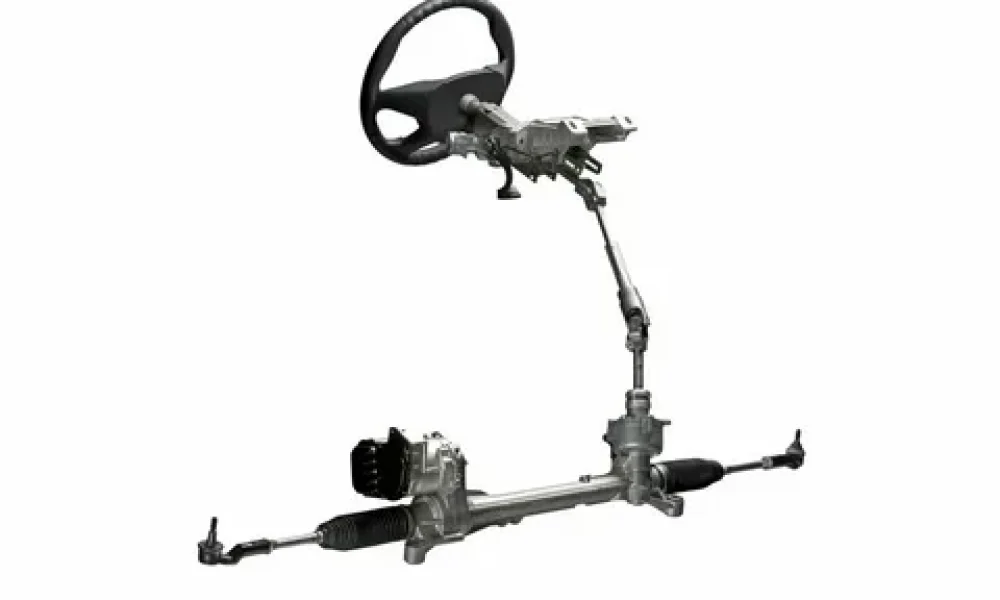
The global Electronic Power Steering (EPS) market is positioned for a decade of accelerated growth as automakers worldwide intensify their transition toward electrification, steer-by-wire architectures, and advanced driver-assistance systems (ADAS). According to new industry analysis, the market is projected to grow from USD 29,378.8 million in 2025 to USD 48,774.3 million by 2035, registering a CAGR of 5.2%. The sector recorded 4.7% year-on-year growth in 2024, underscoring its rising strategic importance in modern vehicle design and global regulatory compliance.
Industry Momentum Driven by Steer-by-Wire and ADAS Integration
Demand for intelligent and energy-efficient steering solutions continues to gather pace as manufacturers shift away from hydraulic systems. EPS has emerged as a preferred steering technology due to its lightweight design, reduced parasitic losses, and seamless integration with ADAS functions such as lane keeping, stability control, and autonomous navigation modules.
The market’s upward trajectory is reinforced by its alignment with global fuel-efficiency mandates and increasingly stringent emission targets. Governments in Europe, North America, and Asia are promoting vehicle platforms that optimize efficiency and electrification—positions that EPS technologies are uniquely engineered to support.
Subscribe for Year-Round Insights → Stay ahead with quarterly and annual data updates
https://www.futuremarketinsights.com/reports/sample/rep-gb-1962
Global OEMs Accelerate EPS Adoption Through Innovation and Localization
In 2024, Nexteer Automotive expanded its Modular Pinion-Assist EPS (mP-EPS) platform to enhance scalability across compact cars, SUVs, and light trucks. The company confirmed that the platform lowers integration costs while maintaining consistent steering feel and high safety compliance across vehicle categories.
In India, Rane NSK Steering Systems and ZF Group jointly introduced localized EPS solutions designed for domestic production, supporting the “Make-in-India” objectives. The collaboration focuses on torque-efficient, ADAS-ready EPS units produced at the Chennai facility for both OEM and Tier-1 customers.
The performance segment also witnessed advancements with Wisefab launching an electric steering kit for motorsport applications. The lightweight, fully programmable system integrates with CAN networks, providing race teams with real-time precision steering control.
Semi-Annual Growth Indicators Reflect Consistent Market Strength
The latest semi-annual assessment shows a steady upward growth pattern, with:
- H1 2024 CAGR: 4.7%
- H2 2024 CAGR: 4.9%
- H1 2025 CAGR: 5.1%
- H2 2025 CAGR: 5.2%
Both periods reflect incremental gains of 30 basis points, signaling heightened demand for EPS in global automotive manufacturing cycles.
Passenger Cars Anchor Market Expansion
Passenger cars accounted for 64% of global EPS demand in 2025, with the segment projected to grow at a 4.9% CAGR through 2035. As OEMs globally standardize EPS in compact and mid-size platforms, adoption is reinforced by the need for ADAS compatibility, improved maneuverability, and enhanced vehicle safety.
Platform engineering has also intensified EPS standardization, allowing manufacturers to deploy uniform steering systems across gasoline, hybrid, and electric variants.
Rack-Assist EPS Gains Ground in Mid-Size and High-Load Applications
Rack Assist EPS (R-EPS) represented 38% of market share in 2025, with expected growth at a 5.0% CAGR. R-EPS is increasingly preferred for SUVs, sedans, and light commercial vehicles due to its superior torque output and compatibility with adaptive steering technologies.
Suppliers continue to enhance actuator efficiency and thermal durability—critical for next-generation EV platforms and mid-size vehicles operating under variable load and speed conditions.
Key Trends Shaping EPS Market Trajectory
- Global Focus on Fuel Efficiency
EPS plays a pivotal role in reducing engine load and improving fuel economy. By eliminating hydraulic pumps and cutting 3–4 kg of system weight, EPS directly supports CO₂ reduction targets such as the EU’s 37.5% emission reduction mandate for 2030.
- Rapid Expansion of Electric Vehicle Manufacturing
With more than 10 million EVs sold globally in 2023, EPS is becoming indispensable due to its lightweight architecture and engine-independent operation. Its integration directly enhances EV range and energy efficiency.
- Rising Adoption of Autonomous and Semi-Autonomous Driving
EPS systems enable the precision steering control essential for autonomous mobility. With over 50 companies worldwide testing self-driving technologies, EPS integration has become a foundational requirement for AV ecosystem development.
- Addressing Reliability Challenges in Extreme Environments
Manufacturers are fortifying EPS components to withstand harsh climates, rugged terrains, and thermal stress—an area undergoing rapid innovation to ensure system durability and consistent performance.
Personalize Your Experience: Ask for Customization to Meet Your Requirements
https://www.futuremarketinsights.com/customization-available/rep-gb-1962
Competitive Landscape: Tiered Market Dynamics
Tier 1 (65–75% market share)
Industry leaders include:
- Bosch
- JTEKT Corporation
- Nexteer Automotive
- NSK Ltd.
These companies maintain broad portfolios, high-volume production capabilities, and global manufacturing presence.
Tier 2
Regionally strong manufacturers such as:
- Hyundai Mobis
- ZF Friedrichshafen AG
- Mando Corporation
Tier 2 participants demonstrate robust technical capabilities with expanding international footprint.
Tier 3
Local and niche suppliers with limited revenue scale, including:
- Zhuzhou Elite Electro-Mechanical Co. Ltd., among others.
Geographical Outlook: Asia Leads EPS Demand
Countries posting the highest CAGR through 2035 include:
- China: 7.2%
- India: 6.9%
- United States: 5.3%
- Germany: 4.9%
- Japan: 4.5%
China dominates EPS production due to its massive EV output, while Germany asserts leadership through premium automakers and advanced EPS engineering.
Industry Updates Strengthen Innovation Momentum
- January 2025: ZF Rane Automotive India launched advanced rack-drive EPS solutions tailored for India’s evolving vehicle fleet.
- December 2023: Nexteer Automotive celebrated the production of 100 million EPS systems, marking a milestone in global steering innovation.
Why Choose FMI: Empowering Decisions that Drive Real-World Outcomes:
https://www.futuremarketinsights.com/why-fmi
About Future Market Insights (FMI)
Future Market Insights, Inc. (FMI) is an ESOMAR-certified, ISO 9001:2015 market research and consulting organization, trusted by Fortune 500 clients and global enterprises. With operations in the U.S., UK, India, and Dubai, FMI provides data-backed insights and strategic intelligence across 30+ industries and 1200 markets worldwide.



