
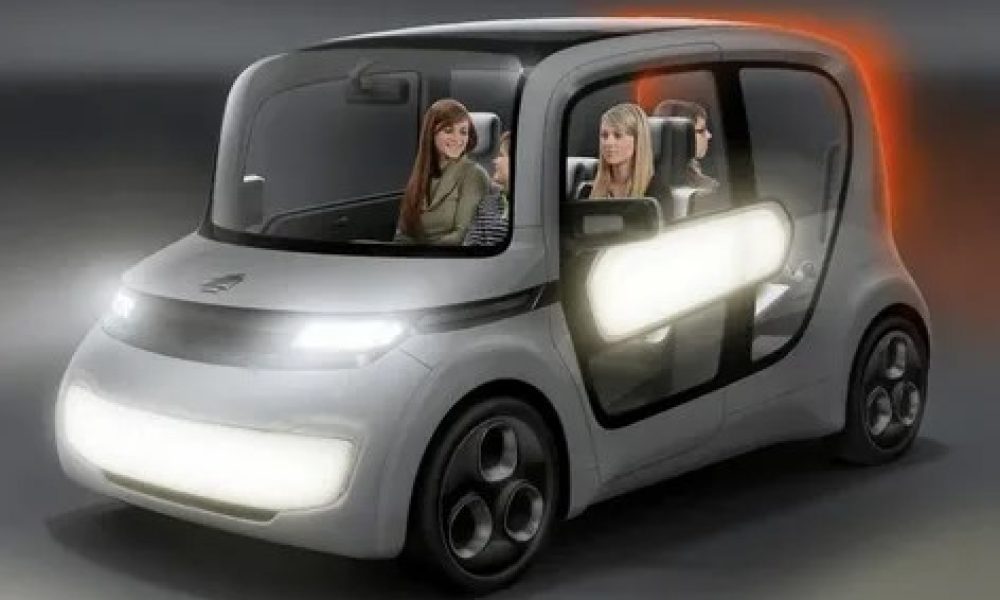
The global electric vehicle (EV) lighting market is on track for unprecedented expansion, rising from USD 4.1 billion in 2025 to USD 21.8 billion by 2035, according to new industry estimates. With a powerful 21.7% CAGR, lighting has become a core pillar of EV innovation—transforming from a traditional vehicle accessory into a critical enabler of brand identity, safety performance, and intelligent energy management.
Driven by advances in LED technology, adaptive lighting systems, vehicle electrification, and ADAS integration, the EV lighting sector is undergoing a technology shift unmatched in any previous automotive lighting cycle.
Lighting Becomes a Platform-Level Innovation in Next-Gen EVs
Lighting technologies have rapidly evolved into strategic components of EV architecture. Automakers now integrate intelligent lighting modules to differentiate vehicle identity and elevate safety—most notably seen in Hyundai’s “Parametric Pixel” LED signature used across the IONIQ lineup. Such lighting designs are now central to automaker branding strategies, with programmable front and rear signatures becoming a defining visual language for electric models.
Advanced deployments—including adaptive matrix LED systems, dynamic beam shaping, glare-suppression technology, and customizable ambient interior lighting—have moved from premium electric vehicles into mid-tier offerings. These innovations enhance visibility and driver awareness while enabling personalized, immersive in-cabin experiences.
Technical insights from American Bright and EEWorld further highlight the role of LED-based infrastructure in EV charging stations, helping improve nighttime usability and achieve meaningful energy savings through automated brightness control and motion-triggered illumination.
Subscribe for Year-Round Insights → Stay ahead with quarterly and annual data updates
https://www.futuremarketinsights.com/reports/sample/rep-gb-16571
Market Metrics Highlight Accelerated Growth
| Metric | Value |
| EV Lighting Market Size (2025E) | USD 4.1 Billion |
| EV Lighting Market Value (2035F) | USD 21.8 Billion |
| CAGR (2025–2035) | 21.7% |
Between 2023 and 2024, the industry saw a significant surge in smart lighting innovations—including dynamic beam adjustment and daylight-calibrated ambient LEDs—aligned with stronger global safety mandates and evolving consumer preferences.
As EV production scales, lighting is increasingly treated as a mission-critical system designed to maximize aesthetics, efficiency, and functional safety in a unified platform.
LEDs to Capture 72% Market Share in 2025
LED lighting will remain the dominant investment segment, accounting for approximately 72% of total EV lighting demand in 2025 and expanding at a 22.0% CAGR through 2035.
Key factors driving LED dominance include:
- Superior energy efficiency, critical for EV range preservation
- Longer operational life and reduced heat output
- Compact module design, enabling flexible styling
- Rapid advances in adaptive LED matrices and connected lighting systems
- Enhanced compatibility with digital vehicle electronics
LEDs have become a centerpiece of EV design evolution—supporting advanced DRLs, adaptive high beams, sequential turn indicators, and premium interior lighting ecosystems.
Passenger Cars to Lead with 63% Market Share
Electric passenger cars will account for approximately 63% of global EV lighting revenue in 2025, expanding at a 21.9% CAGR through 2035. Growth is underpinned by rising global EV adoption, wider model availability, and stringent regulatory support for zero-emission fleets.
Lighting functions increasingly influence purchasing decisions, with EV manufacturers integrating:
- Customizable interior ambient light
- Adaptive and laser-based headlights
- Intelligent beam switching
- Energy-optimized LEDs tailored for EV platforms
As global EV penetration accelerates, lighting remains a centerpiece of design strategy, branding, and user experience.
Risk Landscape: Supply Chain, Regulation & Technology Substitution
Despite high growth potential, the EV lighting industry faces notable risks:
- Chip shortages affecting LED drivers and electronic components
- Trade tariffs and import restrictions, especially on Chinese LEDs
- Regulatory inconsistencies slowing adoption of technologies like matrix LEDs in the U.S.
- Potential substitutes, including OLED and fiber-optic lighting solutions
- Market volatility tied to EV adoption rates and macroeconomic cycles
Suppliers must maintain agility—prioritizing innovation while balancing escalating cost pressures and evolving OEM expectations.
Pricing Strategies Reflect Technology Differentiation
Premium EVs increasingly use dynamic LED projectors, AI-driven headlights, and luxury ambient lighting, leveraging value-based pricing to command higher margins. Meanwhile:
- Budget EVs prioritize cost-efficient LED modules
- Customizable lighting packages drive upselling opportunities
- Asian suppliers employ penetration pricing to gain OEM share
- Declining LED component costs support broader affordability
Lighting bundling within EV trim packages has become a primary strategy for margin optimization.
Country-Level Growth Outlook (CAGR 2025–2035)
| Country | CAGR |
| USA | 7.6% |
| UK | 7.2% |
| EU | 7.8% |
| Japan | 7.5% |
| South Korea | 7.9% |
USA: Growth led by EV incentives, advanced matrix LEDs, and large-scale OEM adoption (Tesla, Ford, GM).
UK: Strong demand supported by the 2035 ICE ban and rising luxury EV production.
EU: Technology leadership driven by the EU Green Deal and automakers like BMW and Volkswagen.
Japan: Accelerated adoption of OLED, matrix LEDs, and adaptive systems driven by carbon-neutrality goals.
South Korea: Rapid rise in AI-enabled adaptive lighting led by Hyundai/Kia innovation.
Personalize Your Experience: Ask for Customization to Meet Your Requirements
https://www.futuremarketinsights.com/customization-available/rep-gb-16571
Competitive Landscape
Leading players shaping the market include:
- Hella GmbH
- Valeo
- Koito Manufacturing
- Stanley Electric
- Marelli
- Osram
- Hyundai Mobis
- Denso Corporation
- Robert Bosch GmbH
- ZKW
These companies continue to expand portfolios in LED, OLED, adaptive matrix, and AI-driven lighting systems, leveraging deep OEM partnerships and proprietary optical design capabilities.
Future Outlook
As electric vehicles evolve toward autonomous and software-defined architectures, lighting will become increasingly intelligent, dynamic, and integrated with vehicle perception systems. Innovations in AI-controlled lighting, ultra-thin OLED panels, and digital light projection will redefine visibility, energy efficiency, and exterior design signatures.
By 2035, EV lighting will stand as one of the most innovation-intensive domains in the entire EV ecosystem—shaping next-generation mobility through intelligent illumination that merges safety, sustainability, and digital aesthetics.
Why Choose FMI: Empowering Decisions that Drive Real-World Outcomes:
https://www.futuremarketinsights.com/why-fmi
About Future Market Insights (FMI)
Future Market Insights, Inc. (FMI) is an ESOMAR-certified, ISO 9001:2015 market research and consulting organization, trusted by Fortune 500 clients and global enterprises. With operations in the U.S., UK, India, and Dubai, FMI provides data-backed insights and strategic intelligence across 30+ industries and 1200 markets worldwide.



