
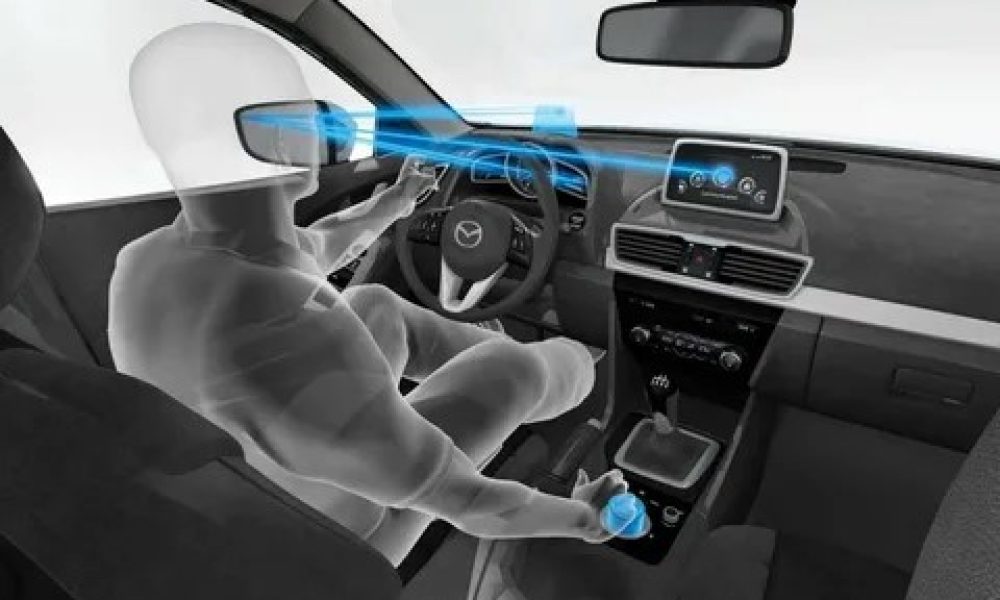
The global Driver Monitoring System (DMS) market is entering a period of accelerated expansion, driven by stricter safety regulations, rising consumer demand for advanced in-vehicle protection, and rapid advancements in artificial intelligence and sensor technologies. According to the latest industry assessment, the market is projected to grow from USD 5.2 billion in 2025 to USD 10.5 billion by 2035, registering a CAGR of 7.3% over the forecast period.
Growing safety mandates, the escalation of fatigue-related accidents, and the integration of DMS into both passenger and commercial vehicle platforms are solidifying the technology’s role as a core component of advanced driver assistance systems (ADAS). Road safety authorities globally continue to cite drowsiness and driver distraction as primary contributors to severe collisions, prompting rapid adoption of intelligent driver monitoring solutions.
Next-Generation DMS Technologies Reshape the Competitive Landscape
Innovation within the DMS ecosystem accelerated significantly in 2024. Smart Eye introduced the industry’s first system capable of detecting alcohol impairment by analyzing micro-patterns in eye movement and behavioral cues—an advancement designed to synchronize with ADAS platforms for automated safety interventions.
In parallel, OmniVision Technologies unveiled its high-resolution RGB-IR global shutter sensor optimized for both low- and high-light cabin environments. Designed for Level 2 and Level 3 autonomous vehicles, the sensor enables precise interpretation of gaze direction, eyelid activity, and head movement.
AI innovation also gained momentum with FEV Group’s Cognisafe, an advanced solution using multilayer biometric sensor fusion to detect driver alertness, cognitive load, and emotional state. The system entered pilot phases with leading OEMs across luxury and utility vehicle segments.
Across emerging markets, adoption is equally robust. In India, Novus Hi-Tech introduced an AI-enabled DMS for Eicher Trucks, strengthening commercial fleet safety with real-time alerts routed to centralized monitoring centers.
Subscribe for Year-Round Insights → Stay ahead with quarterly and annual data updates
https://www.futuremarketinsights.com/reports/sample/rep-gb-14561
Key Market Metrics
| Metric | Value |
| Industry Size (2025E) | USD 5.2 billion |
| Industry Value (2035F) | USD 10.5 billion |
| CAGR (2025–2035) | 7.3% |
As the automotive industry advances toward higher levels of vehicle autonomy, the role of driver monitoring systems becomes foundational. Human-machine collaboration in semi-autonomous cars increasingly depends on precise driver attentiveness detection, positioning DMS as essential for compliance and accident reduction.
Radar Sensors Lead as Top Investment Segment
Radar-based technologies continue to dominate DMS hardware adoption. Radar sensors represented 29% of global market value in 2025, with projected growth at 7.8% CAGR through 2035. Their integration into adaptive cruise control, blind-spot detection, lane departure warnings, and forward collision systems positions radar as indispensable for ADAS standardization.
In 2025, dual- and tri-mode radar configurations gained traction as OEMs sought improved object detection in complex traffic scenarios. Suppliers increasingly prioritized reducing module size, improving power efficiency, and lowering total cost to support broader usage in compact vehicles and medium-duty commercial fleets.
Passenger Vehicles Remain the Growth Engine
Passenger vehicles accounted for 64% of total DMS sensor demand in 2025, driven by rapid ADAS adoption across sedans, hatchbacks, compact SUVs, and electric passenger vehicles. The segment is projected to expand at a 7.6% CAGR through 2035.
Global OEMs expanded sensor integration across mid-tier models, propelled by regulatory alignment with Euro NCAP, NHTSA, and China NCAP standards. Multi-sensor fusion—including cameras, radar, infrared, and ultrasonic sensors—continues to enhance safety functionality across global vehicle platforms.
Challenges: Cost Barriers, Integration Complexity, Privacy Concerns
Despite strong demand, the market faces notable constraints:
- High implementation costs tied to infrared cameras, AI processors, and facial recognition algorithms pose challenges for entry-level vehicle platforms.
- Integration complexity with existing vehicle architectures demands precise calibration to minimize false alerts.
- Regulatory inconsistency across global markets restricts OEMs from adopting unified DMS standards.
- Consumer privacy concerns regarding facial data and in-cabin behavioral monitoring raise cybersecurity expectations and require transparent policy frameworks.
Addressing these barriers through modular designs, cost-optimized systems, and regulatory standardization will unlock broader mass-market adoption.
Opportunity: ADAS Expansion and Road Safety Acceleration
DMS adoption is strongly supported by the global focus on road safety.
Over 30% of global road accidents are attributed to distraction or fatigue—making DMS integration a critical requirement for both new-generation passenger vehicles and commercial fleets.
Additionally, the rise of semi-autonomous Level 2 and Level 3 vehicles intensifies demand for intelligent systems that ensure driver readiness during transitions between manual and automated modes.
Insurers are also adopting DMS-linked risk models to reduce accident-related claims, further expanding the commercial incentive for fleet operators to deploy advanced monitoring solutions.
Country-Level Growth Outlook
- United States (CAGR 7.6%) – Expansion backed by NHTSA mandates and adoption by Tesla, GM, and Ford.
- United Kingdom (CAGR 7.2%) – Driven by GSR-aligned vehicle safety requirements.
- European Union (CAGR 7.5%) – Mandatory DMS installation on new vehicles from 2024 fuels rapid uptake.
- Japan (CAGR 7.4%) – Advanced safety regulations and high EV penetration strengthen adoption.
- South Korea (CAGR 7.8%) – Fastest-growing country, led by Hyundai, Kia, and Genesis ADAS deployment.
Personalize Your Experience: Ask for Customization to Meet Your Requirements
https://www.futuremarketinsights.com/customization-available/rep-gb-14561
Competitive Landscape
Global leaders continue to invest heavily in AI-based monitoring, multi-sensor fusion, and in-cabin analytics.
Key market participants include:
- Valeo S.A. (20–24%) – Facial-recognition-enabled, ADAS-integrated DMS platforms
- Denso Corporation (16–20%) – AI-driven fatigue and distraction detection
- Bosch Group (12–16%) – Comprehensive biometrics-based DMS solutions
- Seeing Machines (10–14%) – Commercial fleet-focused AI monitoring
- Continental AG (8–12%) – Next-generation in-cabin monitoring for autonomous systems
Additional contributors include Aptiv, Smart Eye, Omron, Faurecia, and Xperi.
Outlook
As governments intensify safety mandates and OEMs prepare for the autonomous era, the Driver Monitoring System market is transitioning from a premium feature to a global safety standard. AI-driven behavioral analytics, sensor fusion, and proactive driver-state monitoring will define the next decade of vehicle intelligence—positioning DMS as a critical pillar of the automotive industry’s future.
Why Choose FMI: Empowering Decisions that Drive Real-World Outcomes:
https://www.futuremarketinsights.com/why-fmi
About Future Market Insights (FMI)
Future Market Insights, Inc. (FMI) is an ESOMAR-certified, ISO 9001:2015 market research and consulting organization, trusted by Fortune 500 clients and global enterprises. With operations in the U.S., UK, India, and Dubai, FMI provides data-backed insights and strategic intelligence across 30+ industries and 1200 markets worldwide.



