
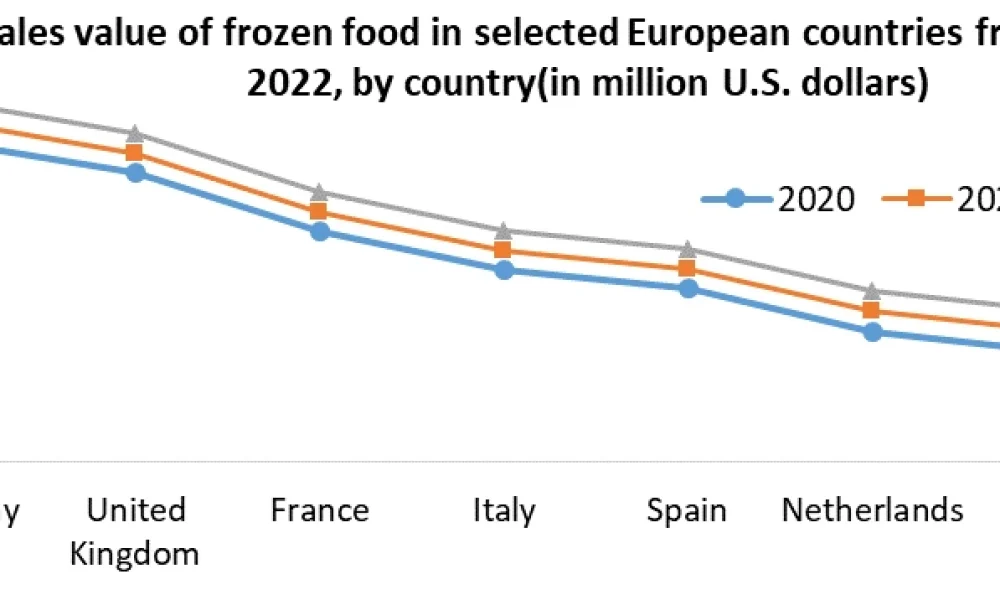
Frozen Food Market Overview:
Frozen Food Market is projected to grow from USD 214.32 billion in 2025 to nearly USD 347.01 billion by 2034, registering a compound annual growth rate (CAGR) of 5.5%. Driven by shifting consumer preferences towards convenient and ready-to-cook meals, advancements in freezing technology that preserve quality and nutrition, and expanding retail infrastructure, the frozen food industry is experiencing robust growth. Urbanization, dual-income households, and a growing e-commerce presence are significantly shaping this expanding market.
Key Highlights & Insights
Market Size & Growth: The market will increase from USD 214.32 billion in 2025 to USD 347.01 billion by 2034, at a CAGR of 5.5%.
Dominating Region: North America leads the market with a 34% share in 2024, driven by high consumer demand for convenient food options, extensive frozen food retail presence, and adoption of premium frozen products.
Leading Segment: Ready meals account for the largest product share of 43% in 2024, reflecting the rising need for quick, nutritious meal solutions.
Key Driver: Lifestyle changes, increasing urbanization, and growing popularity of frozen plant-based and organic food products are key drivers encouraging market growth.
► Get a sample of the report:https://www.maximizemarketresearch.com/request-sample/11588/
Recent Developments
2024-2025: Significant growth in online grocery shopping platforms has led to a 31% increase in online frozen food sales, enhancing consumer accessibility.
Leading frozen food manufacturers have diversified product portfolios with an emphasis on plant-based, organic, and clean-label items.
Investments in cold chain logistics have improved product quality and distribution efficiency.
Collaborations between frozen food producers and e-commerce platforms continue to widen market reach and customer engagement.
Market Dynamics
Growth Drivers:
Increasing demand for convenient, time-saving meals among urban, working populations.
Technological progress in freezing techniques, including individual quick freezing (IQF) and blast freezing, enhancing product quality.
Expanding retail infrastructure with supermarkets, hypermarkets, and digital channels facilitating broader availability.
Rising health awareness fostering demand for organic and plant-based frozen options.
Challenges:
High costs associated with frozen food storage and transportation.
Consumer perception regarding nutritional quality compared to fresh food.
Supply chain disruptions impacting consistent product availability.
Regional Analysis
North America: Dominates with 34% market share, supported by widespread frozen food consumption in the U.S. and Canada.
Asia Pacific: Fastest growing region, propelled by rapid urbanization, increasing disposable income, and evolving food habits in China, India, Japan, and Southeast Asia.
Europe: Growing demand driven by consumer preferences for premium and organic frozen food products.
Latin America and Middle East & Africa: Emerging markets expanding due to rising urban lifestyles and retail modernization.
Product Segmentation
By Product Type: Ready meals (largest segment), fruits & vegetables, frozen meat & seafood, dairy & desserts, others.
By Freezing Technology: Individual quick freezing (IQF), blast freezing, belt freezing.
By Distribution Channel: Offline retail (90% share in 2024), online retail (fastest growing segment).
Key Trends
Surge in frozen plant-based and clean-label product launches responding to environmental and health concerns.
Rapid expansion of online grocery shopping facilitating convenient frozen food access.
Increased use of innovative freezing and packaging technologies to maintain nutritional quality and extend shelf life.
Growing consumer inclination towards international cuisines and ready-to-eat ethnic frozen meals.
Enhanced focus on sustainability in sourcing, packaging, and cold chain logistics.
Frequently Asked Questions (FAQs)
What is the projected size of the global frozen food market by 2034?
Approximately USD 347.01 billion.
Which region dominates the frozen food market?
North America, holding 34% market share.
What product segment leads the market?
Ready meals, accounting for 43% of the market share.
What factors are driving market growth?
Urbanization, lifestyle changes, technological advances in freezing, and e-commerce expansion.
Conclusion
The frozen food market is poised for substantial growth over the next decade fueled by consumer demand for ready-to-eat and nutritious meals, technological improvements, and strengthened distribution networks. Dominated by North America’s established consumption pattern and bolstered by Asia Pacific’s dynamic urban growth, the industry’s future will be shaped by innovations in product offerings, sustainability, and digital commerce, making frozen foods an essential part of global food consumption through 2034 and beyond.
◉ Get Market Research Latest Trends
♦ Global CBRNE Detection Technologies Market
♦ Maximize Market Research is launching a subscription model for data and analysis in the MMR Statistics
Contact Maximize Market Research:
3rd Floor, Navale IT Park, Phase 2
Pune Bangalore Highway, Narhe,
Pune, Maharashtra 411041, India
[email protected]
+91 96071 95908, +91 9607365656
About Maximize Market Research:
Maximize Market Research is a multifaceted market research and consulting company with professionals from several industries. Some of the industries we cover include medical devices, pharmaceutical manufacturers, science and engineering, electronic components, industrial equipment, technology and communication, cars and automobiles, chemical products and substances, general merchandise, beverages, personal care, and automated systems. To mention a few, we provide market-verified industry estimations, technical trend analysis, crucial market research, strategic advice, competition analysis, production and demand analysis, and client impact studies.




