
The DNA diagnostics market is entering a transformative decade, propelled by breakthroughs in genomics, rising demand for precision medicine, and rapid technological advancement in molecular testing.
DNA-based diagnostic tools including PCR assays, next-generation sequencing (NGS), microarrays, and point-of-care genetic tests—play a pivotal role in detecting hereditary diseases, infectious pathogens, oncology biomarkers, and rare genetic mutations. This report provides a detailed overview of global market dynamics, growth outlook, technology innovations, and strategic implications for stakeholders across healthcare, biotechnology, and diagnostics.
Market Size and Growth
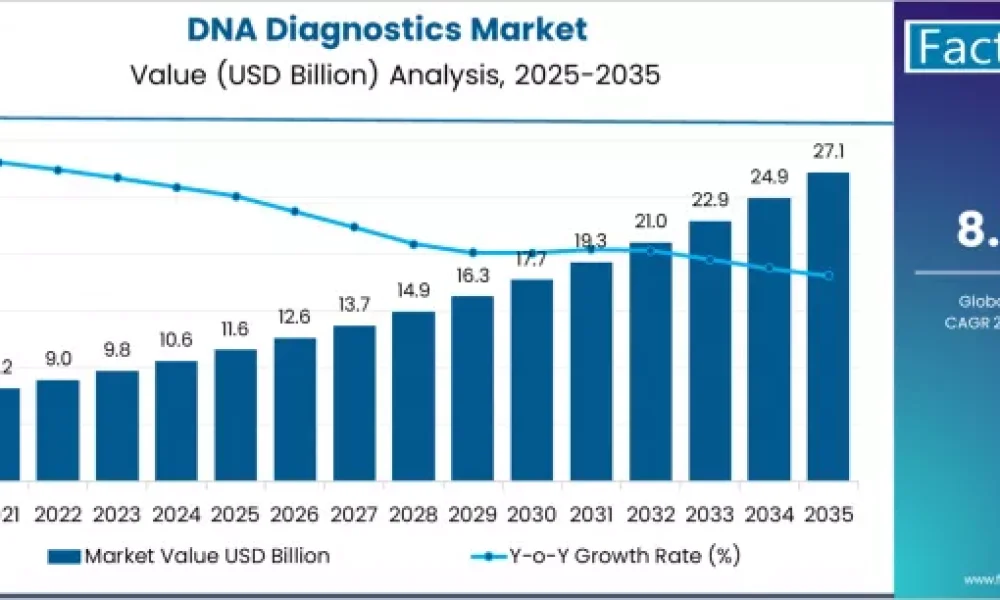
The global DNA diagnostics market is projected to rise from USD 11.57 billion in 2025 to approximately USD 27.14 billion by 2035, marking an absolute increase of USD 15.57 billion during the period. With a CAGR of 8.9%, the market is set to expand by nearly 2.3x by 2035, reflecting robust adoption of genomic testing across clinical, research, and consumer domains.
This strong growth trajectory underscores the expanding role of personalized medicine, increased prevalence of genetic disorders, and the integration of DNA-based technologies into mainstream healthcare.
To access the complete data tables and in-depth insights, request a Discount On The Report here: https://www.factmr.com/connectus/sample?flag=S&rep_id=11641
Key Growth Drivers
- Rising burden of genetic and chronic diseases
Increasing diagnosis of hereditary conditions, cancer, prenatal abnormalities, and lifestyle-related disorders amplifies the demand for accurate and early DNA testing. Genomic screening is becoming crucial in clinical decision-making and risk prediction.
- Technological advancement and cost reductions
Major innovations such as NGS platforms, CRISPR-based assays, microfluidics, and automated sequencing systems have significantly enhanced test accuracy while reducing turnaround time and cost. This democratization of genomics accelerates adoption across emerging markets.
- Expansion of precision medicine and targeted therapies
Healthcare systems worldwide are shifting toward personalized treatment pathways. DNA diagnostics enable tailored therapies, companion diagnostics, pharmacogenomics, and tumor profiling—supporting high-demand applications in oncology and rare disease management.
- Increasing awareness and accessibility
Direct-to-consumer (DTC) DNA testing, newborn screening programs, and government genomics initiatives are expanding public awareness about genetic risk assessment, fueling testing volumes globally.
Global Market Insights
DNA diagnostics have become an essential component of healthcare infrastructure. North America maintains technological leadership with strong adoption in oncology and clinical genomics. Europe continues to show consistent growth, supported by robust regulatory standards, public healthcare coverage, and national genomics initiatives. Meanwhile, Asia-Pacific represents the fastest-growing region due to rapidly improving healthcare access, expanded laboratory capacity, and increasing investment in precision medicine.
The largest product segments include NGS-based tests and PCR platforms, while DTC genetic tests and liquid biopsy diagnostics represent the fastest-growing categories.
However, challenges persist, including unequal testing access, variable reimbursement structures, and data-privacy concerns within genetic information ecosystems.
Technology Trends and Competitive Landscape
Key trends shaping the DNA diagnostics landscape include:
- Next-generation sequencing (NGS) adoption for oncology, infectious disease, and inherited condition screening.
- CRISPR-powered diagnostic tools offering ultra-fast and highly sensitive DNA detection.
- AI-enabled genomic analytics enhancing interpretation accuracy and clinical workflows.
- Microfluidic lab-on-chip devices facilitating near-patient and decentralized testing.
- Liquid biopsy and circulating tumor DNA (ctDNA) assays supporting early cancer detection.
- Direct-to-consumer genetic testing expanding personal health insights.
The competitive environment includes leading global diagnostics companies, genomic sequencing pioneers, and emerging biotech innovators developing cost-efficient, high-throughput DNA testing technologies.
Challenges
Despite strong momentum, the DNA diagnostics market faces several constraints:
- High initial equipment costs and complexity of genomic workflows for smaller labs.
- Variability in reimbursement for advanced genetic tests across regions.
- Genetic data privacy and ethical concerns, particularly in consumer genomics.
- Shortage of trained bioinformaticians and genetic counselors limiting interpretation capacity.
- Regulatory hurdles for novel DNA-based testing systems.
Addressing these limitations will be essential to achieving widespread adoption and equitable access.
Strategic Implications
For manufacturers and innovators
Develop scalable, automated platforms and cost-effective genetic tests suited for both advanced and resource-limited settings. Prioritize AI integration, cloud-based analytics, and multi-omics solutions to gain competitive differentiation.
For healthcare providers and laboratories
Expand genetic testing capabilities, invest in NGS and bioinformatics infrastructure, and incorporate DNA diagnostics into care pathways for cancer, prenatal health, and rare diseases.
For investors and stakeholders
Back companies that focus on precision diagnostics, decentralized genomic testing, and AI-driven data interpretation. The sector promises high-return, long-term growth supported by continuous scientific advancement.
Outlook Summary
From 2025 to 2035, the DNA diagnostics market will continue its ascent as genomics becomes integral to global healthcare. Driven by technological breakthroughs, rising prevalence of genetic disorders, and the expanding role of precision medicine, the market presents abundant opportunities for companies, clinicians, researchers, and investors. Despite regulatory and cost-related challenges, DNA diagnostics will reshape the future of disease detection, personalized therapy, and global population health—positioning the industry for rapid and resilient expansion.
Have a specific Requirements and Need Assistant on Report Pricing or Limited Budget please contact us – [email protected]
About Fact.MR
Fact.MR is a global market research and consulting firm, trusted by Fortune 500 companies and emerging businesses for reliable insights and strategic intelligence. With a presence across the U.S., UK, India, and Dubai, we deliver data-driven research and tailored consulting solutions across 30+ industries and 1,000+ markets. Backed by deep expertise and advanced analytics, Fact.MR helps organizations uncover opportunities, reduce risks, and make informed decisions for sustainable growth.



