
The contemporary architecture of innovation rarely finds a prism as clear as that offered by the iF DESIGN AWARD , a distinction that, since 1953, has operated as a barometer of global visual and functional culture. Far from being a mere competition, the final call for entries for the iF DESIGN AWARD 2026, with a deadline of November 5, 2025 , stands as an articulation of the forces redefining capitalism and creative practice: the inescapable convergence between aesthetic excellence and ecological responsibility. This announcement, addressed to designers, studios, brands, and innovators on a planetary scale, marks an inflection point in the consideration of design as a tool for social and environmental progress, not merely a formal exercise.
Ethics as the Axis of Formal Evaluation
The history of the iF DESIGN AWARD is grounded in the rigorous evaluation of the pillars defining “good design”: idea, form, function, and differentiation. However, the 2025 edition consolidated a paradigmatic evolution by elevating sustainability to a fifth evaluation criterion with equal structural weight. This formalization is not a trend, but a recognition of the guiding principle that obligates all material production to justify its existence beyond mere utility or beauty. The process, which in 2025 involved nearly 11,000 entries from 70 countries and was judged by a jury of 134 independent experts , now demands that environmental consciousness be intrinsic to the concept of the avant-garde.
The New Synthesis of Luxury and Responsibility
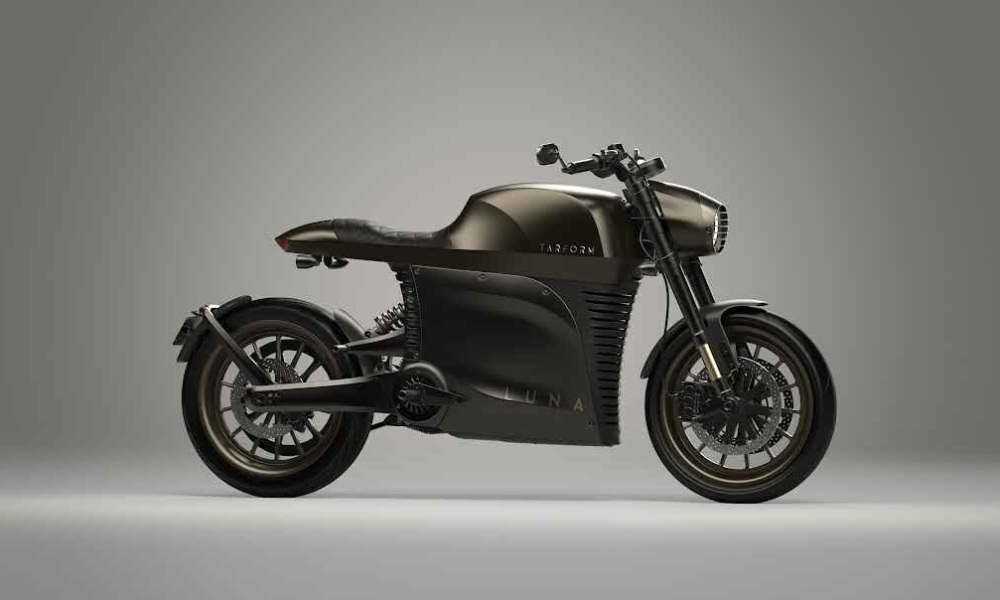
Recent laureates exemplify this new synthesis between luxury, technology, and minimized ecological footprint. Designs such as the Tarform Motorcycle, recognized for its approach to mobility that combines luxury with explicit environmental awareness , or the Nothing Phone (2a) Plus Community Edition, a pioneering co-creation initiative designed by its user community, demonstrate that innovation is intrinsically relational and responsible.
Another significant case is the Silhouette Clear Sky collection, bio-circular glasses made with renewable materials that achieved a 50% reduction in carbon emissions , categorically merging luxury design with sustainable commitment. These examples illustrate that the distinction granted by the award, of which only 75 Gold Awards are given annually, is reserved for those works that achieve a tripartite complexity: technical audacity, formal precision, and contextual relevance.
From Minimalist Precision to Domestic Connection
The selectivity of the accolade is confirmed in the trajectory of winners ranging from tech giants to lifestyle and furniture industry leaders. Brands like Apple, recognized for their precision engineering and human-centric minimalist design in products such as the Studio Display and the Watch Ultra 2 , coexist in the list of winners with sanitation innovations like the Kohler Loope, an innovative waterless system that rethinks sustainable living in the home.
The scope of the award extends to the redefinition of modern computing, as demonstrated by the Lenovo ThinkBook Plus Gen 6, which introduced rollable display technology to modern computing, and to the merging of fashion with connectivity, exemplified by the Ray-Ban | Meta Smart Glasses. Even corporate identity finds its space, with the Volkswagen Group custom typography (by Landor) , which establishes a global visual identity with an elegant synthesis of sophistication and simplicity. Finally, the xBloom Studio coffee maker (from TBDx Inc.) represents app-connected brewing technology that brings the craftsmanship of a coffee shop to the home, with unprecedented precision. The constant in all of them is a commitment to precision engineering and user orientation.
International Projection and the Legacy of the Vanguard
Winning an iF DESIGN AWARD transcends mere celebration to become a professional milestone that opens the doors to international recognition. The award guarantees exposure in global media and various exhibitions, in addition to a permanent place in the iF Design Index, a curated showcase of the world’s most outstanding design achievements.
The invitation for designers and brands from the United States to submit their proposals in this 2026 call is not just an invitation to compete, but to join a legacy of companies and individuals who have shaped the vision of the future through design. Among the names that have left their mark on this award are Foster + Partners, Google, Herman Miller, IBM, Johnson & Johnson, L’Oréal, Lucid Motors, and PepsiCo. The deadline of November 5, 2025, for the iF DESIGN AWARD 2026 is, therefore, the deadline for the articulation of the next great idea that will redefine functional and aesthetic excellence within the framework of planetary responsibility.



