
Walk through the post-operative unit of almost any community hospital and you’ll find the same thing: bagged ice from the ice machine, wrapped in a towel or pillowcase, placed over a surgical dressing. It’s inexpensive, it’s familiar, and it’s been the default for decades. It’s also inconsistent, messy, ineffective after the ice melts, and impossible to standardize across a nursing unit.
The issues with loose ice are well documented among clinicians who think carefully about recovery outcomes. Ice bags don’t conform to anatomy — a bag of ice sitting on a knee or shoulder delivers inconsistent contact and uneven cold distribution across the treatment area. They melt within 20 to 30 minutes, creating wet dressings and requiring frequent nurse interventions to replace them. They provide no compression, which is the component of post-operative cold therapy that most directly affects edema reduction. And they can’t be tracked, standardized, or reliably reproduced across patients or across shifts.
Nurses and staff who manage post-op patients know all of this firsthand. The question is whether their facility has given them a better option.
What Cold Compression Therapy Delivers That Ice Alone Can’t
The clinical distinction between cold alone and cold combined with compression is meaningful and supported by the research literature on post-operative recovery. Compression applied simultaneously with cold accelerates edema reduction more effectively than either modality applied alone. The mechanical pressure directly limits fluid accumulation in interstitial spaces while the cold component reduces the inflammatory cascade driving that accumulation. Applied together and maintained consistently, the combined effect on pain and swelling in the immediate post-operative period is measurably better than cold alone.
For orthopedic procedures specifically — knee replacements, shoulder repairs, hip replacements, foot and ankle surgeries — the first 48 to 72 hours of recovery are when post-operative cold therapy delivers its highest return. Early pain control in this window enables earlier mobilization, earlier physical therapy participation, and the kind of recovery trajectory that reduces length of stay and improves patient-reported outcomes.
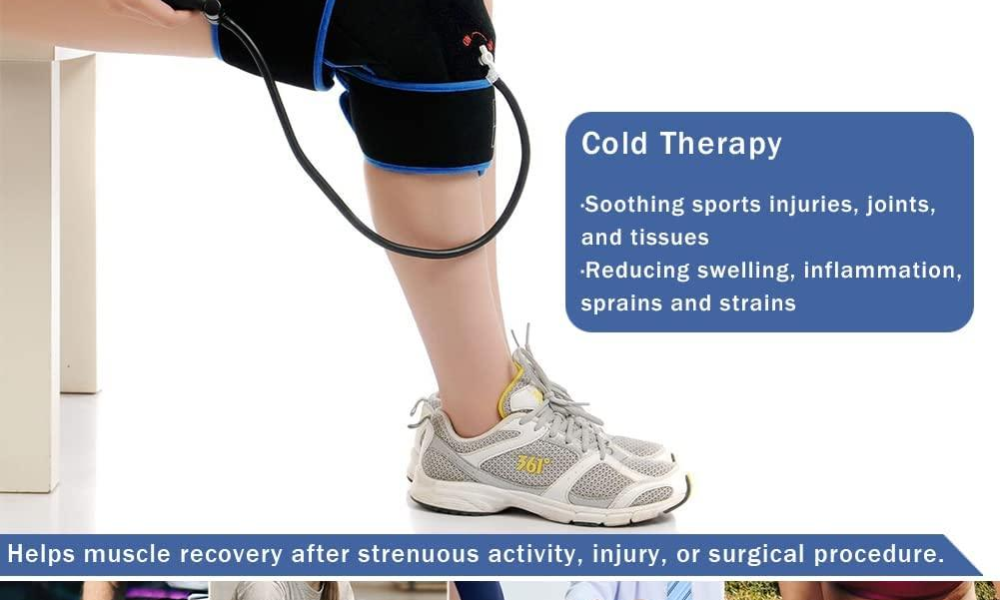
SMI Cold Therapy orthopedic compression wraps are anatomically designed to conform to specific joints and maintain therapeutic cold temperatures for three or more hours without continuous replacement — addressing the structural limitations of ice bags while delivering the compression component ice bags simply cannot.
The three-hour gel performance distinction matters specifically in a nursing workflow context. A wrap that maintains therapeutic cold for three or more hours means one application covers a full nursing shift without the repeated interventions required to replace melted ice. That has real implications for nursing time allocation, patient satisfaction during off-hours when staffing is lower, and the consistency of therapy delivery across the full post-operative period.
Why Supply Chain and Administrators Should Be Part of This Conversation
The decision about what cold therapy products are stocked in a facility is often made at the supply chain or materials management level, with clinical input that is sometimes limited to whatever has always been stocked. The result is that nursing staff and surgical teams frequently use whatever is available rather than what the clinical evidence recommends — not because decision-makers don’t care about outcomes, but because the connection between supply decisions and clinical outcomes isn’t always made explicit in the evaluation process.
The case for standardizing on compression-based cold therapy in post-operative settings is strongest when framed in terms of outcomes the facility already cares about: patient satisfaction scores that reflect pain management quality, length of stay metrics, and nursing time efficiency. A product that reduces PRN pain medication requests, eliminates the nursing time spent replacing ice every 30 minutes, and produces measurably better edema reduction in the first 48 hours pays for its cost differential many times over — but only if the evaluation includes those factors rather than comparing unit cost in isolation.
SMI has contract agreements with all major GPOs, and their freezer program supplies and maintains freezers throughout the patient pathway at no charge, with no minimum order requirements or contracts required.
The Broader Application Beyond Orthopedics
Post-operative cold therapy applications extend well beyond orthopedic procedures, and facilities that have standardized on compression wraps for their ortho volume often discover secondary applications that expand utility across service lines. Spine procedures, general surgery cases with significant abdominal tissue disruption, plastic surgery recovery, and podiatric procedures all benefit from targeted cold therapy delivered with anatomic conformity and consistent contact.
The oncology application is perhaps the most distinctive. Cold therapy delivered to the extremities during chemotherapy infusion has a growing body of evidence supporting its role in reducing chemotherapy-induced peripheral neuropathy. These are applications that ice bags are practically useless for — and that purpose-built compression wraps handle with a level of standardization and clinical confidence that changes what’s possible within those protocols. SMI’s chemo infusion cooling wrap is purpose-built for exactly this application.
Making the Case Internally
For facilities interested in evaluating a transition away from loose ice, the starting point is understanding what the clinical evidence actually shows. SMI has compiled clinical studies and supporting resources that provide the evidence base for an informed evaluation — one that goes well beyond the unit cost comparison that too often drives supply decisions in this category.
The gap between what post-operative cold therapy can deliver and what most facilities currently provide isn’t a clinical knowledge problem. It’s a supply and standardization problem. Closing that gap is one of the highest-return, lowest-disruption improvements available to surgical facilities operating at any volume.




