
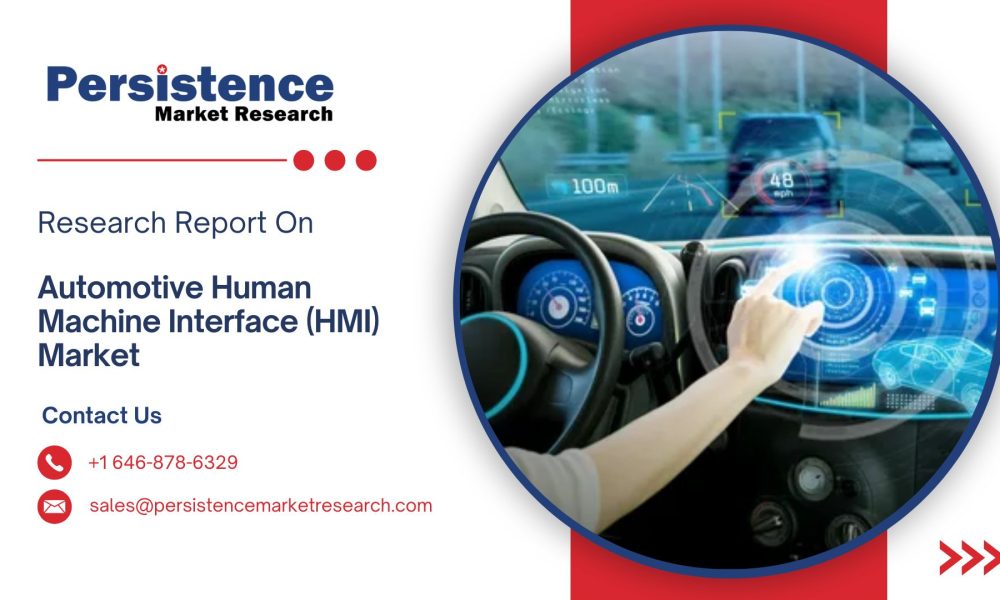
The global automotive human machine interface (HMI) market is poised for robust growth in the coming years, reflecting the automotive industry’s shift toward intelligent, connected, and autonomous mobility solutions. According to Persistence Market Research, the market is projected to grow from US$ 28.20 billion in 2025 to US$ 56.10 billion by 2032, registering an impressive CAGR of 10.3% during the forecast period. This expansion is being driven by a surge in demand for safe driving systems, personalized in-vehicle digital experiences, and advanced connectivity technologies such as Vehicle-to-Everything (V2X) communication and over-the-air (OTA) software updates. The integration of artificial intelligence (AI) and augmented reality (AR) into vehicle interfaces has further elevated the HMI’s role as the central hub for digital interaction between driver and vehicle.
Moreover, the increasing adoption of autonomous driving technologies and infotainment systems is creating new opportunities for manufacturers. Consumers now expect vehicles that offer seamless interaction, intuitive controls, and enhanced safety. As a result, automotive OEMs are investing heavily in adaptive HMI platforms that combine voice recognition, gesture control, haptic feedback, and multi-modal displays. In terms of market segmentation, the touchscreen segment continues to dominate due to its widespread integration across mid-range and premium vehicles. Geographically, North America leads the market, owing to early technological adoption, a strong presence of automotive innovators, and regulatory initiatives promoting connected and safe driving technologies.
Get | Download Sample Copy with TOC, Graphs & List of Figures @ https://www.persistencemarketresearch.com/samples/35413
Key Highlights from the Report
- The global automotive HMI market is projected to grow from US$ 28.20 billion in 2025 to US$ 56.10 billion by 2032, at a CAGR of 10.3%.
- Growing consumer demand for personalized, digital, and intuitive in-vehicle experiences is fueling market expansion.
- The rise of autonomous vehicles and ADAS (Advanced Driver Assistance Systems) has accelerated the development of smart HMIs.
- Vehicle-to-Everything (V2X) and OTA software updates are transforming vehicle connectivity and predictive maintenance.
- Touchscreen-based HMI systems continue to dominate the market, supported by voice and gesture recognition technologies.
- North America remains the leading regional market, followed by Europe and Asia-Pacific, due to rapid technological integration and smart mobility initiatives.
Market Segmentation
The automotive HMI market is segmented based on product type, technology, and end-user applications. Among product types, instrument clusters, touch screen displays, head-up displays (HUDs), and rear-seat entertainment systems account for significant shares. Instrument clusters are evolving rapidly from analog systems to fully digital and hybrid displays, offering real-time driving data, navigation, and alerts. Meanwhile, HUDs are gaining traction in premium vehicles, projecting key information directly onto the windshield to enhance driver focus and safety. The touchscreen display segment leads due to its versatility, user-friendly interface, and integration into infotainment and control systems.
From an application standpoint, passenger vehicles represent the largest end-user segment. The integration of AI-based voice assistants and predictive analytics in passenger cars has significantly improved driving comfort and personalization. In contrast, commercial vehicles are increasingly adopting HMIs to monitor fleet performance, driver behavior, and vehicle health. With the evolution of connected fleets and electric mobility, commercial HMI systems are transitioning from basic controls to data-driven dashboards, providing operators with enhanced efficiency and safety insights. As automotive digitization accelerates, the boundary between hardware and software-based HMIs continues to blur, emphasizing the growing importance of embedded systems and cloud-based analytics.
Regional Insights
North America remains at the forefront of the automotive HMI market, driven by early adoption of advanced automotive electronics and strong R&D investments by leading OEMs and tech companies. The U.S. is a major contributor to this growth, supported by the rapid integration of connected car technologies, autonomous systems, and EV innovation. The region’s robust regulatory landscape also encourages safety and driver-assist technologies, further strengthening HMI demand.
In Europe, countries such as Germany, the UK, and France are witnessing significant developments in luxury and electric vehicle segments, boosting demand for sophisticated HMI solutions. Meanwhile, Asia-Pacific is emerging as the fastest-growing market due to rising automotive production in China, Japan, and South Korea, along with increasing consumer preference for digitally enhanced vehicles. Local automakers are focusing on cost-effective yet technologically advanced HMI designs, aiming to attract the growing middle-class population.
Market Drivers
The automotive HMI market is primarily fueled by the growing consumer preference for advanced digital experiences within vehicles. Modern drivers expect intuitive interfaces that provide real-time information, connectivity, and entertainment while ensuring safety. With increasing vehicle automation, HMI serves as the critical bridge between human intuition and machine intelligence. The integration of technologies like AI, voice recognition, and gesture control enhances responsiveness and reduces driver distraction, directly contributing to safer roads. Additionally, OTA updates allow manufacturers to improve vehicle software remotely, enhancing system performance and longevity without physical servicing.
The second key driver lies in the expansion of connected and autonomous vehicle ecosystems. As V2X communication and IoT-based automotive platforms gain traction, HMIs are evolving into intelligent command centers capable of interacting with both internal and external systems. This shift supports predictive maintenance, personalized infotainment, and real-time navigation adjustments. Furthermore, the emergence of electric and hybrid vehicles has accelerated the demand for energy-efficient and intelligent dashboards, further broadening the HMI market’s growth potential. Together, these technological and consumer-driven trends are shaping the future of smart mobility.
For customization options before purchasing: https://www.persistencemarketresearch.com/request-customization/35413
Market Restraints
Despite its strong growth trajectory, the automotive HMI market faces notable challenges. One of the primary restraints is the high cost of advanced HMI technologies, which can significantly increase overall vehicle production costs. Integrating components like head-up displays, haptic interfaces, and AI-based systems requires substantial R&D investment, making these solutions less accessible in low-cost and mass-market vehicles. Additionally, ensuring seamless integration between HMI software, sensors, and control systems poses technical complexities that can affect product reliability and safety.
Another key limitation is the risk of driver distraction due to complex interface designs. While HMIs are intended to enhance safety, poorly optimized systems may lead to cognitive overload, especially in vehicles with multiple digital touchpoints. Regulatory compliance regarding safety standards also adds to the cost and time of product development. Moreover, concerns over data privacy and cybersecurity in connected vehicles remain a major restraint, as HMI systems often handle sensitive driver data. These challenges highlight the need for simplified designs, robust security frameworks, and standardization across manufacturers.
Market Opportunities
The automotive HMI market presents a wealth of opportunities as the industry shifts toward autonomous and electric mobility. As vehicles become more self-driven, the focus of HMI will move from operational control to passenger engagement and comfort. This opens avenues for immersive technologies such as augmented reality dashboards, 3D visualization, and advanced voice-based AI assistants. Manufacturers can leverage these innovations to differentiate their vehicles in an increasingly competitive market. The adoption of 5G connectivity will further enable real-time communication and adaptive interface customization, enhancing the overall driving experience.
Furthermore, emerging markets in Asia-Pacific and Latin America offer substantial growth potential due to rising disposable incomes and increased vehicle ownership. Automakers entering these regions can gain an advantage by introducing affordable, modular HMI solutions tailored to local preferences. Additionally, the rise of software-defined vehicles (SDVs) presents new revenue streams for HMI developers through continuous software upgrades and subscription-based services. Partnerships between automotive OEMs and technology firms will continue to drive innovation, transforming the HMI ecosystem into a core pillar of next-generation mobility.
Company Insights
Leading players operating in the global automotive HMI market include:
- Continental AG
- Robert Bosch GmbH
- Denso Corporation
- Panasonic Corporation
- Visteon Corporation
- Valeo S.A.
- Alpine Electronics, Inc.
- Harman International Industries, Inc.
- Magneti Marelli S.p.A.
- Nippon Seiki Co., Ltd.
Recent Developments:
- Continental AG launched an integrated 3D display technology that enhances depth perception without requiring special glasses, aiming to reduce driver distraction.
- Visteon Corporation unveiled its latest SmartCore™ cockpit domain controller, capable of managing multiple displays and infotainment systems within a single interface for next-generation vehicles.
Buy Now: https://www.persistencemarketresearch.com/checkout/35413
Frequently Asked Questions
What are the main factors influencing the Automotive Human Machine Interface (HMI) Market from 2025–2032?
Which companies are the major sources in the Automotive Human Machine Interface (HMI) Market industry?
What are the market’s opportunities, risks, and general structure within the Automotive Human Machine Interface (HMI) Market?
How do the top Automotive Human Machine Interface (HMI) Market companies compare in terms of sales, revenue, and pricing?
How are market types, applications, and value propositions explored in the Automotive Human Machine Interface (HMI) Market?
Future Opportunities and Growth Prospects
The future of the automotive human machine interface market is closely tied to the evolution of connected, autonomous, and electrified mobility. With vehicles transitioning into digital ecosystems on wheels, HMIs will serve as the central hub for communication, control, and personalization. Advancements in AI, cloud computing, and 5G connectivity are expected to transform the way drivers and passengers interact with vehicles, shifting focus from manual operation to intelligent automation.
As automakers continue to prioritize safety, convenience, and user experience, the next generation of HMIs will incorporate adaptive learning systems, offering interfaces that adjust in real time based on driver behavior and environmental conditions. Emerging opportunities in developing regions, coupled with growing investments in smart city infrastructure, will further propel market expansion. Between 2025 and 2032, the global automotive HMI market is set to redefine mobility—making vehicles not just modes of transport, but intelligent companions on the road.




