
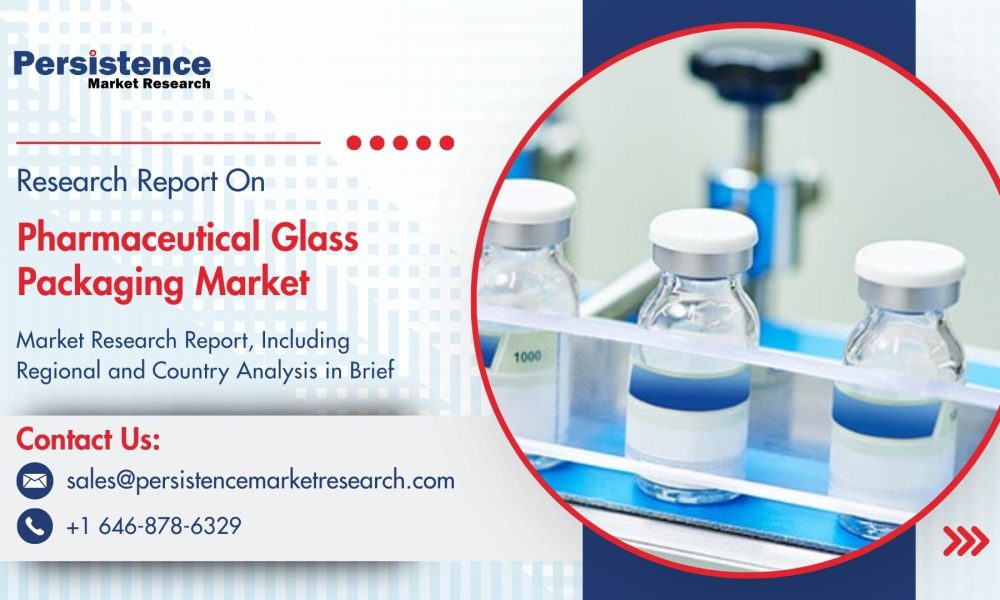
The pharmaceutical glass packaging market is undergoing a period of remarkable transformation, driven by growing healthcare demands, stringent regulatory requirements, and increasing emphasis on drug safety and sustainability. Glass, long regarded as the gold standard for packaging pharmaceutical products, continues to hold its dominance due to its superior chemical resistance, transparency, and inert nature. As global healthcare infrastructure expands and the demand for vaccines, biologics, and injectables rises, the pharmaceutical glass packaging market is set for substantial growth.
According to the latest study by Persistence Market Research, the pharmaceutical glass packaging market size is projected to be valued at US$ 23.0 Bn in 2025 and is estimated to reach US$ 44.3 Bn by 2032, growing at an impressive CAGR of 9.8% during the forecast period (2025–2032). This growth is primarily driven by increasing consumption of parenteral drugs, expanding biologics production, and the growing global focus on sustainable and recyclable packaging solutions.
Get a Sample PDF Brochure of the Report (Use Corporate Email ID for a Quick Response): https://www.persistencemarketresearch.com/samples/3778
Increasing Demand for Parenteral and Biologic Drugs Fuels Growth
The surge in parenteral drug formulations—which include injectables, infusions, and vaccines—is one of the most significant drivers of the pharmaceutical glass packaging market. Parenteral drugs require packaging that ensures high chemical stability, sterility, and protection against contamination, making glass the preferred material.
Additionally, the growing production of biologic drugs, such as monoclonal antibodies, cell therapies, and gene therapies, has led to higher demand for specialized glass vials, ampoules, and syringes. Biologic drugs are often sensitive to temperature and pH changes, and glass provides an ideal barrier against external elements, thereby preserving drug integrity and efficacy.
The increasing prevalence of chronic diseases—such as diabetes, cancer, and autoimmune disorders—has further boosted the consumption of injectable medications. As a result, pharmaceutical manufacturers are expanding their portfolios of glass-based containers to meet the evolving needs of these drug formulations.
Rise of Sustainable and Recyclable Packaging Solutions
Sustainability has become a defining trend in the global packaging landscape, and the pharmaceutical industry is no exception. Glass is 100% recyclable without loss of purity or quality, making it a highly sustainable material compared to plastics. This intrinsic property aligns well with the global push toward eco-friendly and circular economy practices.
Pharmaceutical companies and packaging manufacturers are increasingly investing in lightweight and recyclable glass packaging solutions to minimize material usage and reduce environmental impact. Additionally, advancements in borosilicate and aluminosilicate glass formulations are helping improve the durability and chemical resistance of containers, ensuring longer product shelf life and safety.
Governments and regulatory authorities across regions are also encouraging the adoption of sustainable materials in the pharmaceutical supply chain. As sustainability goals become integral to corporate strategies, the demand for green packaging solutions is expected to further propel market growth.
Technological Innovations and Smart Packaging Trends
Technological innovation continues to redefine the pharmaceutical glass packaging market. The industry is witnessing the adoption of smart glass packaging solutions integrated with digital technologies such as QR codes, NFC tags, and sensors. These innovations enhance product traceability, patient engagement, and supply chain transparency.
For instance, QR-coded vials enable healthcare professionals and patients to access detailed product information, usage instructions, and authentication details, reducing the risk of counterfeit drugs. Similarly, smart sensors embedded in packaging can monitor temperature fluctuations during transit, ensuring drug efficacy is not compromised.
Furthermore, the development of anti-break and anti-delamination coatings on glass containers is gaining traction. These coatings enhance mechanical strength and chemical stability, reducing the risk of particle contamination—a critical concern for injectable drugs and biologics.
Growing Vaccine Production and Pandemic-Driven Demand
The COVID-19 pandemic has had a lasting impact on the pharmaceutical glass packaging industry. The unprecedented demand for vaccine vials and injectable containers created a surge in global glass packaging production. Even beyond the pandemic, vaccine development continues to expand, particularly for infectious diseases, seasonal flu, and emerging viral threats.
The increased capacity for vaccine manufacturing has underscored the need for reliable glass packaging materials that can withstand high sterilization temperatures and provide long-term stability. Pharmaceutical glass manufacturers have responded by scaling up production capacities and investing in advanced forming technologies to meet global supply requirements.
Additionally, partnerships between pharmaceutical companies and packaging suppliers have strengthened the supply chain, ensuring consistent availability of high-quality glass containers during critical public health emergencies.
Expanding Use of Glass in Oral and Topical Drug Packaging
While injectables dominate the pharmaceutical glass packaging market, oral and topical formulations also represent important growth segments. Glass bottles and jars are extensively used for storing liquid syrups, suspensions, and topical solutions due to their impermeability and chemical inertness.
The increasing preference for amber and coated glass containers to protect light-sensitive formulations is another key trend. These containers prevent drug degradation caused by UV exposure, ensuring longer shelf life and product stability.
As pharmaceutical companies continue to diversify their product lines across oral, ophthalmic, and topical drug categories, the demand for varied glass packaging formats—such as dropper bottles, ointment jars, and liquid containers—is expected to increase steadily.
Regional Market Insights
The global pharmaceutical glass packaging market shows diverse growth trends across regions, with Europe, North America, and Asia-Pacific being the major contributors.
- Europe dominates the market, supported by a strong pharmaceutical manufacturing base, strict quality standards, and growing biologics production. Countries such as Germany, Switzerland, and the United Kingdom are leading hubs for glass packaging innovation.
- North America is witnessing robust growth driven by the presence of leading pharmaceutical companies, increasing vaccine production, and the widespread adoption of sustainable packaging practices.
- Asia-Pacific is emerging as a high-potential region due to expanding healthcare infrastructure, rising drug manufacturing capabilities, and supportive government initiatives. Countries such as India and China are increasingly focusing on enhancing domestic glass packaging production capacities to reduce import dependency.
For Customized Insights on Segments, Regions, or Competitors, Request Personalized Purchase Options: https://www.persistencemarketresearch.com/request-customization/3778
Challenges and Market Constraints
Despite its many advantages, the pharmaceutical glass packaging market faces certain challenges. The fragility of glass containers and the risk of breakage during transportation and handling remain key concerns for manufacturers. This has led to ongoing research into improving glass strength and flexibility through advanced material engineering.
Another major challenge is the cost of production. High-quality pharmaceutical-grade glass, especially borosilicate glass, requires complex manufacturing processes that can drive up production costs. In addition, fluctuations in raw material prices and energy costs can affect overall profitability.
However, these challenges are being addressed through technological innovation and process optimization. Automation, robotics, and digital monitoring systems are helping reduce production errors and improve yield efficiency. Moreover, the trend toward localized production and supply chain diversification is mitigating risks associated with global disruptions.
Company Insights
The pharmaceutical glass packaging market features several established players and emerging innovators striving to strengthen their market presence through product development, mergers, and sustainability initiatives. Key companies operating in the market include:
✦ Gerresheimer AG
✦ Schott AG
✦ Corning Incorporated
✦ Nipro Corporation
✦ SGD Pharma
✦ Shandong Pharmaceutical Glass Co., Ltd.
✦ Stevanato Group
✦ Bormioli Pharma S.p.A.
✦ West Pharmaceutical Services, Inc.
✦ Piramal Glass Private Limited
These companies are focusing on expanding their global footprint, developing smart packaging solutions, and adopting sustainable manufacturing practices. Strategic collaborations between pharmaceutical manufacturers and packaging suppliers are also becoming increasingly common, enabling seamless integration of innovation and quality across the supply chain.
Future Outlook
Looking ahead, the pharmaceutical glass packaging market is set to experience sustained momentum through 2032. The increasing adoption of biologic drugs, ongoing vaccine development, and the global shift toward sustainable and recyclable packaging will continue to drive market expansion.
Innovation will play a crucial role in shaping the future of the industry. The introduction of next-generation glass materials with improved strength, chemical resistance, and compatibility with advanced drug formulations will further enhance the performance of pharmaceutical packaging.
Moreover, the integration of digital technologies into glass packaging—enabling real-time tracking, authentication, and patient engagement—will open new avenues for differentiation and value creation.
In conclusion, with its projected market value reaching US$ 44.3 Bn by 2032, the pharmaceutical glass packaging market stands at the intersection of innovation, safety, and sustainability. As the pharmaceutical industry evolves to meet the growing healthcare needs of a global population, glass packaging will continue to play an indispensable role in ensuring the integrity, efficacy, and sustainability of modern medicines.
Explore the Latest Trending Research Reports:
About Persistence Market Research:
At Persistence Market Research, we specialize in creating research studies that serve as strategic tools for driving business growth. Established as a proprietary firm in 2012, we have evolved into a registered company in England and Wales in 2023 under the name Persistence Research & Consultancy Services Ltd. With a solid foundation, we have completed over 3600 custom and syndicate market research projects, and delivered more than 2700 projects for other leading market research companies’ clients.
Our approach combines traditional market research methods with modern tools to offer comprehensive research solutions. With a decade of experience, we pride ourselves on deriving actionable insights from data to help businesses stay ahead of the competition. Our client base spans multinational corporations, leading consulting firms, investment funds, and government departments. A significant portion of our sales comes from repeat clients, a testament to the value and trust we’ve built over the years.
Contact Us:
Persistence Market Research
G04 Golden Mile House, Clayponds Lane
Brentford, London, TW8 0GU UK
USA Phone: +1 646-878-6329
UK Phone: +44 203-837-5656
Email: [email protected]
Web: https://www.persistencemarketresearch.com




