
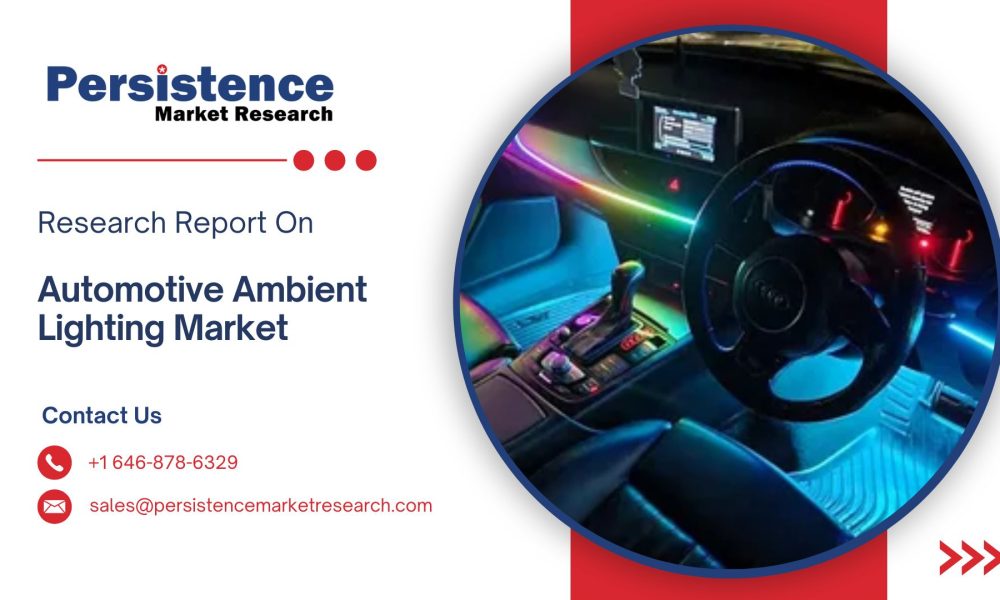
The global automotive ambient lighting market is witnessing unprecedented growth, driven by advancements in automotive design and increasing consumer preference for enhanced in-cabin experiences. According to Persistence Market Research, the market is projected to expand from US$ 4.6 billion in 2025 to US$ 11.7 billion by 2032, reflecting a remarkable CAGR of 9.6%. The rising demand for electric vehicles and premium cars with customizable interior aesthetics is contributing significantly to this upward trajectory.
Leading the market, the segment for LED-based ambient lighting is gaining traction due to its energy efficiency, longer lifespan, and flexibility in design integration. Geographically, North America remains the dominant region owing to strong automotive manufacturing capabilities, high disposable income, and early adoption of advanced technologies. Consumer preference for personalization and luxury features, coupled with stringent safety and environmental regulations, continues to drive the adoption of ambient lighting solutions.
Get | Download Sample Copy with TOC, Graphs & List of Figures @ https://www.persistencemarketresearch.com/samples/35214
Key Highlights from the Report
- The global automotive ambient lighting market is expected to grow at a CAGR of 9.6% from 2025 to 2032, reaching US$ 11.7 billion.
- LED-based ambient lighting holds the largest share due to energy efficiency and advanced customization options.
- North America dominates the market with strong automotive manufacturing infrastructure and technology adoption.
- Premium and electric vehicles are the leading end-users driving market expansion.
- Rising consumer demand for personalization and aesthetic appeal is a key growth driver.
- Asia Pacific shows potential for high growth due to rapid automotive production and increasing disposable income.
Market Segmentation
The automotive ambient lighting market can be segmented based on product type, including LED, fiber optic, electroluminescent, and other lighting technologies. Among these, LED lighting continues to dominate the market due to its versatility, low power consumption, and vibrant color options. Fiber optic lighting is witnessing steady growth, particularly in luxury vehicles, offering unique design flexibility and immersive lighting experiences. Electroluminescent lighting is preferred for smaller components and decorative elements due to its thin and flexible profile.
End-user segmentation encompasses passenger cars, commercial vehicles, and electric vehicles. Passenger cars, especially premium and luxury models, account for the majority of market share as automakers focus on enhancing cabin aesthetics and user experience. Electric vehicles are rapidly emerging as a significant segment, propelled by the increasing adoption of eco-friendly transportation and demand for modern, technology-driven interiors. Commercial vehicles are gradually adopting ambient lighting, mainly for driver comfort and premium fleet offerings.
Regional Insights
North America continues to lead the global automotive ambient lighting market. High adoption of advanced technologies, rising demand for luxury vehicles, and the presence of major automakers contribute to this leadership. U.S. consumers increasingly value vehicle personalization, and automakers are responding by integrating ambient lighting as standard or optional features.
In Asia Pacific, countries such as China, Japan, and India are driving market growth. Rapid automotive production, growing middle-class populations, and increased disposable income are encouraging automakers to introduce vehicles with enhanced interior features. While still developing, the region holds significant long-term growth potential due to the expanding electric vehicle market and rising consumer interest in premium aesthetics.
Market Drivers
The automotive ambient lighting market is propelled by several key drivers. Firstly, the increasing demand for luxury and premium vehicles is pushing automakers to adopt advanced interior features, including customizable lighting. Ambient lighting enhances the cabin experience, creating a sophisticated and visually appealing environment for drivers and passengers. Consumer preferences for personalization further amplify the adoption of these lighting solutions, especially in high-end passenger vehicles.
Secondly, technological advancements in LED and fiber optic lighting are making ambient lighting more accessible and versatile. Innovations such as color-changing LEDs, smart lighting systems, and integration with infotainment systems enable automakers to offer a unique and immersive user experience. The growing adoption of electric vehicles also complements this trend, as manufacturers aim to differentiate their interiors through visually striking lighting solutions.
For customization options before purchasing: https://www.persistencemarketresearch.com/request-customization/35214
Market Restraints
Despite robust growth, the automotive ambient lighting market faces certain restraints. The primary challenge lies in the high cost of advanced lighting systems, which can deter adoption among price-sensitive consumers. While premium and electric vehicles incorporate these features readily, lower-end segments may be slower to adopt due to budget constraints, limiting overall market penetration.
Additionally, technical challenges related to integration and compatibility with existing vehicle electronics pose obstacles. Automakers must ensure that ambient lighting systems do not interfere with safety features or cause excessive power consumption. Compliance with regional safety and environmental regulations can further complicate implementation, requiring manufacturers to invest in research and development to optimize product design and performance.
Market Opportunities
The automotive ambient lighting market offers significant opportunities, particularly in emerging economies and electric vehicle segments. Rising disposable income and urbanization in Asia Pacific present a lucrative market for automakers seeking to introduce premium features in affordable vehicles. Localized production and collaboration with regional suppliers can help companies tap into this growing consumer base efficiently.
The integration of smart and connected lighting solutions offers another major opportunity. Ambient lighting that interacts with driving modes, entertainment systems, and safety features can enhance the overall user experience and differentiate products in a competitive market. Additionally, advancements in sustainable and energy-efficient lighting technologies, such as low-power LEDs and recyclable materials, align with global environmental initiatives, creating new avenues for growth and innovation.
Frequently Asked Questions
- What are the main factors influencing the Automotive Ambient Lighting Market 2025-2032?
- Which companies are the major sources in this industry?
- What are the market’s opportunities, risks, and general structure?
- Which of the top Automotive Ambient Lighting Market 2025-2032 companies compare in terms of sales, revenue, and prices?
- How are market types and applications and deals, revenue, and value explored?
The key players studied in the report include:
Key players operating in the automotive ambient lighting market include:
- Robert Bosch GmbH
- Philips
- HELLA KGaA Hueck & Co.
- Grupo Antolin
- Valeo SA
- Koito Manufacturing Co. Ltd.
- Osram Licht AG
- Dräxlmaier Group
- General Electric
- Stanley Electric Co. Ltd.
Buy Now: https://www.persistencemarketresearch.com/checkout/3521
Recent developments:
- HELLA launched a next-generation LED ambient lighting system with customizable colors and smart control integration.
- Koito Manufacturing expanded its production facility in Japan to increase capacity for automotive interior lighting components.
Future Opportunities and Growth Prospects
The automotive ambient lighting market is poised for significant expansion beyond 2032. Continuous advancements in lighting technologies, growing consumer preference for personalization, and the rising adoption of electric vehicles will sustain market momentum. Emerging markets in Asia Pacific and Latin America present untapped potential, particularly with increased automotive production and urbanization.
Integration of smart lighting with connected vehicle technologies will enhance passenger experience and differentiate product offerings. Collaborations between automakers and lighting manufacturers can accelerate innovation in color customization, energy efficiency, and interactive lighting solutions. As sustainability becomes a key focus, eco-friendly lighting solutions will further drive adoption and support long-term growth.
The market is set to witness a harmonious blend of aesthetics, functionality, and technology, making automotive ambient lighting an integral feature in next-generation vehicles.




