
The global proton exchange membrane fuel cell market is gaining remarkable traction as industries and governments increasingly shift toward sustainable and zero-emission energy solutions. According to the latest analysis by Persistence Market Research, the market is projected to grow at an impressive CAGR of 16.5%, rising from US$3.7 billion in 2023 to US$11 billion by 2030. This growth is fueled by the growing demand for clean energy alternatives, the accelerating adoption of fuel cell electric vehicles (FCEVs), and ongoing investments in hydrogen infrastructure development.
Understanding the Proton Exchange Membrane Fuel Cell Market
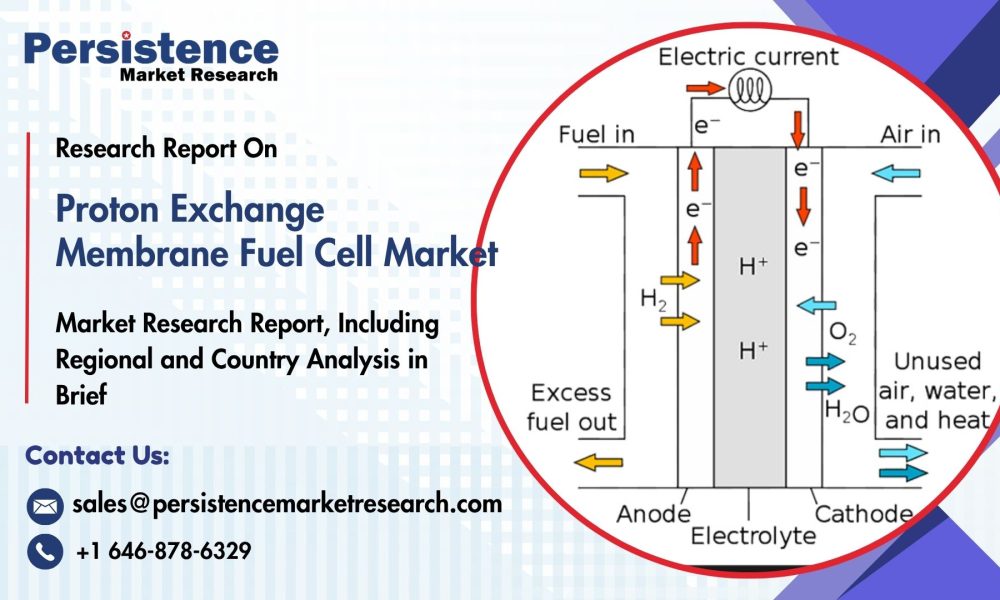
Proton exchange membrane fuel cells are a type of hydrogen fuel cell that convert chemical energy into electrical energy using a polymer electrolyte membrane. Unlike traditional combustion-based energy sources, PEM fuel cells generate electricity through an electrochemical reaction between hydrogen and oxygen, producing only water and heat as by-products. This makes them one of the cleanest and most efficient energy conversion technologies available today.
The increasing global emphasis on decarbonization and climate neutrality is driving the adoption of PEM fuel cells across various sectors. Governments around the world are promoting hydrogen-based technologies through subsidies, tax incentives, and strategic partnerships to reduce dependence on fossil fuels. The transportation industry, in particular, is emerging as a major end-user, as automakers focus on developing hydrogen-powered vehicles to complement battery electric models. Additionally, stationary power generation, backup power systems, and portable energy devices are also witnessing a rise in fuel cell integration.
Get a Sample PDF Brochure of the Report (Use Corporate Email ID for a Quick Response): https://www.persistencemarketresearch.com/samples/33664
Market Growth Drivers
Several key factors are propelling the rapid growth of the proton exchange membrane fuel cell market. One of the most influential drivers is the global push for cleaner and more sustainable energy sources. As countries aim to meet their net-zero emission goals by 2050, fuel cells are increasingly being recognized as a viable solution to reduce greenhouse gas emissions in both stationary and mobile applications.
Another crucial growth driver is the expanding hydrogen economy, supported by major investments in hydrogen production, storage, and distribution infrastructure. The scalability and high efficiency of PEM fuel cells make them suitable for diverse applications ranging from passenger cars to large-scale industrial power systems. In the automotive sector, leading manufacturers like Toyota, Hyundai, and Honda are actively integrating PEM fuel cell technology into their vehicle lineups, marking a significant shift toward hydrogen mobility.
The advancement in fuel cell materials and design is also enhancing the durability, performance, and cost-efficiency of PEM fuel cells. Innovations in catalysts, membrane electrode assemblies (MEA), and bipolar plates are improving fuel cell lifespans while reducing overall system costs. Moreover, the rise in collaborative research between private companies and public institutions is accelerating technological breakthroughs, paving the way for large-scale commercialization.
Key Market Restraints
Despite its promising growth, the PEM fuel cell market faces certain challenges that could hinder widespread adoption. The high cost of hydrogen production and storage remains a significant barrier. Although hydrogen is the most abundant element, producing it in a green and cost-effective manner requires advanced technologies like electrolysis powered by renewable energy sources. Until green hydrogen becomes economically viable, fuel cell deployment at scale may remain limited to niche or high-value applications.
Another restraint is the lack of a robust hydrogen refueling infrastructure, especially in developing economies. While developed regions such as Japan, South Korea, and parts of Europe are making progress in establishing hydrogen refueling networks, most regions still lack the necessary ecosystem to support hydrogen-powered mobility. Additionally, durability issues under high operating conditions and the complexity of integrating fuel cell systems into existing energy frameworks pose engineering and operational challenges.
However, with continuous R&D efforts and increasing government support for hydrogen technologies, these obstacles are gradually being addressed, signaling a positive outlook for the long term.
Emerging Market Opportunities
The future of the proton exchange membrane fuel cell market looks promising, with numerous opportunities emerging across industries. One of the most significant growth opportunities lies in the transportation sector, particularly in heavy-duty and long-haul vehicles where battery electric solutions face limitations due to weight and range constraints. PEM fuel cells, with their quick refueling capabilities and extended range, are ideal for trucks, buses, and commercial fleets.
The stationary power segment also presents strong growth potential. As industries increasingly seek reliable and decentralized power sources, fuel cells are being adopted for backup power, microgrids, and combined heat and power (CHP) applications. Moreover, military and defense sectors are exploring PEM fuel cells for portable power generation due to their quiet operation and high energy density.
Another major opportunity arises from increasing investments in green hydrogen projects. Countries like Germany, Japan, and Australia are at the forefront of hydrogen development, offering substantial funding to promote hydrogen-based technologies. These initiatives are expected to significantly expand the availability of hydrogen fuel, further supporting the growth of PEM fuel cells. The integration of renewable energy sources with fuel cell systems for grid balancing and storage applications also holds great promise for the market’s expansion.
Regional Insights
The Asia-Pacific region dominates the global proton exchange membrane fuel cell market, led by countries like Japan, South Korea, and China. Strong governmental backing, early technology adoption, and the presence of leading automotive and electronics manufacturers have positioned this region at the forefront of hydrogen innovation. Japan’s “Hydrogen Society” initiative and South Korea’s “Hydrogen Economy Roadmap” are two prime examples of national strategies driving the deployment of PEM fuel cells in transportation, residential, and industrial sectors.
Europe follows closely, driven by stringent emission regulations and large-scale clean energy initiatives under the European Green Deal. Germany and France are investing heavily in hydrogen infrastructure, while the European Union has committed to expanding hydrogen refueling networks and supporting research collaborations. The region is also seeing increased adoption of PEM fuel cells for stationary power applications, especially in decentralized and renewable-based systems.
In North America, the United States and Canada are investing in fuel cell research and development for both transportation and stationary energy solutions. The U.S. Department of Energy continues to support hydrogen and fuel cell technology through funding programs aimed at reducing costs and improving performance. Meanwhile, emerging regions like the Middle East and Latin America are gradually exploring hydrogen-based power generation as part of their long-term sustainability goals.
For Customized Insights on Segments, Regions, or Competitors, Request Personalized Purchase Options: https://www.persistencemarketresearch.com/request-customization/33664
Technological Advancements in PEM Fuel Cells
Continuous innovation is shaping the evolution of PEM fuel cells, making them more efficient and affordable. Recent advancements include the development of low-platinum and non-platinum catalysts, which help reduce material costs while maintaining performance. Similarly, new membrane materials with enhanced proton conductivity and temperature tolerance are improving system reliability and efficiency. Compact and modular fuel cell designs are making integration easier for various applications, from passenger vehicles to residential power systems.
The integration of digital monitoring and control systems is another significant leap forward. Smart fuel cell systems can now optimize energy output, track maintenance needs, and extend operational life through predictive analytics. These innovations are collectively driving the commercialization of PEM fuel cells on a global scale.
Company Insights
✦ Ballard Power Systems Inc.
✦ Plug Power Inc.
✦ Bloom Energy Corporation
✦ Cummins Inc.
✦ Hydrogenics Corporation
✦ Toyota Motor Corporation
✦ Panasonic Corporation
✦ Doosan Fuel Cell Co. Ltd.
✦ Intelligent Energy Limited
✦ Nedstack Fuel Cell Technology BV
These companies are at the forefront of innovation, focusing on improving fuel cell efficiency, reducing production costs, and expanding commercial deployment. Strategic partnerships and joint ventures between technology providers and automotive manufacturers are expected to accelerate market growth further.
Future Outlook
The proton exchange membrane fuel cell market is poised for dynamic expansion as global efforts toward clean energy intensify. By 2030, PEM fuel cells are expected to play a pivotal role in the transition to a hydrogen-powered economy, offering sustainable solutions for transportation, industrial energy, and power generation. The combined efforts of governments, private enterprises, and research institutions are steering the industry toward achieving cost parity with conventional energy sources.
While challenges persist, such as high capital costs and limited refueling infrastructure, ongoing innovation and policy support are expected to overcome these barriers. As green hydrogen production scales up and costs continue to decline, PEM fuel cells will become increasingly accessible, efficient, and central to the world’s decarbonization efforts.
In conclusion, the proton exchange membrane fuel cell market represents one of the most promising frontiers in clean energy innovation. With a projected value of US$11 billion by 2030 and a CAGR of 16.5%, the market is set to redefine how industries and societies generate and consume energy in the coming decade—ushering in a new era of sustainable, hydrogen-based power solutions.
Explore the Latest Trending Research Reports:
About Persistence Market Research:
At Persistence Market Research, we specialize in creating research studies that serve as strategic tools for driving business growth. Established as a proprietary firm in 2012, we have evolved into a registered company in England and Wales in 2023 under the name Persistence Research & Consultancy Services Ltd. With a solid foundation, we have completed over 3600 custom and syndicate market research projects, and delivered more than 2700 projects for other leading market research companies’ clients.
Our approach combines traditional market research methods with modern tools to offer comprehensive research solutions. With a decade of experience, we pride ourselves on deriving actionable insights from data to help businesses stay ahead of the competition. Our client base spans multinational corporations, leading consulting firms, investment funds, and government departments. A significant portion of our sales comes from repeat clients, a testament to the value and trust we’ve built over the years.
Contact Us:
Persistence Market Research
G04 Golden Mile House, Clayponds Lane
Brentford, London, TW8 0GU UK
USA Phone: +1 646-878-6329
UK Phone: +44 203-837-5656
Email: [email protected]
Web: https://www.persistencemarketresearch.com




