
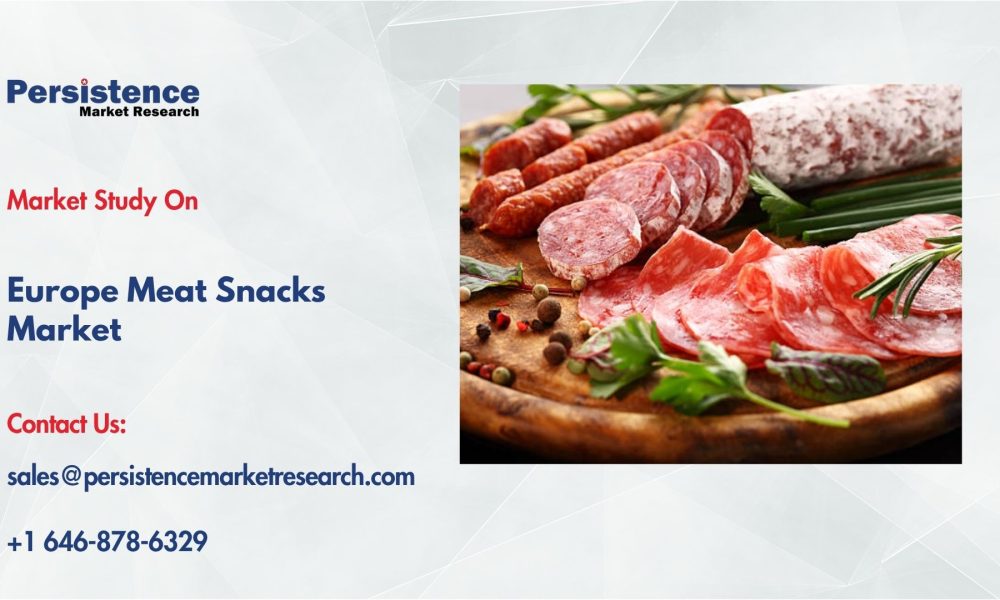
The Europe meat snacks market is set for substantial expansion over the next decade, fueled by evolving consumer preferences and the rising popularity of high-protein, ready-to-eat food options. The market is anticipated to reach a valuation of US$ 3,418.3 Mn in 2025 and is projected to grow at a compound annual growth rate (CAGR) of 8.2% from 2025 to 2032, achieving a total market value of US$ 5,947.1 Mn by 2032.
The growing inclination toward healthy snacking habits, combined with an increasing focus on protein intake, has significantly contributed to the strong market outlook. Consumers across Europe are shifting from traditional carbohydrate-based snacks to protein-rich meat snacks, including jerky, sticks, sausages, and bars, which offer both convenience and nutritional benefits. Additionally, the expanding retail network, coupled with the proliferation of e-commerce platforms, has further enhanced market accessibility.
Lifestyle changes, particularly the increase in on-the-go consumption, are also propelling the demand for packaged, shelf-stable, and portion-controlled meat snack products. Moreover, innovations in flavor profiles, meat processing technologies, and the introduction of premium organic and sustainable meat sources are key factors shaping the industry’s future trajectory.
What factors are driving the growth of the Europe meat snacks market?
The market is primarily driven by the increasing demand for protein-based convenient foods, growing consumer awareness regarding health and fitness, and rising disposable incomes across the region. The expansion of organized retail, introduction of innovative meat-based snack formats, and growing preference for natural and minimally processed products are further fueling the market’s upward trend.
Receive Sample of Research Report @ https://www.persistencemarketresearch.com/samples/35137
Segmentation Analysis
By Type
The Europe meat snacks market is segmented into jerky, sticks, sausages, bars, and others. Among these, jerky holds the largest market share, owing to its wide availability, long shelf life, and high protein content. Beef jerky remains particularly popular among consumers seeking low-fat, nutrient-dense snack options.
Meanwhile, the meat sticks segment is expected to register the fastest growth during the forecast period, driven by rising demand among younger consumers and athletes seeking quick, portable, and high-energy food solutions. The segment benefits from continuous product diversification, such as the introduction of poultry-based and low-sodium variants.
By Product Type
Under product type, the market is classified into beef, pork, poultry, and others. Beef-based snacks dominate the regional market due to their strong consumer appeal, premium positioning, and nutritional advantages. However, the poultry segment is witnessing rapid growth as consumers increasingly seek lean protein alternatives with lower fat content.
The growing popularity of turkey and chicken snacks, supported by their versatility and cost-effectiveness, is reshaping product portfolios across manufacturers. Additionally, the inclusion of exotic meats, such as venison or wild boar, in artisanal snack ranges reflects a rising trend toward premiumization in the category.
By Distribution Channel
Based on distribution channels, the market is segmented into supermarkets/hypermarkets, convenience stores, online retail, and specialty stores. Supermarkets and hypermarkets remain the most dominant distribution channels, accounting for a significant market share in 2025, driven by consumers’ preference for in-store product sampling and variety.
However, online retail is poised to be the fastest-growing channel during the forecast period, supported by the rise of digital shopping habits, direct-to-consumer sales models, and subscription-based snack boxes. The pandemic-driven surge in e-commerce adoption has permanently altered buying behavior, leading to increased accessibility for niche and premium meat snack brands across Europe.
Regional Insights
Geographically, the Europe meat snacks market demonstrates strong performance across major economies such as the United Kingdom, Germany, France, Italy, and Spain. The United Kingdom dominates the regional market in 2025, driven by a well-established snack culture, higher per capita meat consumption, and continuous innovation from domestic and international brands.
Germany follows closely, fueled by consumer preference for high-quality, protein-enriched snacks and the country’s strong meat processing industry. Meanwhile, France and Italy are experiencing increasing adoption of gourmet and premium meat snack variants, particularly in urban centers.
The fastest-growing region is expected to be Eastern Europe, led by rising urbanization, increasing disposable incomes, and a growing appetite for Western-style snacking habits. Countries such as Poland and the Czech Republic are emerging as promising markets, offering lucrative opportunities for new entrants and established brands seeking regional expansion.
Unique Features and Innovations in the Market
Modern meat snacks in Europe are characterized by innovation, sustainability, and premiumization. Manufacturers are focusing on cleaner ingredient labels, natural preservatives, and reduced sodium content to cater to the health-conscious demographic. The incorporation of AI and data analytics in supply chain management and production optimization is helping manufacturers predict consumer preferences and streamline inventory efficiently.
Furthermore, smart packaging technologies, such as oxygen-absorbing packs and freshness indicators, are extending product shelf life while maintaining flavor integrity. Innovations in flavoring and marination techniques—including global fusion flavors like teriyaki, chili-lime, and barbecue—are attracting diverse consumer segments.
Sustainability remains a core focus, with producers adopting ethically sourced meat and eco-friendly packaging materials. Brands are increasingly communicating transparency regarding animal welfare practices and carbon footprint reduction, aligning with the evolving ethical values of European consumers.
Market Highlights
Businesses across Europe are increasingly adopting meat snacks as a profitable product category due to their versatility, strong shelf presence, and consistent consumer demand. The rise of high-protein diets such as keto and paleo has further boosted sales, making meat snacks a preferred choice among fitness enthusiasts and health-oriented consumers.
The market also benefits from regulatory support promoting protein-rich foods and innovations in meat processing technologies that enhance safety and taste. Sustainability initiatives, including the reduction of food waste through efficient portion control and recyclable packaging, are also gaining traction. Moreover, the cost-effectiveness of dried and cured meat snacks compared to fresh alternatives contributes to their widespread acceptance.
Do You Have Any Query or Specific Requirement? Request Customization of Report: https://www.persistencemarketresearch.com/request-customization/35137
Key Players and Competitive Landscape
The Europe meat snacks market features a competitive landscape dominated by both multinational corporations and regional producers. Leading companies are focusing on product innovation, mergers, and regional expansion to strengthen their foothold.
Jack Link’s remains one of the most prominent players, continuously expanding its product portfolio with new flavors and sustainable packaging initiatives. The company’s strategic marketing campaigns have successfully positioned its products as both nutritious and convenient snacking options.
Conagra Brands, Inc., through its Slim Jim brand, is capitalizing on the growing demand for high-protein and portable snack solutions. The company’s focus on innovative packaging and product reformulation to reduce artificial additives has resonated with modern consumers.
Mondelez International has expanded its snacking portfolio by integrating meat-based products alongside traditional confectionery and baked goods, reflecting a diversified strategy to tap into health-conscious segments.
PepsiCo, Inc. is leveraging its strong distribution network to promote meat-based snacks under its Frito-Lay division, combining convenience with global reach. Similarly, Nestlé S.A. is exploring hybrid snack products that blend plant-based ingredients with traditional meat proteins, catering to flexitarian consumers.
Regional brands such as Greendog Snacks, Biltong Factory, and The Meat Makers are contributing to the market’s dynamism through artisanal and locally sourced products. These players emphasize authenticity, transparency, and sustainability to attract discerning consumers seeking premium experiences.
Outlook
The future of the Europe meat snacks market appears promising, with strong growth opportunities emerging across multiple segments. The continued adoption of technology-driven production, including automation, predictive analytics, and digital traceability, will redefine efficiency and quality standards.
The rising influence of health and wellness trends, coupled with innovations in packaging and sustainability, will shape product development strategies. Additionally, evolving regulatory frameworks concerning food labeling, transparency, and sustainability will encourage manufacturers to adopt cleaner and more ethical production processes.
As urban lifestyles continue to evolve, demand for convenient, protein-rich, and flavorful snacks will remain robust. The market’s trajectory suggests a blend of tradition and innovation, where heritage meat products meet modern-day dietary and environmental considerations. By 2032, Europe’s meat snacks industry is expected to establish itself as a cornerstone of the regional snacking economy, appealing to a wide spectrum of consumers across age groups and lifestyles.
Explore the Latest Trending Research Reports:




