
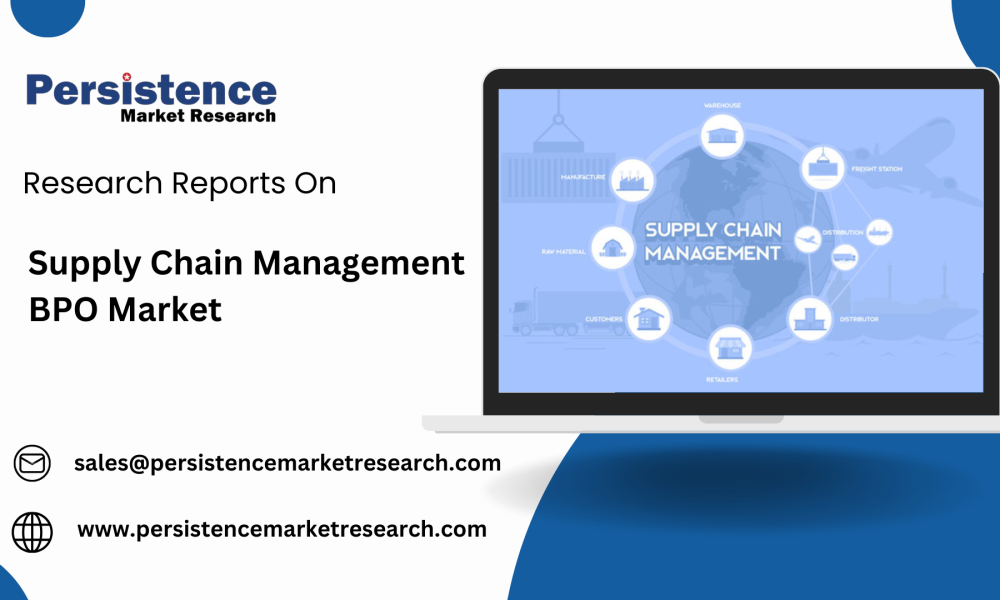
In today’s globalized economy, supply chains have evolved from linear production lines into complex, interconnected networks that span multiple continents. Managing such vast operations demands advanced technologies, deep expertise, and constant innovation. For many organizations, the answer lies in Business Process Outsourcing (BPO)—a strategic approach that allows them to delegate non-core supply chain functions to specialized service providers.
The global supply chain management BPO market is poised for substantial expansion, projected to grow at a CAGR of 8.6% from 2025 to 2032. The market value is expected to surge from US$ 32.5 billion in 2025 to US$ 58 billion by 2032, marking a robust shift toward operational agility and strategic outsourcing. This growth underscores the increasing reliance on third-party partners to optimize logistics, procurement, inventory, and demand planning.
What Is Supply Chain Management BPO?
Supply Chain Management Business Process Outsourcing (SCM BPO) involves entrusting third-party service providers with the responsibility of managing key supply chain operations. These include procurement, logistics, inventory control, demand forecasting, supplier management, and transportation.
By leveraging the expertise, infrastructure, and digital capabilities of BPO providers, companies can achieve greater efficiency, scalability, and visibility across their supply chains. Essentially, SCM BPO transforms traditional supply chains into data-driven ecosystems that are responsive, resilient, and adaptable to market fluctuations.
The outsourcing model also enables companies to focus on their core competencies—such as product innovation and customer engagement—while leaving the operational complexities of the supply chain to experienced professionals.
Key Drivers of Market Growth
- Rising Supply Chain Complexity
Globalization has exponentially increased the number of suppliers, partners, and distribution channels involved in product delivery. The challenge of coordinating across borders, complying with regional regulations, and mitigating risks has made internal management highly resource-intensive.
BPO providers bring domain expertise, global reach, and advanced tools that simplify this complexity. Their ability to handle multi-modal logistics, customs compliance, and supplier risk management is invaluable for companies seeking smooth global operations.
- Digital Transformation and Automation
Technologies like artificial intelligence (AI), machine learning (ML), blockchain, and robotic process automation (RPA) are revolutionizing supply chain operations. BPO firms are leveraging these technologies to offer real-time tracking, predictive analytics, and process automation, leading to enhanced decision-making and reduced errors.
Digitally integrated BPO services empower companies with end-to-end supply chain visibility, allowing them to react swiftly to disruptions and optimize inventory levels dynamically.
- Cost Optimization and Operational Efficiency
Outsourcing supply chain functions reduces overhead costs by minimizing the need for in-house infrastructure, technology investments, and specialized labor. BPO providers achieve economies of scale through centralized operations and shared resources, translating into cost savings for clients.
Moreover, companies can redirect their internal resources toward strategic initiatives such as innovation, sustainability, and customer experience—further boosting long-term competitiveness.
- Focus on Core Business Activities
As competition intensifies across industries, businesses are increasingly prioritizing core value creation. Outsourcing allows organizations to focus on their strategic differentiators while delegating routine, non-core operations such as procurement, logistics coordination, and supplier audits to external experts.
- Growing Demand for Resilience and Risk Management
The COVID-19 pandemic exposed the vulnerabilities of global supply chains, emphasizing the need for agility and contingency planning. SCM BPO providers help companies enhance supply chain resilience through advanced analytics, diversified sourcing strategies, and contingency planning frameworks—helping mitigate disruptions from geopolitical tensions, climate events, or transportation delays.
Elevate your business strategy with comprehensive market data. Request a sample report now: https://www.persistencemarketresearch.com/samples/33666
Market Segmentation Analysis
The global Supply Chain Management BPO market can be segmented based on service type, industry vertical, and region.
By Service Type
- Procurement Outsourcing: Involves vendor selection, negotiation, and supplier performance monitoring.
- Logistics Management: Covers freight forwarding, transportation, and warehousing operations.
- Inventory and Demand Planning: Focuses on optimizing inventory levels and improving demand forecasting accuracy.
- Order Management and Fulfillment: Enhances customer satisfaction through seamless order processing and delivery tracking.
Among these, logistics and procurement outsourcing currently hold the largest share, owing to their critical role in reducing operational costs and ensuring timely delivery.
By Industry Vertical
- Manufacturing
- Retail & E-commerce
- Healthcare & Pharmaceuticals
- Automotive
- Consumer Goods
- Technology and Electronics
The manufacturing and retail sectors are major contributors to market growth, driven by complex supplier networks and the growing importance of omnichannel logistics.
By Region
- North America: A mature market driven by the presence of established BPO players and advanced digital infrastructure.
- Europe: Witnessing increased outsourcing due to sustainability mandates and efficiency-driven reforms.
- Asia Pacific: Expected to dominate the market during the forecast period, fueled by cost advantages, rapid industrialization, and strong BPO hubs in India and the Philippines.
- Latin America and Middle East & Africa: Emerging regions with rising adoption of digital logistics and nearshoring strategies.
Technological Innovations Reshaping SCM BPO
The integration of next-generation technologies is transforming the supply chain management BPO landscape.
Artificial Intelligence and Predictive Analytics
AI-powered analytics help BPO providers forecast demand, optimize routes, and detect potential supply disruptions before they occur. Predictive modeling ensures better decision-making and enhanced resource utilization.
Blockchain for Transparency
Blockchain enables secure and immutable tracking of goods across the supply chain. It enhances traceability, builds trust among stakeholders, and reduces fraud—particularly in sectors such as pharmaceuticals and food & beverages.
Internet of Things (IoT) and Real-Time Monitoring
IoT-enabled sensors provide real-time visibility into inventory levels, shipment status, and environmental conditions. This data-driven approach enhances reliability and allows BPOs to offer proactive management solutions.
Cloud-Based Platforms
Cloud technologies facilitate seamless data integration, collaboration, and scalability across global networks. Cloud-enabled SCM platforms also ensure data accessibility, enabling faster and more accurate decision-making.
Competitive Landscape
The supply chain management BPO market is characterized by the presence of global giants and specialized niche providers. Companies compete on service innovation, technological integration, and geographic reach.
Prominent players include:
- Accenture Plc
- IBM Corporation
- Tata Consultancy Services (TCS)
- Capgemini SE
- Genpact Limited
- Infosys BPM
- Wipro Limited
- DHL Supply Chain
- XPO Logistics
- Li & Fung Limited
These providers focus on end-to-end digital supply chain solutions, AI-driven analytics, and sustainability-focused outsourcing models to enhance value delivery. Strategic partnerships, mergers, and acquisitions are common as players expand their global presence and service portfolios.
Challenges and Restraints
Despite its promising growth trajectory, the SCM BPO market faces several challenges:
- Data Security and Privacy Concerns: As outsourcing involves sharing sensitive supply chain data, cybersecurity remains a key concern.
- Vendor Dependency Risks: Overreliance on third-party providers can limit operational control and agility.
- Integration Challenges: Aligning external BPO systems with in-house technologies can be complex and time-consuming.
- Regulatory Compliance: Adhering to international trade laws and data protection regulations adds another layer of complexity for global operations.
BPO providers are responding by strengthening cybersecurity frameworks, adopting compliance-driven models, and offering transparent governance structures to build client confidence.
Future Outlook: Toward Intelligent, Sustainable Supply Chains
The future of the Supply Chain Management BPO market lies in intelligent automation, strategic partnerships, and sustainability. As businesses embrace ESG (Environmental, Social, and Governance) principles, BPO providers are integrating green logistics, carbon tracking, and ethical sourcing practices into their service offerings.
The rise of Industry 4.0, characterized by connected factories and smart logistics, will further amplify the role of SCM BPO. Service providers equipped with advanced analytics, AI-powered planning tools, and blockchain-enabled transparency will become indispensable partners for global enterprises.
Moreover, as nearshoring and regional diversification gain traction, BPO hubs in emerging economies such as India, Vietnam, and Mexico will play a pivotal role in reshaping global supply chain ecosystems.
Conclusion
The global supply chain management BPO market is at a transformative inflection point. As organizations strive to build agile, resilient, and sustainable supply networks, outsourcing has emerged as a strategic enabler. With market revenues projected to grow from US$ 32.5 billion in 2025 to US$ 58 billion by 2032, at a CAGR of 8.6%, the future looks promising.
By harnessing the power of technology, analytics, and specialized expertise, supply chain management BPO providers are redefining how businesses operate in an interconnected world. The focus is no longer just on cost savings—it’s about unlocking strategic value, operational excellence, and supply chain intelligence that drive long-term growth and resilience.
In the years ahead, companies that adopt a collaborative and digital-first outsourcing approach will not only navigate global disruptions more effectively but also emerge as leaders in the new era of supply chain innovation.
Related Reports:




