
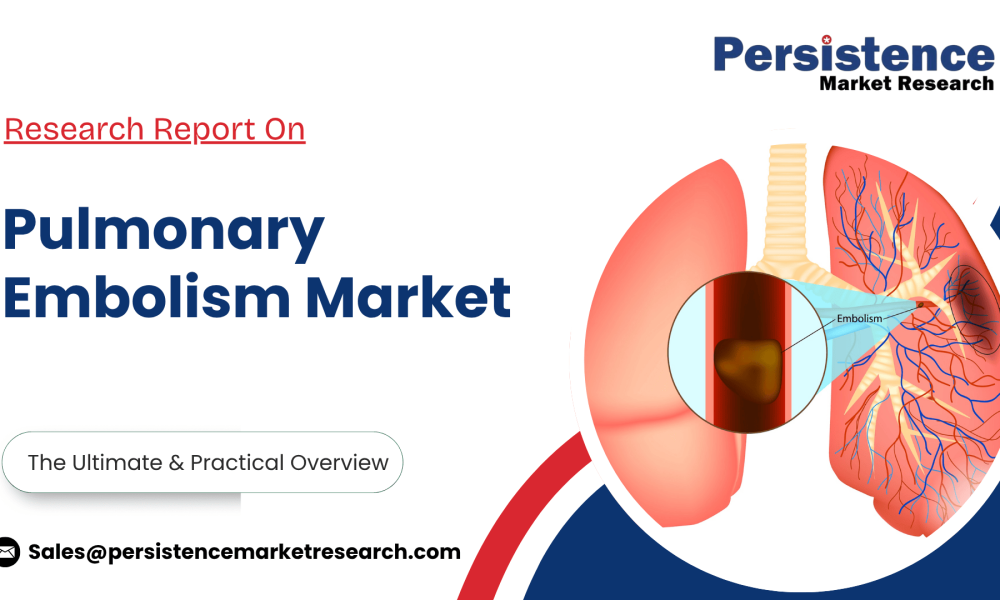
The global pulmonary embolism (PE) market is experiencing significant growth, driven by increasing prevalence rates and advances in diagnostic and treatment methods. The market, estimated to reach USD 1.5 billion in 2024, is projected to expand to USD 3.5 billion by the end of 2031, growing at a compound annual growth rate (CAGR) of 8.1% from 2024 to 2031. This market growth can be attributed to factors such as the rising number of patients at risk, technological advancements in diagnostics, and the development of more effective treatment options.
Key Industry Highlights
Pulmonary embolism, a blockage of the pulmonary arteries usually caused by blood clots, is a major cardiovascular disorder with high morbidity and mortality rates, especially in vulnerable populations such as the elderly. The market has seen growing interest in next-generation therapeutic options, particularly those that minimize the risk of bleeding and improve patient outcomes. At the same time, technological advancements in diagnostics, including imaging and catheter-based treatments, are enhancing the accuracy and speed of pulmonary embolism detection and management.
Get a Sample Copy of Research Report (Use Corporate Mail id for Quick Response): https://www.persistencemarketresearch.com/samples/34496
Market Dynamics
Drivers
Several factors are contributing to the expansion of the pulmonary embolism market. Chief among them is the rising prevalence of conditions that predispose individuals to PE, particularly cancer, obesity, and chronic cardiovascular diseases. As cancer rates increase globally, the incidence of PE among cancer patients receiving chemotherapy is expected to rise, as cancer treatments can significantly increase the risk of developing blood clots. According to the World Health Organization (WHO), nearly 10 million deaths were attributed to cancer in 2020, with that number likely to increase in the coming years, further fueling demand for PE treatments.
Another key driver is the growing healthcare expenditure worldwide. Rising investments in healthcare infrastructure are enabling hospitals and clinics to adopt more advanced diagnostic tools and treatment options. The availability of specialized diagnostic equipment, such as CT pulmonary angiography (CTPA), and advancements in minimally invasive procedures are making PE treatments more accessible and effective.
Restraints
Despite the growth prospects, several challenges hinder the pulmonary embolism market’s full potential. A significant barrier is the lack of awareness about the causes, symptoms, and available treatments for PE. Many patients are unaware of the risks until they experience severe symptoms, which often leads to delayed diagnosis and treatment. Additionally, healthcare professionals may sometimes overlook PE due to its symptoms overlapping with other cardiovascular disorders, contributing to delayed intervention.
The high cost of treatment, especially for advanced medications and surgical procedures, is another key restraint. The expensive nature of drugs and treatments poses a challenge for healthcare systems, particularly in low- and middle-income countries. Moreover, the cost of managing long-term anticoagulation therapy and monitoring in outpatient settings can strain both patients and healthcare providers.
Opportunities
The increasing investment in research and development (R&D) focused on PE, as well as related cardiovascular conditions, presents a significant market opportunity. Advances in personalized medicine, aimed at tailoring treatments to individual patients, are creating new avenues for more effective management of PE. Additionally, the approval of new drugs and devices, such as novel anticoagulants with fewer side effects and improved efficacy, is likely to support market growth.
There is also a growing opportunity in the telemedicine space. The rise of remote patient monitoring and telehealth services has enabled better follow-up care for PE patients, improving patient outcomes while reducing the need for frequent hospital visits.
Category-wise Analysis
Symptom-based Segmentation: Shortness of Breath as a Primary Indicator
Shortness of breath is the most commonly observed symptom of pulmonary embolism, affecting a large percentage of patients. Given that PE symptoms often overlap with other conditions, such as heart attacks or pneumonia, patients experiencing sudden or worsening shortness of breath are typically advised to undergo further diagnostic procedures.
Other symptoms, such as chest pain, cough, or leg swelling, are also associated with PE but are less definitive. The prominence of shortness of breath as a symptom highlights the importance of rapid diagnostic processes in mitigating risks and ensuring timely interventions.
Diagnostic Tools: CTPA Dominates the Market
CT pulmonary angiography (CTPA) remains the gold standard for diagnosing pulmonary embolism due to its high accuracy and speed. CTPA provides detailed imaging of blood vessels in the lungs, allowing healthcare professionals to quickly identify blood clots and make timely treatment decisions. The procedure is relatively non-invasive compared to alternatives such as pulmonary angiography, thus minimizing patient discomfort.
Other diagnostic methods, such as the ventilation-perfusion (V/Q) scan and D-Dimer tests, are also used in diagnosing PE, depending on the patient’s symptoms and history. However, CTPA’s dominance in the market is expected to continue, owing to its precise diagnostic capabilities and quick turnaround times.
Treatment Segment: Medications Lead the Way
Medications, particularly anticoagulants (blood thinners), are the most common treatment option for pulmonary embolism. These drugs prevent the formation of new clots and help dissolve existing clots. The growing use of novel anticoagulants with reduced bleeding risks is likely to continue driving market growth.
Mechanical devices, such as thrombolysis catheters, and surgical interventions for more severe cases of PE are also gaining traction. These treatments cater to high-risk patients who require more immediate or invasive measures. However, medications remain the most widely used form of treatment, especially for the long-term management of PE.
End-user Segmentation: Hospitals at the Forefront
Hospitals are the largest end-user category in the pulmonary embolism market, as the majority of PE patients require hospitalization for accurate diagnosis, intensive monitoring, and initial treatment. Hospitals have the infrastructure, specialists, and medical technologies required for managing complex PE cases, including those that involve high-risk patients.
Additionally, hospital pharmacies play a key role in distributing PE medications. These pharmacies often stock a wide range of drugs, ensuring that patients receive appropriate treatment based on the severity of their condition. Retail pharmacies are expected to emerge as a growing segment, particularly as outpatient management of PE becomes more common.
Request for Customization of the Research Report: https://www.persistencemarketresearch.com/request-customization/34496
Regional Insights
North America Leads the Global Market
North America holds the largest share of the global pulmonary embolism market. This is primarily due to the region’s well-developed healthcare infrastructure, high per capita healthcare expenditure, and the growing prevalence of chronic diseases such as obesity and cardiovascular conditions. The presence of major pharmaceutical and medical device companies headquartered in North America further strengthens the region’s dominance in the market.
Europe and Asia-Pacific Follow Closely
Europe and the Asia-Pacific regions are also expected to witness significant market growth, albeit at a slightly slower pace compared to North America. In Europe, advancements in healthcare systems and increasing awareness about pulmonary embolism are likely to boost market opportunities. Meanwhile, in the Asia-Pacific region, improving healthcare access and increasing healthcare investments are expected to drive market growth, particularly in emerging markets like India and China.
Competitive Landscape
The competitive landscape of the pulmonary embolism market is marked by the presence of several prominent players, including Bayer AG, Johnson & Johnson, Boehringer Ingelheim, and Pfizer. These companies lead the market through strategic mergers, acquisitions, and the development of innovative products. They also invest heavily in R&D to introduce next-generation therapies and diagnostic devices, ensuring they stay ahead of the competition.
Other notable players include Bristol-Myers Squibb, Amgen, and Medtronic, who are also actively involved in PE treatments and diagnostics. These companies are working on improving treatment outcomes by developing new anticoagulants and exploring minimally invasive treatment methods, such as catheter-directed thrombolysis and endovascular procedures.
Recent Developments
Recent advancements in the PE treatment landscape include the successful use of catheter-directed thrombolysis (CDT) for the dissolution of blood clots. In May 2024, a groundbreaking procedure was performed in India using AI-powered catheters to treat PE with minimal complications and faster recovery times.
Similarly, in early 2024, AngioDynamics’ AlphaVac device received positive results in clinical trials, proving to be highly effective in treating acute pulmonary embolism and improving heart function in patients.
Future Outlook
The pulmonary embolism market is poised for significant growth in the coming years, driven by increased awareness, advancements in diagnostic techniques, and the development of new, more effective treatments. The continued rise of telemedicine and personalized treatment options further strengthens the market outlook. As healthcare systems around the world invest more in PE management, both the demand for innovative treatments and the adoption of cutting-edge diagnostic tools are set to increase.
In conclusion, the global pulmonary embolism market is on a positive growth trajectory. With technological advancements and a deeper focus on patient-centered care, the market is expected to deliver improved outcomes for patients and healthcare providers alike in the coming years.




