
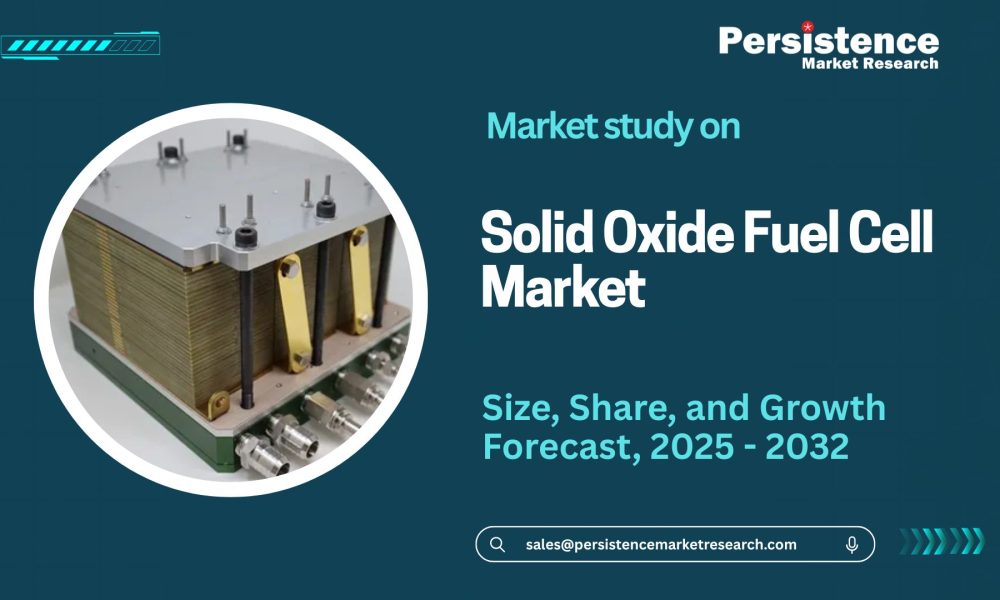
The global Solid Oxide Fuel Cells market energy landscape is undergoing a significant transformation, with a growing emphasis on sustainable and efficient power generation technologies. Among the most promising innovations is the Solid Oxide Fuel Cell (SOFC), a device that converts chemical energy directly into electrical energy through electrochemical reactions. This article delves into the SOFC market’s current state, growth projections, technological advancements, applications, and regional dynamics.
Solid Oxide Fuel Cells are high-efficiency, low-emission power generation devices that operate at elevated temperatures, typically between 600°C and 1,000°C. Unlike conventional combustion-based power generation methods, SOFCs produce electricity through electrochemical reactions without combustion, leading to higher efficiency and lower emissions.
Get a Sample Copy of Research Report (Use Corporate Mail id for Quick Response): https://www.persistencemarketresearch.com/samples/33670
Key Components and Operation
An SOFC consists of three primary components:
- Anode: The negative electrode where the fuel (often hydrogen or natural gas) is oxidized.
- Cathode: The positive electrode where oxygen is reduced.
- Electrolyte: A solid ceramic material that conducts oxygen ions from the cathode to the anode.
The operation involves the following steps:
- Fuel Introduction: Hydrogen or natural gas is supplied to the anode.
- Electrochemical Reaction: At the anode, the fuel reacts with oxygen ions from the cathode to produce electricity, water, and heat.
- Energy Output: The generated electricity is used to power devices or systems, while the heat can be utilized for cogeneration purposes.
Market Overview and Growth Projections
The global SOFC market is experiencing rapid growth, driven by the increasing demand for clean and efficient energy solutions. According to Persistence Market Research, the market is projected to expand at a compound annual growth rate (CAGR) of 27.9%, increasing from a value of US$ 2.8 billion in 2025 to US$ 16.1 billion by the end of 2032.
This growth is attributed to several factors:
- Rising Energy Demand: The global increase in energy consumption necessitates the development of more efficient power generation technologies.
- Environmental Concerns: Growing awareness about environmental issues is pushing industries and governments towards cleaner energy solutions.
- Technological Advancements: Innovations in SOFC technology are enhancing performance and reducing costs, making them more attractive for various applications.
Applications of Solid Oxide Fuel Cells
SOFCs are versatile and can be utilized in various sectors, including:
- Stationary Power Generation
SOFCs are increasingly used in stationary applications such as:
- Residential Power Systems: Providing reliable and efficient electricity for homes.
- Commercial and Industrial Applications: Supplying power to businesses and manufacturing facilities.
- Combined Heat and Power (CHP) Systems: Utilizing the waste heat from SOFCs for heating purposes, improving overall efficiency.
- Transportation
While less common, SOFCs are being explored for use in transportation, including:
- Electric Vehicles (EVs): Offering a clean alternative to traditional internal combustion engines.
- Aerospace Applications: Providing power for aircraft systems.
- Portable Power Systems
SOFCs are also being developed for portable applications, such as:
- Military Equipment: Supplying power to remote or mobile units.
- Consumer Electronics: Offering longer battery life for devices like laptops and smartphones.
Technological Innovations
Recent advancements in SOFC technology are focused on improving efficiency, reducing costs, and expanding fuel flexibility. Key innovations include:
- Advanced Materials: Development of new materials for electrodes and electrolytes to enhance performance and durability.
- System Integration: Designing SOFC systems that can be easily integrated into existing infrastructure.
- Fuel Flexibility: Enabling SOFCs to operate on a variety of fuels, including hydrogen, natural gas, and biogas.
Regional Market Dynamics
The adoption of SOFC technology varies across different regions, influenced by factors such as energy policies, infrastructure, and market demand.
North America
- United States: The U.S. is a leader in SOFC development, with significant investments in research and development. Government incentives and a strong industrial base support the growth of SOFC technology.
- Canada: Canada’s focus on clean energy solutions has led to increased interest in SOFCs, particularly in remote and off-grid applications.
Europe
- Germany: Germany’s commitment to renewable energy and energy efficiency has driven the adoption of SOFC technology.
- United Kingdom: The UK is exploring SOFCs for both residential and industrial applications, aiming to reduce carbon emissions.
Asia-Pacific
- Japan: Japan is at the forefront of SOFC research, with several companies developing commercial SOFC systems.
- China: China’s large-scale energy needs and focus on reducing pollution make SOFCs an attractive option.
- India: India’s growing energy demand and interest in sustainable solutions are fostering the development of SOFC technology.
Rest of the World
- Middle East: The Middle East’s vast natural gas resources provide a potential fuel source for SOFCs, supporting their adoption in power generation.
- Africa: While adoption is currently limited, Africa’s energy challenges present opportunities for SOFCs in off-grid and renewable energy applications.
Challenges and Opportunities
Challenges
- High Initial Costs: The cost of SOFC systems remains a barrier to widespread adoption.
- Material Durability: The high operating temperatures can lead to material degradation over time.
- Infrastructure Requirements: The need for specialized infrastructure can limit deployment in certain areas.
Opportunities
- Government Support: Policies promoting clean energy can accelerate the adoption of SOFC technology.
- Technological Advancements: Ongoing research and development can lead to cost reductions and performance improvements.
- Market Expansion: Emerging markets present new opportunities for SOFC deployment.
Future Outlook
The future of the SOFC market appears promising, with continued growth expected across various applications and regions. Ongoing advancements in technology, coupled with supportive policies and increasing environmental awareness, are likely to drive the adoption of SOFCs in the coming years.
Conclusion
Solid Oxide Fuel Cells represent a transformative technology in the quest for sustainable and efficient energy solutions. With their high efficiency, low emissions, and versatility, SOFCs are poised to play a significant role in the future energy landscape. As research and development continue to advance, and as global demand for clean energy solutions grows, the SOFC market is set to expand, offering new opportunities for industries and consumers alike.




