
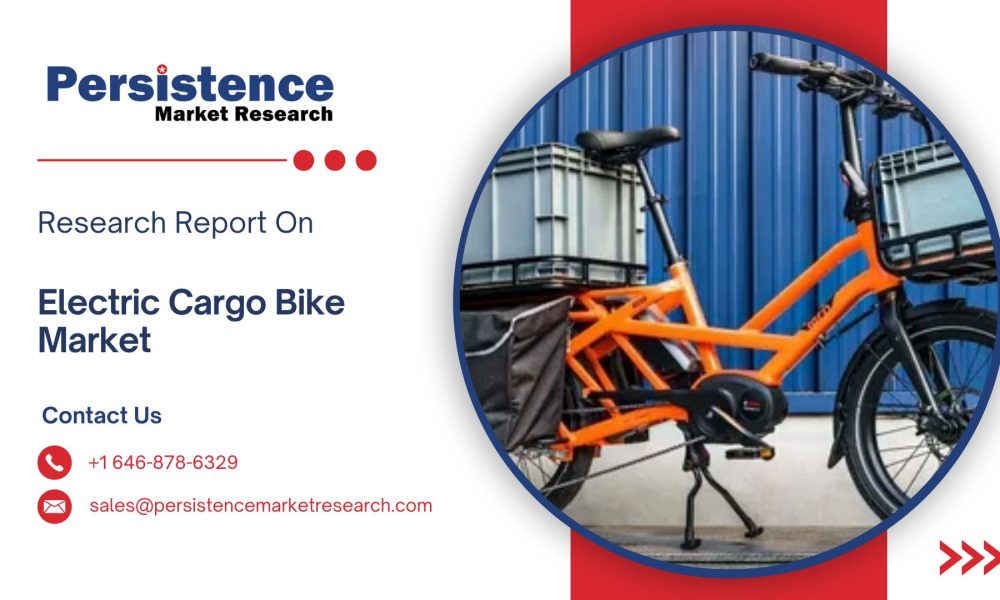
The global electric cargo bike market is poised for significant expansion in the coming decade, driven by increasing urbanization, sustainability initiatives, and the growing demand for efficient last-mile delivery solutions. According to Persistence Market Research (PMR), the market is projected to achieve a value of US$ 2.14 billion by the end of 2032, advancing at a compound annual growth rate (CAGR) of 11.9% over the forecast period. Sales of electric cargo bikes already accounted for a dominant 66.2% share of the overall cargo bike market at the close of 2021, underscoring the growing preference for electrified mobility solutions across logistics, retail, and urban transportation sectors.
The market growth is propelled by several factors, including the escalating need for eco-friendly transportation, rising fuel costs, and congestion challenges in urban areas. With governments worldwide incentivizing low-emission vehicles and providing subsidies for electric mobility adoption, electric cargo bikes are increasingly emerging as a viable alternative to traditional delivery vans and freight vehicles. Additionally, the surge in e-commerce and on-demand delivery services has reinforced the demand for compact, cost-effective, and sustainable transportation options.
Request Sample Copy of Report: https://www.persistencemarketresearch.com/samples/25447
Segmentation Analysis
By Type
The electric cargo bike market is segmented based on design and functionality, primarily categorized into two-wheelers, three-wheelers, and four-wheelers. Among these, two-wheel electric cargo bikes currently dominate the market due to their maneuverability, lower operational costs, and suitability for congested urban environments. Three-wheelers are witnessing rapid adoption in commercial delivery operations, particularly in Europe and Asia-Pacific, where they provide enhanced load-carrying capacity while maintaining compact dimensions for city streets. Four-wheel electric cargo bikes, although limited in volume, are gaining traction in niche segments that demand higher payload capacities, such as industrial deliveries and urban logistics hubs.
By Vehicle/Product/Service Type
From a product perspective, electric cargo bikes are classified as fleet-based solutions for commercial purposes and individually owned or small business-focused cargo bikes. Fleet adoption is accelerating as businesses seek to reduce operational costs, minimize carbon footprints, and navigate urban congestion efficiently. Individual ownership, on the other hand, is influenced by factors such as last-mile delivery convenience, personal utility, and environmental consciousness. Notably, subscription and leasing models are emerging as popular adoption channels, enabling businesses to access electric cargo bikes without significant upfront capital investment, while also facilitating maintenance and fleet optimization.
By Propulsion/Technology
Electric cargo bikes are primarily powered by lithium-ion batteries, with hub motors and mid-drive motors representing the two leading propulsion technologies. Mid-drive motors are increasingly preferred for their superior torque, energy efficiency, and enhanced control on varied terrains, while hub motors offer cost-effective and low-maintenance solutions for lighter loads and short-distance deliveries. The integration of regenerative braking, energy-efficient battery management systems, and smart motor controls has further enhanced operational efficiency and reliability. Additionally, several manufacturers are exploring solar-assisted charging and swappable battery technologies to improve convenience and reduce downtime for fleet operators.
Regional Insights
Europe currently leads the global electric cargo bike market, accounting for a significant share of both sales and technological advancements. The region benefits from strong governmental support, stringent emission regulations, and well-developed urban logistics networks that facilitate the adoption of cargo bikes for last-mile delivery. Countries such as Germany, the Netherlands, and Denmark are particularly prominent markets, driven by eco-conscious consumers, municipal regulations favoring low-emission vehicles, and a well-established cycling culture.
Asia-Pacific, however, is emerging as the fastest-growing region, with rapid urbanization, expanding e-commerce infrastructure, and increasing environmental awareness fueling market adoption. Cities in China, Japan, and India are witnessing a surge in electric cargo bike deployment, particularly in urban delivery services, small-scale logistics, and commercial freight sectors. North America is also witnessing steady growth, supported by rising investment in clean mobility solutions, a strong push toward carbon neutrality, and adoption by large-scale logistics providers.
Request Customization of Report: https://www.persistencemarketresearch.com/request-customization/25447
Unique Features and Innovations in the Market
Modern electric cargo bikes differentiate themselves through advanced technologies, innovative designs, and enhanced operational capabilities. The integration of IoT-enabled fleet management systems allows real-time tracking, predictive maintenance, and optimized route planning, significantly improving efficiency for commercial operators. Artificial Intelligence (AI) is being deployed to analyze traffic patterns, anticipate delivery bottlenecks, and improve battery management, thereby extending the operational range and lifespan of electric cargo bikes. Furthermore, the adoption of 5G connectivity enables seamless communication between vehicles, logistics hubs, and mobile applications, fostering improved coordination and faster response times.
Ergonomic designs, modular cargo configurations, and lightweight yet durable frame materials are also shaping market innovation. Manufacturers are increasingly focusing on customizable cargo solutions, allowing users to configure bikes for parcel delivery, food transport, or industrial applications. Enhanced safety features, including integrated lighting, anti-lock braking systems, and advanced suspension mechanisms, are further boosting market appeal and supporting the shift toward widespread adoption.
Market Highlights
Businesses and urban operators are adopting electric cargo bikes for multiple strategic reasons. Chief among these is cost efficiency; electric cargo bikes offer significantly lower operating and maintenance costs compared with traditional delivery vehicles, making them attractive for small and medium-sized enterprises. Additionally, regulatory support in the form of low-emission zones, tax incentives, and subsidies encourages adoption while reinforcing sustainability objectives. The focus on carbon reduction, particularly in densely populated cities, positions electric cargo bikes as critical tools in achieving corporate social responsibility and environmental goals.
The convenience of navigating congested urban areas, combined with the ability to offer faster delivery in city centers, further strengthens the market’s value proposition. Companies in the logistics, retail, and food delivery sectors increasingly leverage electric cargo bikes to enhance operational efficiency, reduce delivery times, and improve customer satisfaction. Sustainability trends are also influencing consumer preferences, with eco-conscious end-users demonstrating a growing willingness to support businesses that utilize electric mobility solutions.
Key Players and Competitive Landscape
The electric cargo bike market features a mix of established automotive companies, specialized bike manufacturers, and innovative start-ups. Leading market participants include Riese & Müller, Rad Power Bikes, Tern, Yuba, and Babboe, each pursuing unique strategies to strengthen their market position. Riese & Müller emphasizes premium product quality, advanced technological integration, and expanded European distribution networks, catering to both commercial and individual customers. Rad Power Bikes focuses on cost-effective solutions, innovative designs, and strategic entry into North American and Asian markets to capture the growing demand for urban mobility solutions.
Tern specializes in modular and foldable cargo bikes, offering versatile designs for diverse applications and partnering with logistics operators for fleet deployments. Yuba prioritizes high-capacity cargo solutions, particularly for commercial deliveries, and emphasizes sustainable manufacturing practices. Babboe, a Netherlands-based manufacturer, is renowned for family and commercial cargo bikes, focusing on ergonomic designs, safety features, and urban delivery adoption. Many key players are actively investing in research and development to enhance battery efficiency, connectivity features, and load-carrying capabilities, as well as forming strategic partnerships for regional expansion and technology integration.
Buy Now: https://www.persistencemarketresearch.com/checkout/25447
Future Opportunities and Growth Prospects
The electric cargo bike market presents substantial growth opportunities driven by evolving technology, increasing environmental regulations, and the proliferation of e-commerce. Companies investing in AI-based fleet management, IoT connectivity, and lightweight, modular designs are well-positioned to capitalize on the shift toward sustainable urban logistics. Emerging markets in Asia-Pacific and Latin America offer significant potential, fueled by urban congestion, growing middle-class populations, and government initiatives promoting green transportation.
Regulatory frameworks encouraging low-emission transport, coupled with rising fuel costs and urban congestion challenges, will continue to drive adoption across both commercial and individual segments. Additionally, innovations such as battery swapping, solar-assisted charging, and advanced cargo modularity are expected to enhance operational efficiency and reduce downtime, further accelerating market growth. The convergence of digital technologies, urban mobility planning, and environmental consciousness will continue to shape market dynamics, creating a favorable landscape for manufacturers, service providers, and logistics operators.
As electric cargo bikes gain traction, stakeholders can expect not only robust revenue growth but also transformative impacts on urban delivery models, sustainable logistics, and low-emission mobility solutions. Companies that strategically leverage technological innovation, regional expansion, and regulatory support are likely to secure a competitive edge in this rapidly evolving market.




