
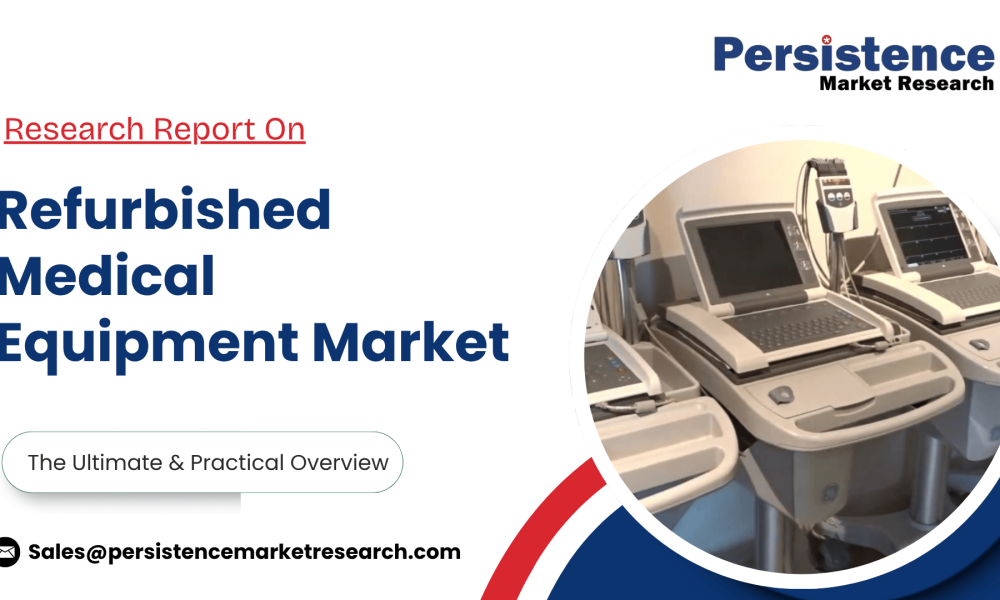
The global refurbished medical equipment market is undergoing significant growth, driven by increasing demand for cost-effective healthcare solutions, alongside the rising focus on sustainability and waste reduction in the healthcare industry. In 2025, the market is expected to be valued at USD 16.7 billion and is projected to grow to USD 32.4 billion by 2032, reflecting a compound annual growth rate (CAGR) of 9.9%. This growth is spurred by healthcare providers seeking affordable, high-quality alternatives to new medical equipment while maintaining patient safety and care standards.
Key Industry Highlights
Refurbished medical devices offer substantial cost savings, often priced 20-50% lower than new equipment, making them a popular choice for healthcare organizations with limited budgets. In emerging markets such as Asia Pacific, Latin America, and Africa, the demand for refurbished equipment is particularly high, driven by budget constraints and the need for advanced medical technologies. Additionally, growing awareness around sustainability is further propelling the market, as refurbished medical devices help reduce medical e-waste and resource consumption.
North America remains the leading market for refurbished medical devices due to its well-established healthcare infrastructure and a robust network of specialized companies offering refurbished equipment. As healthcare costs rise globally, more regions are turning to refurbished medical technologies as an affordable and effective solution.
Get a Sample Copy of Research Report (Use Corporate Mail id for Quick Response): https://www.persistencemarketresearch.com/samples/35242
Market Dynamics
Drivers: Growing E-Waste Concerns and Sustainable Practices in Healthcare
A major factor fueling the growth of the refurbished medical equipment market is the increasing concern over medical e-waste and the push for more sustainable healthcare practices. The World Health Organization (WHO) reports that global e-waste generation reached 62 million tons in 2022, with only a small percentage being properly recycled. The healthcare sector is one of the key contributors to this growing e-waste issue due to the disposal of outdated and non-functional medical devices.
To combat these concerns, healthcare providers are increasingly turning to refurbished devices, which extend the life of medical equipment and reduce environmental impact. This is in line with the broader trend toward sustainability in the healthcare industry, where hospitals and healthcare organizations aim to minimize waste and reduce resource consumption.
Restraint: Quality Assurance and Regulatory Compliance
Despite the growing adoption of refurbished medical devices, concerns around their quality and reliability pose a challenge to wider acceptance. Regulatory bodies, such as the U.S. Food and Drug Administration (FDA), have expressed concerns over the safety of refurbished medical equipment, particularly regarding its maintenance and servicing. Improper refurbishment practices can lead to device malfunctions, potentially compromising patient safety.
To address these concerns, regulations and certification processes for refurbished medical devices are becoming stricter. The FDA, in 2024, issued updated guidelines to ensure that all refurbished medical devices meet high safety and performance standards, clarifying what constitutes “remanufacturing” and requiring refurbishers to adhere to established safety protocols.
Opportunity: Demand from the Private Healthcare Sector
The private healthcare sector, particularly in developed markets, is increasingly embracing refurbished medical devices as a cost-effective solution. Private hospitals and clinics often face budgetary constraints, making refurbished devices an attractive alternative to new, expensive equipment. For instance, Spire Healthcare, a leading private healthcare provider in the UK, recently invested in refurbished medical equipment, including a £1.5 million CT scanner, to enhance its services without incurring the high costs of new technology.
As private healthcare providers seek ways to expand services while managing rising costs, the demand for refurbished equipment is likely to continue increasing, presenting a significant growth opportunity for companies in this sector.
Category-Wise Analysis
Product Insights
X-ray equipment is one of the largest segments within the refurbished medical equipment market. These diagnostic devices are essential in healthcare settings, yet the high cost of new machines makes refurbished alternatives an attractive option. Refurbished X-ray machines cost significantly less—often 30% to 70% less than new models—allowing healthcare organizations to allocate their budgets to other critical areas. However, regulatory standards governing the import and use of refurbished X-ray equipment, particularly in countries like India, can be stringent. For example, X-ray machines older than seven years cannot be exported or used in some regions without specific safety certifications.
Application Insights
The oncology segment is driving a significant portion of the demand for refurbished medical equipment, particularly in the context of radiotherapy. With the global cancer burden increasing annually, more healthcare providers are turning to refurbished radiotherapy equipment to offer high-quality treatment at a reduced cost. The WHO reports that over 50% of cancer patients require radiotherapy as part of their treatment, and refurbished linear accelerators, brachytherapy systems, and other radiotherapy devices help meet this critical need. As the number of cancer patients continues to rise worldwide, especially in emerging economies, the need for affordable yet advanced cancer treatment technologies will continue to increase.
Request for Customization of the Research Report: https://www.persistencemarketresearch.com/request-customization/35242
Regional Insights
North America
North America is the largest market for refurbished medical equipment, holding a significant share of the market. The region is expected to account for 38.1% of the market share in 2025. The high demand for refurbished medical equipment in North America can be attributed to increasing healthcare costs, especially for smaller hospitals and healthcare facilities that are seeking affordable alternatives to new devices. Strict regulatory standards, such as those enforced by the FDA, ensure that refurbished devices meet safety and quality requirements, further bolstering confidence in their use.
Europe
The European market for refurbished medical equipment is growing steadily, driven by the aging population and the increasing demand for cost-effective healthcare solutions. According to Eurostat data from January 2023, over 21% of the EU population is aged 65 or older, creating a significant need for continuous healthcare services. As a result, hospitals and healthcare facilities are increasingly adopting refurbished devices, including diagnostic equipment and surgical instruments, to manage rising healthcare expenditures. Additionally, European regulatory bodies are encouraging the use of refurbished devices under strict safety guidelines, promoting their adoption across the region.
Asia Pacific
In the Asia Pacific region, low-income countries are increasingly turning to refurbished medical equipment to improve healthcare access while keeping costs manageable. Countries like Bangladesh, Nepal, and Cambodia face significant challenges in providing affordable healthcare due to limited funding and high equipment costs. Refurbished devices, particularly for imaging and patient monitoring, provide a cost-effective solution that allows healthcare providers to expand their service offerings. The World Health Organization’s (WHO) MeDevIS platform, launched in 2024, helps governments and healthcare providers in the region make informed decisions about medical equipment procurement, including refurbished devices.
Competitive Landscape
The refurbished medical equipment market is highly competitive, with both large multinational corporations and smaller independent refurbishers vying for market share. Key players in the market include GE Healthcare, Siemens Healthineers, Philips Healthcare, and Canon Medical Systems, all of which offer certified refurbished devices that meet stringent quality standards and regulatory requirements. These companies have established global networks to serve healthcare providers seeking reliable and cost-effective solutions.
In addition to the major players, smaller refurbishers and independent companies also compete by offering affordable and high-quality refurbished equipment, particularly in cost-sensitive markets. As the demand for sustainable healthcare solutions grows, competition in the refurbished medical equipment market is expected to intensify, with companies focusing on technological upgrades, certifications, and expanding their global reach.
Key Industry Developments
Recent developments in the refurbished medical equipment market reflect the sector’s dynamic nature. In February 2025, Surplus Solutions expanded its portfolio by offering refurbished analytical and medical equipment globally. Meanwhile, in India, the government suspended the import of refurbished medical devices in response to safety concerns and called for the establishment of a new regulatory framework to ensure patient safety.
In July 2024, AA Medical acquired Surgical Product Solutions (SPS), a supplier of surgical consumables, in a move to expand its offerings of refurbished medical equipment. Similarly, Owens & Minor, a major U.S. medical supplies distributor, announced its acquisition of Rotech Healthcare for $1.36 billion, further bolstering its presence in the home care sector.
Future Outlook
The refurbished medical equipment market is expected to continue its upward trajectory, driven by the growing need for affordable healthcare solutions, increasing sustainability efforts, and advancements in refurbishment technologies. As the global healthcare landscape evolves, healthcare providers will increasingly turn to refurbished devices to meet rising demand while keeping costs in check. With stricter quality regulations, improved certifications, and a growing focus on environmental sustainability, the refurbished medical equipment sector is set to play an increasingly crucial role in global healthcare delivery.
The market’s future will be characterized by technological advancements, the expansion of regulatory frameworks, and a continued shift toward sustainable, cost-effective healthcare solutions. As emerging markets demand more affordable medical equipment, refurbished devices will become an integral part of the healthcare ecosystem worldwide.




