
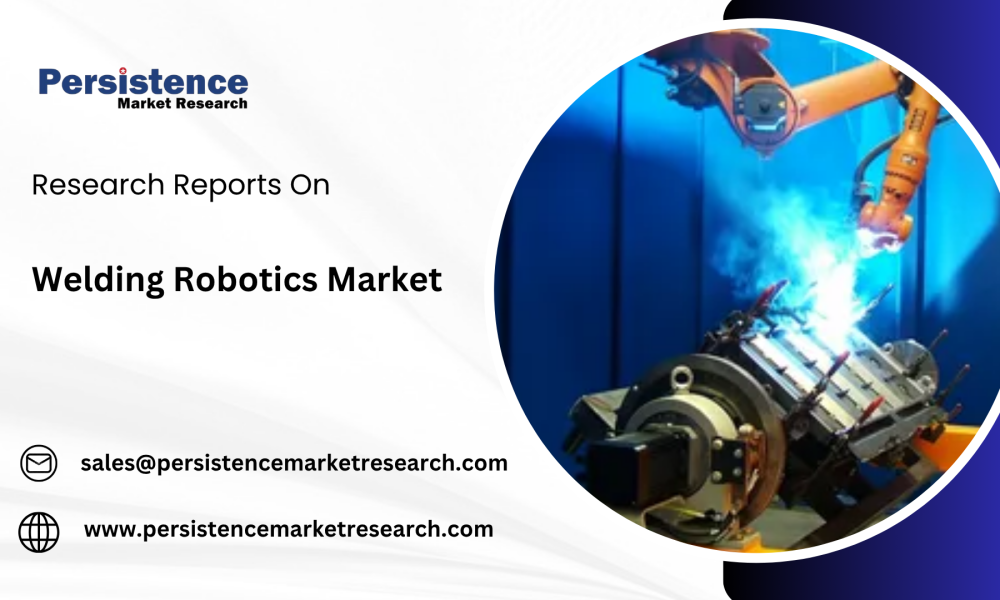
The global manufacturing landscape is undergoing a technological renaissance, and welding robotics is at the forefront of this transformation. As industries increasingly seek efficiency, precision, and cost-effectiveness, robotic solutions for welding have emerged as an indispensable tool. The global welding robotics market is projected to witness substantial growth, rising from US$10.2 billion in 2025 to US$19.9 billion by 2032, at a CAGR of 10.0%. This robust growth is fueled by rising adoption of automation in manufacturing, continuous advancements in robotic technologies, and a worldwide drive to enhance production efficiency and quality.
Key Drivers of Market Growth
Several factors are propelling the welding robotics market to new heights:
- Rising Demand for Automation in Manufacturing
Manufacturers are increasingly integrating automation to remain competitive in a global market characterized by shrinking lead times and rising consumer expectations. Traditional manual welding processes are labor-intensive, time-consuming, and prone to human error. Welding robots provide a solution by ensuring consistent quality, higher productivity, and improved workplace safety. Industries such as automotive, aerospace, electronics, and heavy machinery are prioritizing automated welding to reduce costs, minimize defects, and optimize operational efficiency.
- Technological Advancements in Robotic Welding
Recent innovations in robotics, artificial intelligence (AI), and machine learning (ML) have greatly enhanced the capabilities of welding robots. Modern welding robots are equipped with advanced sensors, real-time monitoring systems, and adaptive control mechanisms, enabling precise welds and the ability to operate in complex production environments. Collaborative robots, or cobots, are now being deployed to work alongside human operators, bridging the gap between automation and manual labor while enhancing productivity and safety.
- Focus on Production Efficiency and Quality
The growing emphasis on quality control and production efficiency is another major driver of the market. Welding defects can result in costly rework, safety hazards, and reputational damage. Automated welding systems ensure high repeatability, uniformity, and accuracy, significantly reducing errors and waste. As manufacturers aim to meet stricter quality standards and optimize throughput, the adoption of welding robotics continues to accelerate.
Regional Analysis
Asia Pacific: The Leading Market
Asia Pacific is expected to dominate the welding robotics market, accounting for approximately 35% of the global share in 2025. Several factors contribute to this dominance:
- Advanced Manufacturing Infrastructure: Countries like China, Japan, and South Korea have established sophisticated manufacturing ecosystems that embrace advanced technologies, including robotics.
- High Adoption Rates: Widespread adoption of industrial robots in automotive, electronics, and metal fabrication sectors has significantly boosted demand for welding robotics.
- Government Initiatives: Investments in research and development (R&D) for smart manufacturing and Industry 4.0 initiatives have further propelled the market.
China, in particular, is emerging as a global hub for robotic automation, with increasing investments in robotic technology and manufacturing innovation. The region’s focus on reducing labor costs and improving productivity also supports robust market growth.
North America: The Fastest-Growing Market
North America is projected to be the fastest-growing region, driven by technological advancements, expanding industrial automation, and high demand from automotive and aerospace sectors. The United States and Canada are witnessing rapid adoption of welding robots due to:
- Technological Expertise: North American manufacturers are leaders in adopting AI-driven robotics and automation solutions.
- Industrial Expansion: The expansion of manufacturing facilities and reshoring of production activities to North America is creating higher demand for advanced welding systems.
- Rising Labor Costs: Automation helps mitigate the impact of rising labor costs while ensuring consistent quality.
Europe also presents significant opportunities for growth, particularly in Germany, France, and Italy, where industrial automation and smart manufacturing are widely embraced.
Elevate your business strategy with comprehensive market data. Request a sample report now: https://www.persistencemarketresearch.com/samples/5957
Market Segmentation
By Function Type: Spot vs. Arc Welding
Welding robotics are generally categorized based on their function type, with spot welding and arc welding being the most prevalent.
- Spot Welding: Expected to account for 26.4% of the market share in 2025, spot welding robots are widely used in high-volume assembly operations such as automotive manufacturing. Advancements in precision and speed have made spot welding robots a crucial component of automated production lines.
- Arc Welding: Arc welding robots are extensively used in heavy industries, including shipbuilding, construction, and metal fabrication. Their ability to perform complex welds on large and irregular surfaces makes them essential for industrial applications requiring durability and strength.
By End-User Industry
The automotive industry is the dominant end-user, holding a 40% share of the market. Welding robots are integral to vehicle assembly lines, performing tasks such as body-in-white welding, chassis welding, and component joining. The demand is further amplified by the rise of electric vehicles (EVs), which require precise welding of battery packs, lightweight materials, and high-strength components.
Other key end-user industries include:
- Aerospace: Precision and safety are critical, and robotic welding ensures adherence to stringent quality standards.
- Electronics: Miniaturization and high-volume production in electronics manufacturing benefit from precise welding automation.
- Metal Fabrication: Welding robots improve efficiency and consistency in fabricating large-scale structures.
Emerging Trends in Welding Robotics
- Collaborative Robots (Cobots)
Cobots are transforming the welding robotics landscape by enabling safe interaction between robots and human operators. Unlike traditional robots that require safety cages and isolation, cobots can share the workspace with humans, making automation accessible for small and medium-sized enterprises (SMEs). Cobots are particularly suited for applications with variable production volumes and complex geometries.
- Integration with Industry 4.0
The integration of welding robots with Industry 4.0 technologies, including the Internet of Things (IoT), cloud computing, and real-time data analytics, is revolutionizing manufacturing. Smart welding systems can monitor operations in real time, predict maintenance needs, optimize welding parameters, and provide actionable insights for continuous improvement. This connectivity enhances productivity, reduces downtime, and enables predictive quality management.
- Advanced Materials and Lightweighting
With industries like automotive and aerospace increasingly adopting lightweight materials such as aluminum and composites, welding robotics must evolve to handle new challenges. Advanced robotic systems equipped with adaptive welding technologies can manage different material thicknesses, thermal conductivities, and structural properties, ensuring consistent weld quality.
- Expansion into SMEs and Emerging Markets
Historically, welding robots were primarily adopted by large enterprises due to high costs. However, decreasing costs, modular robotic systems, and financing options are making automation accessible to SMEs. Emerging markets in Latin America, Southeast Asia, and the Middle East are witnessing increased adoption of welding robots, driven by industrial growth, government initiatives, and the need for productivity enhancement.
Challenges Facing the Market
While the welding robotics market is growing rapidly, certain challenges persist:
- High Initial Investment: The upfront cost of robotic welding systems remains a barrier for smaller manufacturers.
- Skilled Workforce Requirements: Operating, programming, and maintaining welding robots require skilled personnel, which may be limited in some regions.
- Complex Integration: Integrating robotic systems into existing production lines can be complex and may require redesigning workflows.
Despite these challenges, the long-term benefits of efficiency, precision, and cost reduction continue to outweigh the initial hurdles, ensuring sustained market growth.
Future Outlook
The welding robotics market is poised for transformative growth through 2032, driven by technological innovation, increasing automation adoption, and global manufacturing expansion. Key opportunities in the future include:
- AI-Enhanced Robotics: Artificial intelligence will enable welding robots to learn from operations, optimize parameters, and improve self-adaptation to new tasks.
- Sustainable Manufacturing: Robotic welding contributes to sustainable production by reducing material waste, energy consumption, and occupational hazards.
- Customization and Flexibility: Modular and reconfigurable welding robots will allow manufacturers to handle diverse production requirements efficiently.
As manufacturing evolves toward fully automated, intelligent, and interconnected production lines, welding robotics will play a pivotal role in shaping the factories of the future.
Conclusion
The global welding robotics market represents a convergence of technology, innovation, and efficiency. With a projected market size of US$19.9 billion by 2032 and a CAGR of 10%, the sector is a clear reflection of the industrial world’s commitment to automation and quality. Asia Pacific leads in market share due to robust manufacturing infrastructure and adoption rates, while North America is emerging as the fastest-growing region driven by technological innovation and industrial expansion.
Spot welding continues to dominate the function type segment, particularly in the automotive industry, which is the leading end-user. Trends such as collaborative robots, Industry 4.0 integration, and the handling of advanced materials are shaping the market’s trajectory, while challenges like high initial investment and workforce skill gaps remain considerations.
The future of welding robotics is bright, offering manufacturers enhanced productivity, superior quality, and sustainable operations. As industries continue to embrace automation, welding robots will remain a cornerstone of modern manufacturing, driving innovation and efficiency across sectors worldwide.
Related Reports:




