
The global intracranial aneurysm market is forecasted to grow from approximately USD 1,626 million in 2024 to USD 4,903 million by 2035, reflecting a strong compound annual growth rate (CAGR) of 10.5% over the period from 2025 to 2035. This expansion amounts to a near 2.7-fold increase, with an absolute dollar opportunity of about USD 3,096 million. Major factors behind this surge include rising disease awareness, improvements in diagnostic imaging, and increasing adoption of neurovascular innovation globally.
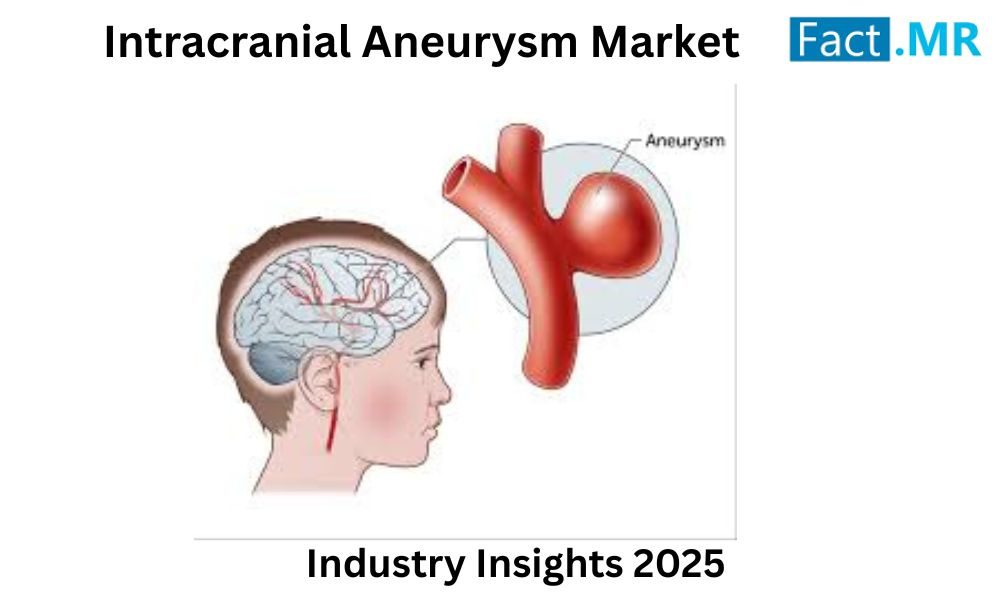
Intracranial aneurysms are pathological dilations of cerebral arteries that, if not detected and treated in time, can rupture, leading to subarachnoid hemorrhage, stroke, or even fatal outcomes. Key modes of treatment include surgical clipping, endovascular coiling, and the use of flow diverter devices among others.
Key Drivers of Growth
A prominent driver of market growth is the growing epidemiological awareness and detection of intracranial aneurysms. Improved access to advanced neuroimaging modalities such as MRI angiography and CT angiography has enabled earlier diagnosis of unruptured aneurysms, increasing the eligible population for treatment.
Another strong growth catalyst is the aging global population. Elderly individuals are more prone to cerebrovascular disorders, hypertension, and other risk factors such as smoking and hereditary predisposition, all of which increase the incidence of aneurysms.
Advancements in minimally invasive methods, particularly endovascular procedures (coiling, flow diverters) are contributing heavily. These techniques reduce surgical trauma, shorten hospital stays, and tend to have fewer complications compared to open surgical methods. The emergence of flow diverters and improved embolic coils with better packing, higher occlusion rates, and biocompatible materials is pushing market adoption.
Healthcare spending expansion, especially in emerging markets, and growth in hospital infrastructure are also enabling greater accessibility to intracranial aneurysm treatments. Government emphasis on stroke prevention and neurovascular disease awareness, coupled with regulations favoring reimbursement for less invasive therapies, further bolster market growth.
Full Market Report Available for Delivery. For Purchase or Customization, Please Request Here: https://www.factmr.com/connectus/sample?flag=S&rep_id=7817
Regional Landscape and Trends
North America holds the largest share of the market. Well-developed healthcare infrastructure, high rates of neurovascular device readiness, reimbursement frameworks, and strong research institutions make the region a leader in both diagnosis and treatment of intracranial aneurysms. The United States in particular is a key contributor, driven by high patient awareness, widespread adoption of flow diverters and coiling, plus continuous investment in device innovation.
Europe is another substantial market, with countries such as Germany, the UK, and France being early adopters of advanced aneurysm treatment options. Positive reimbursement policies, regulatory frameworks ensuring safety and efficacy, and well-established hospitals and specialist neurosurgical centers support growth in the region.
Asia-Pacific is expected to register the fastest growth rate. Rising healthcare expenditure, improving diagnostic capabilities, increasing patient awareness, and growing numbers of hospitals with neurovascular treatment capabilities are fueling demand in China, India, Japan, and other Asia-Pacific nations. Emerging economies are making headway in acquiring advanced devices and procedures that used to be limited to developed countries.
Middle East & Africa are gradually expanding, with increased investments, foreign partnerships, and increasing awareness of neurological health challenges. Although the healthcare infrastructure remains variable, growth is being seen in GCC countries where access to advanced neurointerventional technologies is improving.
Recent Developments
Recent years have seen multiple notable advances in the intracranial aneurysm market. One major development is the launch of new microcatheters and delivery systems designed to better navigate complex cerebrovascular anatomy. For instance, in early 2025, Penumbra introduced a new microcatheter aimed at improving access for aneurysm embolization, which supports enhanced coil deployment and better trackability in tortuous vessels.
Another innovation is the increasing use of bioresorbable flow diverters and improved embolic coils. Manufacturers are developing new coil materials and surface coatings (hydrogel, bioactive coatings) to improve occlusion rates, reduce recurrence, and reduce thrombogenicity.
Artificial intelligence is also making inroads in diagnosis and treatment planning. AI-powered image analysis tools are helping clinicians detect aneurysms earlier, stratify rupture risk, and plan interventions more precisely. Some centers are also experimenting with robotic assistance in neurovascular interventions to enhance accuracy and reduce human error.
Policy and reimbursement shifts are contributing as well. Governments in several countries have increased focus on stroke prevention and mental/brain health campaigns, supporting early diagnostic programs, and neurovascular device approvals. Regulatory agencies are placing more emphasis on long-term patient outcomes and device safety, which is pushing innovation.
Challenges & Restraints
Despite positive trends, several challenges remain. The high cost of treatment remains a barrier, especially in low- and middle-income regions. Flow diverters, coils, and some advanced devices are expensive, and access is often limited by reimbursement policies and insurance coverage.
Another significant challenge is the shortage of skilled neurointerventionalists and neurosurgeons. The expertise required to perform endovascular coiling or flow-diversion procedures is highly specialized, and in many regions there is a lack of trained personnel.
Device complications such as recurrence of aneurysms, thrombosis, device migration, or long-term durability issues remain concerns. Regulatory and approval processes are often stringent, particularly for new materials or bioresorbable devices, which can slow down market entry.
Integration of advanced diagnostic tools, including AI, also faces limitations due to lack of standardization, data privacy concerns, and need for validation via clinical trials.
Key Players Insights
The intracranial aneurysm market is increasingly competitive, with both global MedTech giants and specialized neurovascular device makers pushing the envelope. Among the prominent players are Medtronic, Johnson & Johnson (through its CERENOVUS business), Stryker, B. Braun Melsungen AG, MicroPort Scientific Corporation, Integra LifeSciences, MicroVention Inc., Terumo Corporation, Raumedic AG, and Balt.
Medtronic continues to lead through its advanced flow diverter platforms and coil systems, heavily investing in R&D to enhance safety, biocompatibility, and ease of use. Johnson & Johnson’s CERENOVUS arm is pushing improvements in embolic coils and stenting technologies, with emphasis on reducing procedural risk and increasing durability of treatment outcomes.
Stryker is focusing on expanding its portfolio of neurovascular devices including newer flow diverters, stents, and catheter technologies, often collaborating with clinicians to adapt to complex anatomies. MicroPort Scientific is growing its presence in emerging markets while diversifying its device offerings and working toward cost optimization.
B. Braun and Terumo are contributing through ancillary devices and improved microcatheter designs, while Integra and other specialized firms are examining bioactive coatings, better diagnostic support, and device delivery systems that enhance usability.
Future Outlook
In the decade ahead, the intracranial aneurysm market is expected to be shaped by continuous technological innovation, greater access to advanced treatments, and a stronger focus on patient-centric outcomes. Closed-loop treatment thinking, combining early diagnosis, minimally invasive intervention, AI-assisted planning, and improved post-operative monitoring, will become more standard.
Additionally, bioresorbable and biodegradable materials may become more prevalent, reducing long-term device burden. Robotic-assisted microsurgical and endovascular tools will likely be refined and more widely adopted, particularly in centers of excellence. Efforts to standardize guidelines for AI-based diagnostics and risk stratification, along with improved insurance and reimbursement frameworks, will help broaden access in developing regions.
By 2035, with the market expected to reach nearly USD 4,903 million, the intracranial aneurysm field stands at an inflection point where scientific progress, physician training, policy support, and device innovation converge to deliver safer, more accessible, and more effective care for patients worldwide.
Check out More Related Studies Published by Fact.MR:
Intracranial Pressure (ICP) Monitoring Market
Aneurysm Clip Market
Contact:
US Sales Office
11140 Rockville Pike
Suite 400
Rockville, MD 20852
United States
Tel: +1 (628) 251-1583, +353-1-4434-232
Email: [email protected]
About Fact.MR
We are a trusted research partner of 80% of fortune 1000 companies across the globe. We are consistently growing in the field of market research with more than 1000 reports published every year. The dedicated team of 400-plus analysts and consultants is committed to achieving the utmost level of our client’s satisfaction.



