
Market Overview
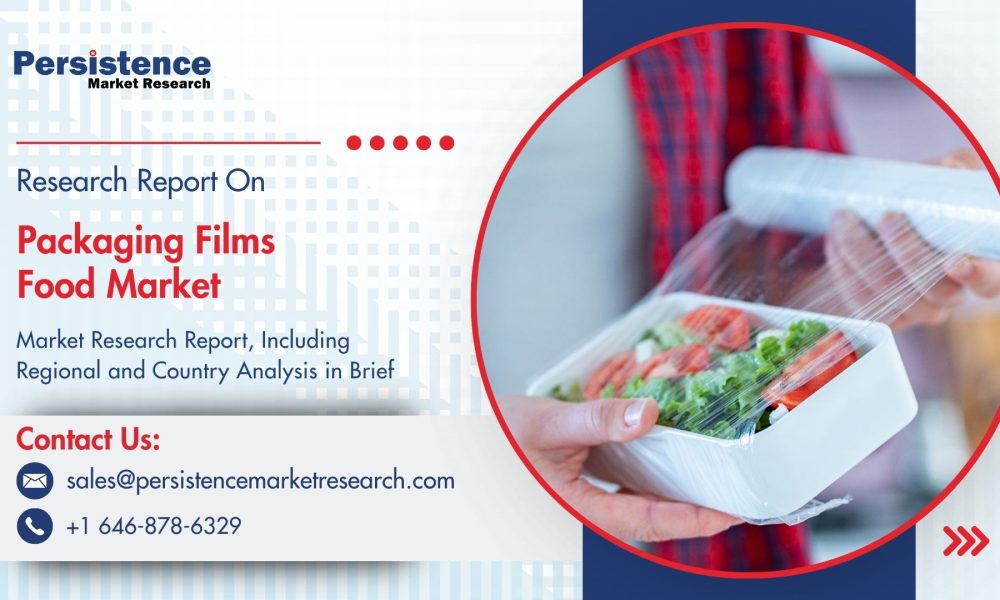
The global packaging films food market is witnessing significant growth, driven by evolving consumer preferences, increasing demand for convenience foods, and rising emphasis on product safety and sustainability. According to the latest study by Persistence Market Research, the market is projected to be valued at US$50.3 Bn in 2025 and is estimated to reach US$77.7 Bn by 2032, registering a CAGR of 6.4% during the forecast period from 2025 to 2032.
Food packaging films serve multiple roles, including preservation, containment, transportation, and visual appeal. They are extensively used to extend product shelf life, maintain freshness, and provide tamper-proof features that ensure consumer safety. With the ongoing shift in consumer lifestyles toward on-the-go and ready-to-eat meals, packaging films are increasingly being adopted by food producers and retailers worldwide. Furthermore, advancements in materials science, barrier technology, and recycling innovations are reshaping the market landscape, providing manufacturers with opportunities to meet both regulatory requirements and consumer expectations.
Get a Sample PDF Brochure of the Report (Use Corporate Email ID for a Quick Response): https://www.persistencemarketresearch.com/samples/4073
Market Drivers
Several factors are fueling the rapid growth of the food packaging films market. The rising demand for packaged and processed foods is one of the primary drivers, especially in urban regions where consumer preferences lean toward convenience-oriented lifestyles. Packaging films play a crucial role in ensuring food safety and extending product shelf life, making them indispensable to the modern food supply chain.
Sustainability trends are also influencing the market. Consumers are increasingly demanding eco-friendly packaging solutions, pushing manufacturers to adopt recyclable and biodegradable materials. The integration of innovative technologies such as antimicrobial films, active packaging, and intelligent labeling is further enhancing the functional value of food packaging films.
Additionally, e-commerce growth has accelerated the need for safe, durable, and lightweight packaging materials that can withstand long-distance shipping and handling. Government regulations regarding food safety and sustainable packaging also contribute to rising adoption levels of advanced packaging films across various food categories.
Market Segmentation
The global packaging films food market is segmented based on product type, material type, application, and region.
By Product Type
The market is categorized into flexible packaging films and rigid packaging films. Flexible films dominate the market due to their lightweight nature, cost efficiency, and adaptability across diverse food categories. Their ability to offer superior sealing, barrier protection, and design flexibility makes them the preferred choice for manufacturers and retailers. Rigid packaging films, while less dominant, are gaining traction in applications where strength and durability are essential, particularly in bulk food packaging.
By Material Type
Polyethylene, polypropylene, polyethylene terephthalate (PET), and polyamide are the major material categories. Polyethylene holds a significant share due to its versatility, low cost, and excellent barrier properties. Polypropylene is favored for its clarity and heat resistance, making it ideal for microwaveable and frozen foods. PET is increasingly in demand due to its recyclability and superior mechanical strength, while polyamide films are valued for their high puncture resistance and gas barrier properties, particularly in meat and seafood packaging.
By Application
Food packaging films find applications across fruits & vegetables, bakery & confectionery, meat, poultry & seafood, convenience foods, and dairy products. Convenience foods account for the largest share, driven by rising urbanization and changing lifestyles that prioritize quick and easy meal options. Meat, poultry, and seafood applications are also prominent due to the need for superior oxygen and moisture barriers to maintain freshness. Dairy products, bakery, and fresh produce are also key categories where packaging films play a critical role in extending shelf life and enhancing product appeal.
By Region
Regionally, North America and Europe lead the market, benefiting from well-established packaged food industries, strong regulatory frameworks, and high consumer awareness regarding food safety and sustainability. East Asia and South Asia & Oceania are projected to witness the fastest growth, driven by expanding populations, rising disposable incomes, and rapid urbanization. Countries such as China, India, and Indonesia are particularly key growth hotspots due to increasing consumption of packaged and processed foods. Latin America and the Middle East & Africa represent emerging markets, where gradual lifestyle changes and improved retail infrastructure are contributing to steady growth.
For Customized Insights on Segments, Regions, or Competitors, Request Personalized Purchase Options @ https://www.persistencemarketresearch.com/request-customization/4073
Competitive Landscape
The competitive landscape of the packaging films food market is marked by intense rivalry, with global players focusing on sustainability, innovation, and regional expansion. Leading companies are investing heavily in research and development to produce eco-friendly films that address consumer demand for recyclable and biodegradable packaging. Mergers, acquisitions, and partnerships are also common strategies to expand production capacity and market reach.
Company Insights
✦ Amcor
✦ Berry Global
✦ Coveris
✦ Sealed Air
✦ UFlex
✦ Cosmo Films
✦ Taghleef Industries
✦ Mondi Group
✦ Jindal Poly Films Limited
✦ RKW SE
✦ Others
These companies are at the forefront of innovation, developing films with advanced barrier properties, sustainable materials, and enhanced printability to support brand marketing and consumer engagement. Amcor and Mondi, for instance, are pioneers in recyclable packaging solutions, while companies like UFlex and Cosmo Films are expanding their global footprint by targeting high-growth regions. Strategic collaborations with food producers and retailers are enabling players to co-develop solutions tailored to specific product needs.
Future Outlook
The future of the packaging films food market is poised for strong growth, supported by evolving consumer lifestyles, growing demand for functional packaging, and innovations in sustainable materials. Flexible packaging films will continue to dominate, while rigid films will find niche applications where durability is prioritized. The increasing adoption of PET and biodegradable alternatives will reshape material choices, while technologies like antimicrobial and active packaging films will create new value propositions.
The Asia-Pacific region, with its rising population and expanding food and beverage sector, will serve as a major growth engine for the global market. Companies that align their strategies with sustainability goals and consumer expectations will gain a competitive edge in the coming years. Additionally, regulatory alignment across regions and increasing circular economy initiatives will play a critical role in shaping the market trajectory.
In conclusion, the global packaging films food market is set to grow steadily, reaching US$77.7 Bn by 2032 at a CAGR of 6.4%. This growth is driven by the rising demand for processed and convenience foods, increasing emphasis on sustainability, and advancements in material technology. Although challenges such as environmental concerns and fluctuating raw material costs exist, innovations in recyclable and biodegradable films are paving the way for sustainable growth. With major players investing in new technologies and expanding into emerging economies, the packaging films food market is well-positioned to meet the evolving demands of consumers and industries alike.
Explore the Latest Trending Research Reports:




