
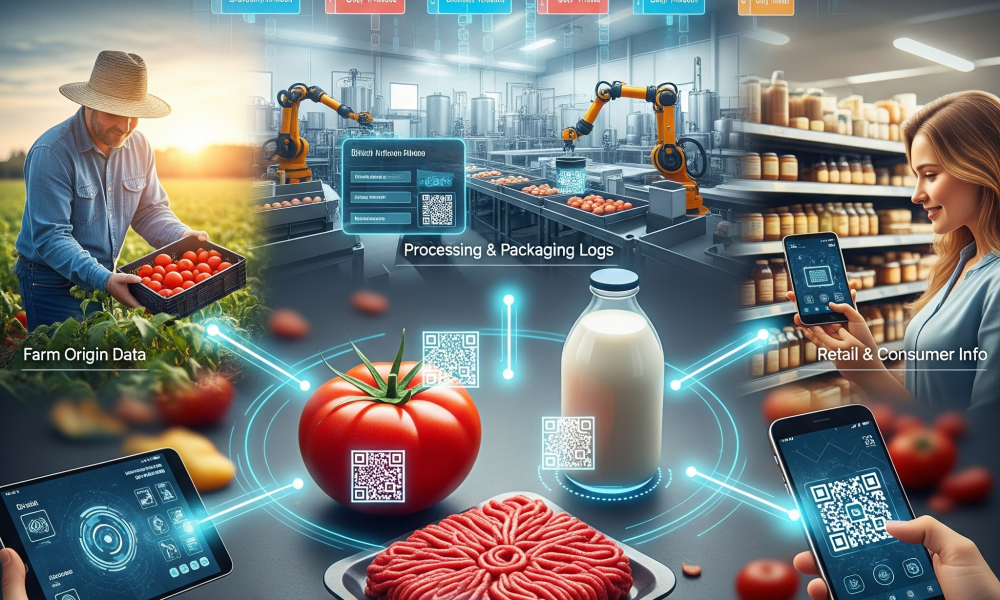
The global Food Traceability Market is on a robust growth path, set to expand from USD 19.3 billion in 2025 to USD 41.8 billion by 2035, advancing at a compound annual growth rate (CAGR) of 8.0%. Growing regulatory mandates, rapid technological adoption, and rising consumer awareness around food safety and authenticity are reshaping the market’s dynamics.
Governments and international agencies are increasingly enforcing stringent food safety standards, compelling manufacturers, processors, and retailers to adopt traceability systems across the supply chain. These frameworks not only enhance transparency but also reduce the risk of contamination, recalls, and fraud, while fostering consumer confidence.
Full Market Report available for delivery. For purchase or customization, please request here – https://www.futuremarketinsights.com/reports/sample/rep-gb-25018
Regulatory Compliance Driving Investments
Food safety regulations across regions have emerged as the backbone of market expansion. Nations in Europe and Asia-Pacific are at the forefront, thanks to rigorous compliance requirements, while North America balances both federal and state-level mandates. Regulations demand that food businesses maintain verifiable records for every stage—from production and processing to packaging and distribution—ensuring a clear “farm-to-fork” journey.
These rules are accelerating investments in blockchain-based platforms, RFID tagging, IoT-enabled monitoring, and centralized databases. Established leaders are scaling up solutions, while startups are carving out niches by offering affordable, cloud-enabled platforms to smaller players eager to meet compliance and customer demands.
Technology Innovations Reshaping the Market
The food traceability landscape is rapidly digitizing. Emerging solutions such as RFID readers, IoT-enabled sensors, and blockchain-powered records are enabling unprecedented accuracy, efficiency, and speed in data tracking.
- Hardware solutions—currently leading the segment with a 44.8% share—form the backbone of traceability, from RFID scanners and GPS trackers to advanced sensors.
- Cloud-based platforms—holding 52.6% of the deployment share—are revolutionizing collaboration across geographically dispersed supply chains with scalability and cost efficiency.
- RFID technology, which accounts for nearly 40% of the technology segment, is enhancing automation, reducing human error, and offering real-time visibility into perishable goods.
Startups are increasingly collaborating with established firms, bringing AI-powered analytics and QR code-based smart labeling into mainstream adoption, making food safety accessible to both multinational giants and mid-sized processors.
Regional Growth Insights
- China (CAGR 10.8%): Leading global adoption with blockchain and IoT integration in food logistics.
- India (CAGR 10.0%): Benefiting from government-backed food safety modernization and export-focused standards.
- Germany (CAGR 9.2%): Leveraging sustainability and consumer preference for premium quality to push traceability adoption.
- United Kingdom (CAGR 7.6%): Advancing with digital monitoring and smart labeling solutions.
- United States (CAGR 6.8%): Scaling through large-scale manufacturer adoption and organic food demand.
These diverse growth patterns reflect how regulatory focus, consumer expectations, and technology ecosystems vary across markets, creating both opportunities and challenges for global players.
Key Players Driving Transformation
The competitive landscape of the food traceability market highlights the roles of both established enterprises and emerging innovators:
- Honeywell International Inc. is pioneering end-to-end monitoring by combining barcode scanning, IoT devices, and advanced analytics.
- C.H. Robinson focuses on real-time logistics traceability, particularly for perishable goods.
- Carlisle strengthens compliance with innovative labeling and data management solutions.
- Cognex leads with machine vision and automated inspection systems that minimize errors in processing and packaging.
- Merit-Trax empowers transparency with software platforms designed for both raw materials and finished goods traceability.
- SGS SA reinforces global food traceability frameworks through certification, testing, and auditing services.
- Zebra Technologies integrates barcode, RFID, and data solutions to enhance operational visibility across supply chains.
Together, these players highlight a market that blends traditional infrastructure with cutting-edge digital platforms, meeting the demands of global compliance and consumer trust.
Why the Market is Growing
The surge in food traceability adoption stems from three core drivers:
- Consumer Awareness: Modern shoppers expect transparency, from sourcing and nutritional content to sustainability claims.
- Regulatory Push: Governments worldwide are tightening safety and labeling requirements, creating mandatory adoption scenarios.
- Technological Breakthroughs: Digital transformation—cloud computing, blockchain, AI, and IoT—is enabling cost-efficient and scalable systems that reduce errors and improve accountability.
Beyond compliance and safety, traceability is now also a competitive advantage. Businesses can assure customers of product authenticity, manage recalls swiftly, and verify ethical sourcing—all of which resonate strongly in today’s marketplace.
Get PDF Brochure: https://www.futuremarketinsights.com/reports/brochure/rep-gb-25018
Future Outlook
The next decade promises accelerated adoption of digital-first, interoperable food traceability platforms, bridging gaps across fragmented global supply chains. Government initiatives promoting smart agriculture and sustainable logistics will further boost uptake, while increasing demand for organic, clean-label, and specialty foods will keep consumer-driven pressure high.
As established manufacturers expand their global footprint and new entrants introduce affordable, flexible technologies, the food traceability market is set to remain one of the most dynamic sectors within global food safety and supply chain management.
About Future Market Insights (FMI)
Future Market Insights, Inc. (ESOMAR certified, recipient of the Stevie Award, and a member of the Greater New York Chamber of Commerce) offers profound insights into the driving factors that are boosting demand in the market. FMI stands as the leading global provider of market intelligence, advisory services, consulting, and events for the Packaging, Food and Beverage, Consumer Technology, Healthcare, Industrial, and Chemicals markets. With a vast team of over 400 analysts worldwide, FMI provides global, regional, and local expertise on diverse domains and industry trends across more than 110 countries.



