
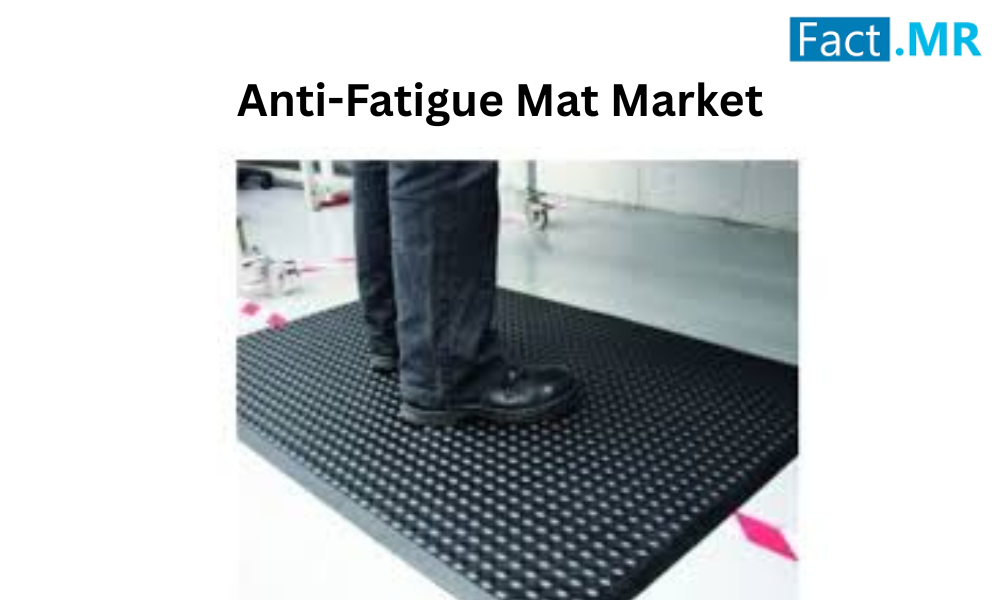
The global anti-fatigue mat market is witnessing a strong growth trajectory. With global sales evaluated at US$ 19.4 billion in 2024, the market is projected to reach approximately US$ 32.1 billion by the end of 2034, growing at a compound annual growth rate (CAGR) of about 5.2%. This expansion reflects rising concerns over worker comfort, health, and productivity across industrial, commercial, and residential sectors, coupled with innovations in materials and design.
Anti-Fatigue Mat Market Growth Drivers:
The uptrend in the anti-fatigue mat market is being propelled by heightened awareness of workplace ergonomics. As more companies and governments emphasize occupational safety, there is increased demand for solutions that reduce discomfort and musculoskeletal disorders among people who stand for long periods—such as factory workers, retail staff, healthcare professionals, and hospitality personnel. Additionally, the surge of hybrid work models, standing desks, and home workspaces has expanded demand from residential users who seek comfort during prolonged standing in kitchens, workstations, or stand-up offices. Material innovations have also played a key role: manufacturers are experimenting with more durable, supportive, and hygienic materials (e.g. polyurethane, rubber, gel, composites) and designs that are spill-resistant, easier to clean, or even antimicrobial. Finally, rising industrialization in developing regions, regulatory push for worker welfare, and a growing emphasis on preventing workplace injuries are reinforcing demand.
Regional Insights:
Geographically, while mature markets such as North America and Western Europe continue to contribute significantly due to strong regulatory frameworks, higher standards for worker safety, and greater purchasing power, rapid growth is anticipated in Asia-Pacific and emerging economies. In Asia-Pacific, expanding manufacturing sectors, rising workforce numbers, and growing awareness of worker well-being are creating robust opportunities. Latin America, Middle East and Africa are beginning to see increasing adoption as commercial, healthcare and industrial infrastructure improves. These regions are also becoming target markets for cost-competitive and eco-friendly product variants.
Full Market Report Available for Delivery. For Purchase or Customization, Please Request Here: https://www.factmr.com/connectus/sample?flag=S&rep_id=3487
Key Applications:
Anti-fatigue mats find their most extensive use in industrial settings—factories, assembly lines, warehouses—where workers stand for long hours on hard surfaces. These environments benefit from mats that absorb shock, reduce fatigue, and improve comfort, thereby helping maintain productivity and reducing injury or absenteeism. Commercial applications—in retail stores, food service, hospitality, cashier counters—are growing, especially as businesses attempt to improve employee comfort and comply with safety norms. Residential usage, while smaller in terms of market share, is increasingly relevant as remote work and home-office setups become more common. Here the appeal comes from ergonomic benefits, safety (non-slip surfaces), ease of cleaning, and aesthetic compatibility.
Market Challenges:
Despite positive demand, several challenges could constrain growth. Raw material costs fluctuate—rubber, foam, PVC, and other compounds are affected by supply chain disruptions, commodity prices, and environmental regulation. These fluctuations make it harder for manufacturers to maintain consistent pricing and product quality. In many regions, awareness of the long-term health benefits of anti-fatigue mats remains limited, especially among small and medium enterprises or residential buyers who may see them as luxury rather than necessity items. In addition, counterfeit or low-quality mats in some markets damage trust and can deter users from investing in higher-quality options.
Recent Developments:
The market has seen a number of recent innovations and strategic moves. Notably, in 2024, several manufacturers expanded offerings of eco-friendly mats made from recycled materials to appeal to sustainability-conscious buyers. For example, products using recycled rubber or processing used mats and industrial by-products are being introduced. Wearwell LLC and others have launched more durable polyurethanes and dual-density mats offering improved comfort and resilience. Another recent trend is product differentiation for specific applications: mats designed for hygiene-critical environments (healthcare, food service), mats with spill- and stain-resistant surfaces, and even mats suited for high-temperature or chemical exposure are being rolled out. Partnerships and distribution strategies are also evolving; manufacturers are collaborating with major industrial or retail chains, expanding online sales channels (especially D2C or business-to-business online), and offering customization to meet specific workspace demands.
Key Players Insights:
Several companies are leading the charge in product innovation, geographic expansion, and strategic partnerships. Brands such as Wearwell, LLC, Notrax, 3M Corporation, Durable Corporation, Smart Step Flooring, Cintas Corporation, M+A Matting, UniFirst Corporation, and others are investing in R&D to develop mats that combine ergonomic comfort with durability, safety, and aesthetic appeal. Some are focusing on sustainable materials, others on performance features (anti-slip surfaces, easy-clean materials, antimicrobial coatings). Key players are also developing smart features (e.g., mats that monitor usage or provide feedback on standing posture) although these are still in early stages. Distribution is also a competitive front: companies that offer customization, strong after-sales service, and multiple purchase channels (offline showrooms, industrial suppliers, online) tend to capture larger market share.
Future Outlook:
Over the next decade, the anti-fatigue mat market is expected to become more sophisticated. Demand will likely shift not only in terms of volume but also in product quality, features, and sustainability. Buyers will increasingly expect mats that are not just cushioning, but also durable, hygienic, safe, and environmentally responsible. Innovations may include biodegradable materials, modular designs (for easy repair or parts replacement), and smart mats with sensors or IoT integration for health monitoring or workplace analytics. Regulatory pressure for workplace safety, ergonomic standards, and worker health will reinforce the growth, especially in developed regions. In emerging economies, growth will depend on awareness, affordability, and improving industrial/ commercial infrastructure.
Conclusion:
The anti-fatigue mat market is at an inflection point, driven by rising awareness of ergonomics, growing industrial and commercial usage, and innovation in materials and design. With global sales poised to rise from US$ 19.4 billion in 2024 to about US$ 32.1 billion by 2034 at a CAGR of ~5.2%, the market offers considerable opportunity for manufacturers, distributors, and specialist brands that can address both performance and sustainability. As workplace wellness becomes more central to organizational culture, the humble anti-fatigue mat is set to play a far larger role in improving productivity, safety, and comfort worldwide.
Check out More Related Studies Published by Fact.MR:
Maternity Personal Care Product Market: https://www.factmr.com/report/2503/maternity-personal-care-products-market
Dermatological Products Market: https://www.factmr.com/report/2363/dermatological-products-market
Contact:
US Sales Office
11140 Rockville Pike
Suite 400
Rockville, MD 20852
United States
Tel: +1 (628) 251-1583, +353-1-4434-232
Email: [email protected]
About Fact.MR
We are a trusted research partner of 80% of fortune 1000 companies across the globe. We are consistently growing in the field of market research with more than 1000 reports published every year. The dedicated team of 400-plus analysts and consultants is committed to achieving the utmost level of our client’s satisfaction.



