
Tattoo Ink Market Overview
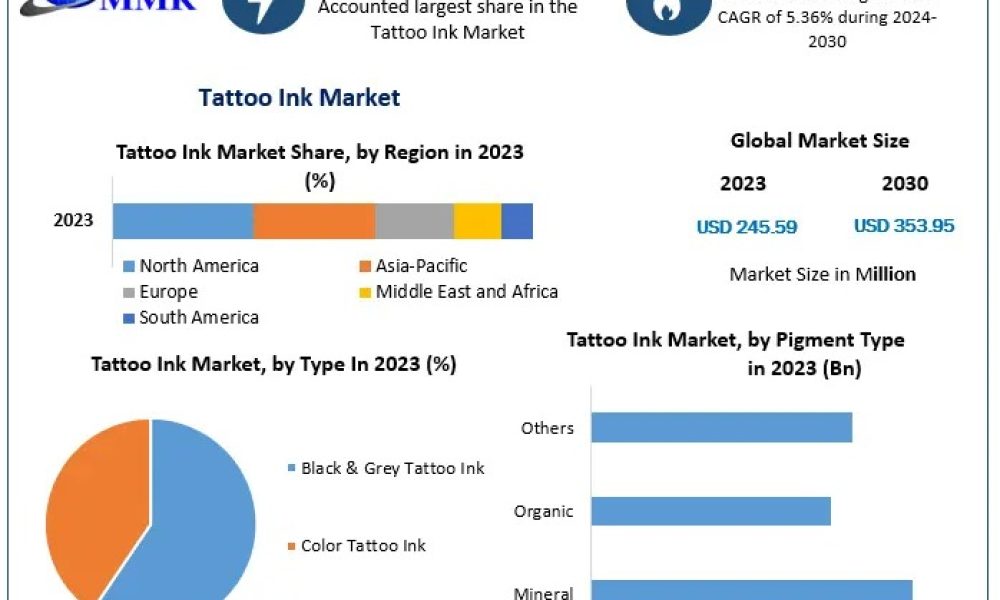
Tattoo Ink Market was valued at approximately USD 245.59 million in 2023 and is projected to grow at a CAGR of 5.36% from 2024 to 2030, reaching nearly USD 353.95 million by 2030. Tattoo inks comprise pigment colors mixed with carriers and additives that ensure even dispersal and safety during the tattooing process. The market is driven by rising tattoo culture acceptance, especially among youth, growing popularity of body art globally, and innovations in ink safety and color quality.
Key Market Dynamics
Drivers
Rising Popularity of Tattoos: Tattoos are increasingly embraced by all age groups, particularly millennials and Gen Z, as forms of personal expression and art. This drives demand for diverse, quality tattoo inks.
Product Innovation: Advances in ink formulation are leading to safer, longer-lasting, vibrant inks including 100% vegan and cruelty-free products, meeting consumer health and ethical concerns.
E-commerce Growth: Online availability of professional and DIY tattoo inks has expanded market access and awareness, especially in emerging markets.
Rise in Professional Studios: Growth in licensed tattoo parlors globally fuels demand for professional-grade inks with consistent quality and compliance.
Restraints
Health Safety Concerns: Tattoo inks may contain heavy metals and chemicals (e.g., lead, titanium) that can cause allergic or toxic reactions, raising regulatory scrutiny and consumer wariness.
Regulatory Challenges: Different regulatory frameworks (e.g., FDA in the U.S, REACH in Europe) impose strict testing and labeling requirements, limiting new product launches and restricting some pigment use.
Market Segmentation
By Type:
Black & Grey Ink: Dominates the market with the highest consumption; preferred for classic, detailed tattoos.
Colorful Tattoo Ink: Includes red, violet, blue, purple pigments with vibrant visual appeal but some health risks, particularly with red ink.
By Pigment Type:
Mineral, Organic, Hybrid: Hybrid inks are emerging fastest, combining the color vibrancy of organics and stability of inorganics.
By End User:
Age Groups: The 18-25 years age segment dominates usage, fueled by social media influence and fashion trends, while older groups slowly increase adoption.
Professional Tattooing vs DIY/Home Tattooing: Professional parlors account for the largest revenue share due to quality assurance, with DIY inks growing rapidly through e-commerce channels.
Regional Insights
Europe: Largest regional market in 2023, driven by robust tattoo culture in countries like Italy, Sweden, and the UK, along with stringent product safety regulations (REACH). Europe’s customers prefer premium, certified inks with high safety and eco-friendly attributes.
North America: High demand especially in the U.S. with a large youth consumer base, but expected to face regulatory challenges due to FDA scrutiny on ink components.
Asia Pacific: Fastest-growing region supported by evolving cultural acceptance, expanding tattoo parlors, growing e-commerce sales, and domestic manufacturing hubs in China, Japan, and India.
Middle East & Africa and Latin America: Emerging markets with rising urbanization, changing societal norms, and increasing disposable income driving gradual adoption.
Competitive Landscape
Key players in the tattoo ink market include:
Intenze Tattoo Ink
Electric Ink
Tommy’s Supplies
Kuro Sumi
Millennium Colors
Eternal Tattoo Supply
Skin Candy Tattoo Ink
Alla Prima
Dynamic Tattoo Inks
Fantasia Tattoo Inks
These companies focus on product safety, pigment innovation, eco-friendly formulations, and expanding global distribution, including via online platforms.
Trends and Outlook
The tattoo ink market is expected to witness increasing adoption of vegan, cruelty-free, and organic inks addressing growing consumer health and environmental concerns.
Hybrid pigment technologies will gain popularity due to their balance of durability and vibrancy.
DIY tattoo kits and inks will expand sales rapidly, especially in emerging economies and among younger consumers experimenting with body art.
Digital platforms and social media continue to fuel tattoo culture growth, promoting demand for diverse, customized ink colors and formulations.
Quote
Tattoo inks have transformed from niche products to mainstream art supplies, reflecting changing social attitudes and technology. Innovation in safety and sustainability, combined with the spread of tattoo culture globally, ensures a bright future for the tattoo ink industry.
This detailed analysis highlights the drivers, trends, and challenges shaping the global tattoo ink market, underscoring its growth potential in the years ahead driven by cultural shifts and product innovation.The global tattoo ink market was valued at approximately USD 245.59 million in 2023 and is expected to grow at a CAGR of 5.36% from 2024 to 2030, reaching nearly USD 353.95 million by 2030. Tattoo inks consist of pigments mixed with carriers and additives that ensure smooth application and safety during tattooing. The market growth is primarily driven by the rising popularity of tattoos among various age groups, especially young adults aged 18-25, and increasing cultural acceptance of body art worldwide.
Key drivers include innovations leading to the development of safer, longer-lasting, and vibrant inks such as 100% vegan and cruelty-free products that meet consumer health and ethical concerns. Additionally, the rise of professional tattoo studios and availability of tattoo inks via online retail channels are expanding market access. However, health safety concerns due to the presence of heavy metals and potential allergens in inks have raised regulatory scrutiny, especially in regions like the US and Europe, which may restrain market growth to some extent.
The tattoo ink market is segmented by type into Black & Grey inks, which hold the largest share due to their widespread use in classic and detailed tattooing, and colored inks such as red, violet, blue, and purple—the latter facing regulatory challenges due to safety concerns. By pigment, the market includes mineral, organic, and hybrid inks, with hybrids emerging as the fastest growing due to their enhanced vibrancy and durability. End-users include professional tattooing parlors/studios, tattoo artists, and individuals engaging in DIY or home tattooing, the latter segment growing rapidly with e-commerce availability.
Regionally, Europe dominates the market in 2023 with strong cultural tattoo traditions in countries like Italy and Sweden, coupled with stringent regulatory frameworks ensuring product safety. North America also shows high demand, but faces regulatory pushbacks. The Asia Pacific region is the fastest-growing market, driven by urbanization, rising incomes, social media influence, and expanding tattoo parlors in countries such as China, Japan, and India. Emerging regions like the Middle East, Africa, and Latin America show increasing adoption as cultural norms evolve.
Leading players include Intenze Tattoo Ink, Electric Ink, Tommy’s Supplies, Kuro Sumi, Millennium Colors, and Eternal Tattoo Supply, among others, focusing on product innovation, global distribution expansion, and compliant, eco-friendly formulations.
Tattoo inks are transitioning from niche artistic products to mainstream consumer goods, supported by cultural shifts and technological advancements. The market’s future will be shaped by safety innovations, sustainability trends, increasing DIY participation, and growing tattoo culture worldwide.




