
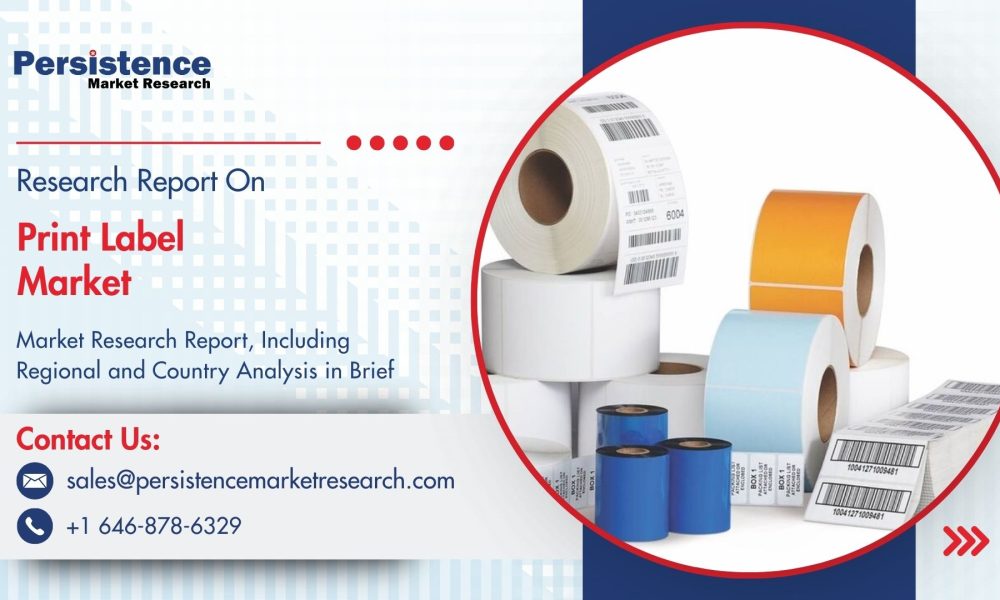
Introduction: The Expanding Role of Print Labels
Print labels have long been an essential part of global commerce, serving as identifiers, communicators, and brand builders for products across industries. From food and beverages to pharmaceuticals, logistics, and consumer goods, print labels play a pivotal role in providing critical information, enhancing visual appeal, and ensuring regulatory compliance. With the rise of e-commerce and increased consumer demand for transparency and sustainability, the print label market has witnessed significant advancements in design, materials, and printing technologies. As industries evolve, print labels are no longer just functional but also strategic tools for marketing and brand differentiation.
Market Overview: Steady Growth and Strong Prospects
The print label market is expected to continue its steady trajectory of growth in the coming years, supported by increasing demand across diverse industries. According to Persistence Market Research, the global print label market is projected to expand at a CAGR of 4.3% over the forecast period. The market, which was valued at US$ 51.1 billion in 2024, is anticipated to reach approximately US$ 68.6 billion by the end of 2031. This consistent growth reflects the indispensable role of print labels in global trade and the ongoing investments in innovative labeling technologies.
Get a Sample PDF Brochure of the Report (Use Corporate Email ID for a Quick Response): https://www.persistencemarketresearch.com/samples/34082
What is Driving the Growth of the Global Print Label Market?
The growth of the global print label market is driven by several converging factors. Firstly, rising demand in industries such as food, beverages, pharmaceuticals, and personal care is boosting label consumption. Secondly, increasing regulations around product information, authenticity, and safety are compelling manufacturers to adopt advanced labels. Thirdly, the e-commerce boom has escalated the need for shipping and logistics labels that ensure efficient supply chain operations. Finally, innovations in printing technologies, including digital and sustainable labeling solutions, are fueling adoption. Together, these drivers highlight why print labels remain critical to modern business operations.
Key Growth Drivers: Factors Supporting Market Expansion
Several growth drivers are shaping the trajectory of the print label market. Sustainability is a prominent factor, as businesses and consumers alike demand eco-friendly labeling materials and processes. Recyclable, biodegradable, and reusable label solutions are becoming increasingly popular, pushing companies to innovate and align with global sustainability goals.
E-commerce has also had a transformative impact, significantly increasing the demand for shipping labels, barcode labels, and packaging labels. With millions of parcels shipped daily, labels serve as the backbone of tracking and logistics management. Additionally, the pharmaceutical and healthcare sectors are increasingly dependent on highly detailed labels for compliance, dosage instructions, and traceability, further fueling market demand.
Segmentation Insights: Types of Labels Driving Demand
The print label market is diverse, comprising different label formats tailored for industry needs. Pressure-sensitive labels remain one of the most widely used types due to their versatility and ease of application across packaging materials. Glue-applied labels continue to hold relevance in beverages and consumer goods packaging. In-mold labels, which merge labels with packaging during the molding process, are gaining attention in premium consumer goods for their durability and aesthetic appeal. Shrink sleeve labels, known for their 360-degree design coverage, are also witnessing strong demand in the beverage and personal care sectors.
Technological Advancements: The Role of Digital and Smart Labels
Technological innovation is redefining the print label market. Digital printing is emerging as a game-changer due to its flexibility, cost efficiency in small batches, and ability to enable customization. Brands are increasingly leveraging digital print labels for targeted marketing campaigns, seasonal promotions, and personalization.
Smart labeling technologies, including QR codes, NFC tags, and RFID-enabled labels, are transforming customer engagement and supply chain transparency. These innovations allow consumers to scan labels for product information, authenticity verification, or promotional offers, while businesses benefit from enhanced traceability and inventory management. The integration of smart features into print labels is becoming a strategic differentiator for companies in competitive markets.
Regional Insights: Where the Growth is Happening
The print label market exhibits strong regional variations. North America and Europe lead in adoption due to advanced manufacturing practices, high consumer awareness, and strict regulatory frameworks for product labeling. In these regions, sustainability and digital innovation are key trends shaping the industry.
The Asia Pacific region, on the other hand, is expected to record the fastest growth during the forecast period. Countries like China, India, and Japan are experiencing booming consumer goods and e-commerce markets, driving a surge in labeling requirements. Rising middle-class incomes and growing demand for packaged foods and pharmaceuticals further contribute to this regional growth.
Challenges: Navigating Market Complexities
Despite steady growth, the print label market faces several challenges. Sustainability concerns around waste generation and recycling remain a major issue, prompting the need for greener solutions. Additionally, fluctuations in raw material prices, particularly paper and adhesives, can affect production costs.
The competitive landscape also poses challenges, with companies under pressure to differentiate their labels in terms of design, material, and functionality. Moreover, the adoption of digital technologies requires significant investments in equipment and training, which can be a barrier for smaller players.
Future Outlook: Innovation Driving Market Evolution
Looking ahead, the print label market is expected to evolve through a combination of sustainability, customization, and smart technologies. Eco-friendly labels made from recycled or bio-based materials will gain prominence, aligning with global climate commitments. Digital printing will continue to rise as a preferred choice, offering agility and cost savings in an era of fast-changing consumer preferences.
Smart and connected labels will further redefine how consumers interact with brands, fostering deeper engagement and loyalty. As businesses increasingly recognize the strategic importance of labels beyond basic packaging, the industry will continue to grow as a critical part of global commerce.
Conclusion: A Market with Steady Potential
The global print label market is firmly positioned for consistent growth, underpinned by its indispensable role across industries. From enhancing brand appeal to ensuring product safety and enabling supply chain efficiency, labels are more than just packaging—they are strategic assets. With the market projected to expand from US$ 51.1 billion in 2024 to US$ 68.6 billion by 2031 at a CAGR of 4.3%, the industry is set for a promising future. Innovation, sustainability, and digital integration will be the guiding forces as the print label market continues to evolve and meet the demands of a dynamic global economy.
Explore the Latest Trending Research Reports:




