
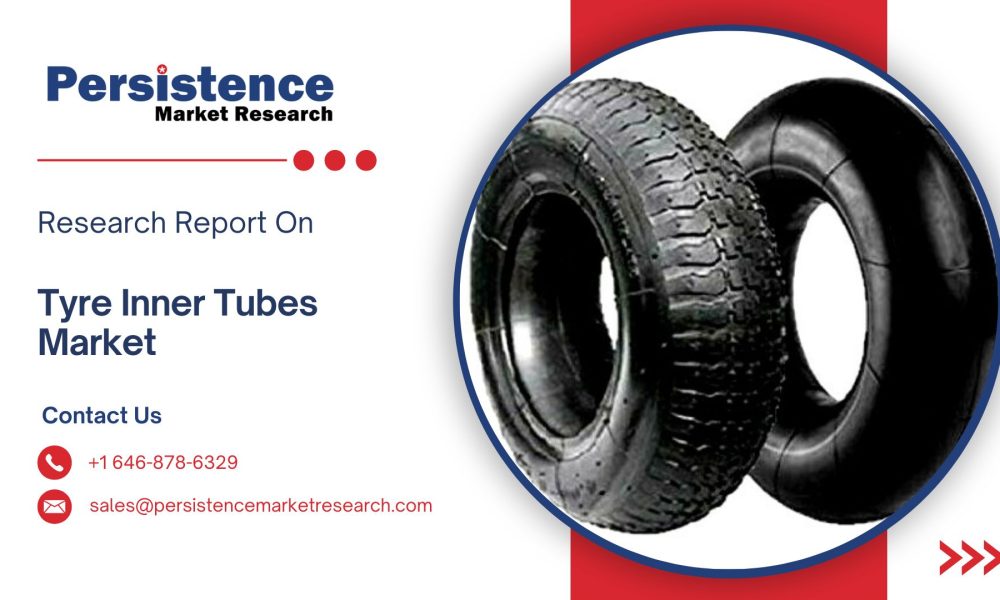
The global tyre inner tubes market continues to demonstrate steady growth, driven by demand across both developed and emerging economies. According to Persistence Market Research, the market is expected to be valued at US$10.19 Bn in 2025 and grow consistently to reach US$11.9 Bn by 2032. This expansion represents a modest but stable CAGR of 2.3% over the forecast period from 2025 to 2032. Tyre inner tubes, commonly used across two-wheelers, passenger vehicles, and heavy commercial vehicles, remain vital in regions where road infrastructure and affordability make tube-type tyres more popular compared to tubeless options.
Market statistics suggest that growth is primarily fueled by rising vehicle ownership in rural and semi-urban regions, where inner tube tyres are more cost-effective and easier to maintain. The two-wheeler segment stands as the leading category, reflecting the surge in motorcycle and scooter sales across Asia-Pacific and parts of Africa. Geographically, Asia-Pacific dominates the global tyre inner tubes market due to its large population base, rapid urbanization, and expanding middle-class demand for affordable mobility solutions. India and China remain particularly influential markets, contributing significantly to overall revenue share. This regional dominance is expected to continue throughout the forecast period.
Get a Sample Copy of Research Report (Use Corporate Mail id for Quick Response): https://www.persistencemarketresearch.com/samples/4361
Key Highlights from the Report
➤ The global tyre inner tubes market is projected to reach US$11.9 Bn by 2032.
➤ The market is anticipated to expand at a CAGR of 2.3% between 2025 and 2032.
➤ Two-wheelers represent the largest segment of the market.
➤ Asia-Pacific remains the leading geographical region driving demand.
➤ Growing adoption in rural and semi-urban areas supports steady market growth.
➤ Cost-effectiveness and maintenance benefits continue to fuel demand for tyre inner tubes.
Market Segmentation
The tyre inner tubes market can be segmented based on product type, with two-wheelers, passenger cars, and commercial vehicles forming the major categories. Among these, the two-wheeler segment leads in terms of revenue and demand share. This is largely due to the high penetration of motorcycles and scooters in Asia-Pacific, Latin America, and Africa, where tube-type tyres remain affordable and widely used. Passenger cars contribute a moderate share, with demand coming primarily from budget and entry-level segments in emerging economies. Heavy and light commercial vehicles also form an essential part of the market, especially in regions where freight and transportation activities heavily rely on cost-effective tube-type solutions.
Segmentation by end-user provides further clarity into market dynamics. OEMs (original equipment manufacturers) continue to play an important role, particularly in emerging economies, where new vehicle sales significantly impact inner tube demand. The aftermarket segment, however, accounts for a substantial portion of sales, reflecting frequent replacement needs due to wear and tear. Rural markets represent a critical end-user category, as users in these areas often prefer cost-efficient and easily repairable tyre solutions. Together, these segments highlight the resilience of tyre inner tubes in markets where affordability and accessibility take precedence over advanced tubeless technologies.
Regional Insights
Asia-Pacific dominates the global tyre inner tubes market and is projected to maintain its leadership through 2032. The region benefits from high two-wheeler ownership, population growth, and rising income levels, especially in countries like India, China, Indonesia, and Vietnam. Rural and semi-urban regions in Asia serve as hotspots for inner tube sales due to the practicality and repairability of tube-type tyres. Government investments in road connectivity further stimulate tyre demand, indirectly boosting the market.
Outside of Asia-Pacific, regions such as Africa and Latin America are also contributing to market growth. In these regions, affordability plays a crucial role, making tube-type tyres more prevalent than tubeless alternatives. North America and Europe, by contrast, demonstrate slower growth due to the widespread adoption of tubeless technology; however, certain niche and aftermarket segments continue to sustain demand. Overall, regional dynamics indicate that developing economies will remain the backbone of global market growth.
Market Drivers
Several key drivers underpin the expansion of the tyre inner tubes market. First, the rising demand for two-wheelers in Asia-Pacific has significantly boosted the consumption of inner tubes. Affordability and convenience make two-wheelers the preferred mode of transportation, especially in densely populated regions. Second, the rural preference for tube-type tyres due to their low cost and easy repairability ensures consistent demand even in the face of growing tubeless adoption. Additionally, inner tubes find strong applications in heavy vehicles and off-road transportation, where durability and shock absorption are critical.
Another important growth driver is the steady expansion of vehicle ownership in emerging markets, where consumers often prioritize value-for-money solutions over advanced technologies. Infrastructure development, rising disposable incomes, and increasing mobility needs contribute to sustained growth. The aftermarket demand for inner tubes, driven by frequent replacements, further adds to the resilience of the market. Together, these drivers illustrate why tyre inner tubes continue to maintain relevance in global automotive and transport ecosystems.
Market Restraints
Despite steady growth, the tyre inner tubes market faces several challenges. The rising popularity of tubeless tyres, particularly in urban and developed markets, poses a significant restraint. Tubeless tyres offer better safety, efficiency, and convenience, leading many consumers to prefer them for modern vehicles. Furthermore, advancements in tyre technology and government incentives for improved safety standards could accelerate the transition away from inner tubes.
Another major restraint is the vulnerability of inner tubes to punctures and frequent replacements. While this ensures steady aftermarket demand, it also contributes to negative consumer perception when compared with the durability of tubeless options. Additionally, fluctuating raw material prices, particularly rubber, impact manufacturing costs and overall market stability. These challenges highlight the need for manufacturers to innovate and adapt strategies to sustain demand in a changing automotive landscape.
Market Opportunities
The tyre inner tubes market presents several promising opportunities. First, growing transportation needs in rural and developing regions create strong prospects for continued demand. As infrastructure expands and vehicle ownership increases, tube-type tyres will remain a preferred solution for cost-sensitive consumers. Second, commercial vehicles, agricultural equipment, and off-road transport segments offer additional avenues for market expansion, given their reliance on durable and affordable inner tube solutions.
There is also an opportunity for manufacturers to innovate with improved inner tube materials that offer enhanced puncture resistance and longer lifespans. By addressing consumer concerns about durability, manufacturers can strengthen demand. Additionally, emerging economies across Africa and Southeast Asia, where economic development is accelerating, present untapped markets for tyre inner tubes. Strategic partnerships, distribution networks, and localized manufacturing could further expand opportunities for global players.
Frequently Asked Questions (FAQs)
➤ How Big is the Tyre Inner Tubes Market?
➤ Who are the Key Players in the Global Market for Tyre Inner Tubes?
➤ What is the Projected Growth Rate of the Market?
➤ What is the Market Forecast for 2032?
➤ Which Region is Estimated to Dominate the Industry through the Forecast Period?
Company Insights
Key players operating in the global tyre inner tubes market include:
- Bridgestone Corporation
- Michelin
- Goodyear Tire & Rubber Company
- Continental AG
- Apollo Tyres Ltd.
- MRF Limited
- JK Tyre & Industries
- CEAT Limited
- Zhongce Rubber Group Co., Ltd.
- Trelleborg AB
Recent Developments:
- Several leading manufacturers have expanded their product portfolios to include reinforced inner tubes with enhanced puncture resistance to appeal to rural and heavy-duty users.
- Companies are increasingly investing in distribution networks across emerging economies in Asia and Africa to strengthen their market presence and capture aftermarket demand.
Explore more related market insights and reports by visiting our website.




