
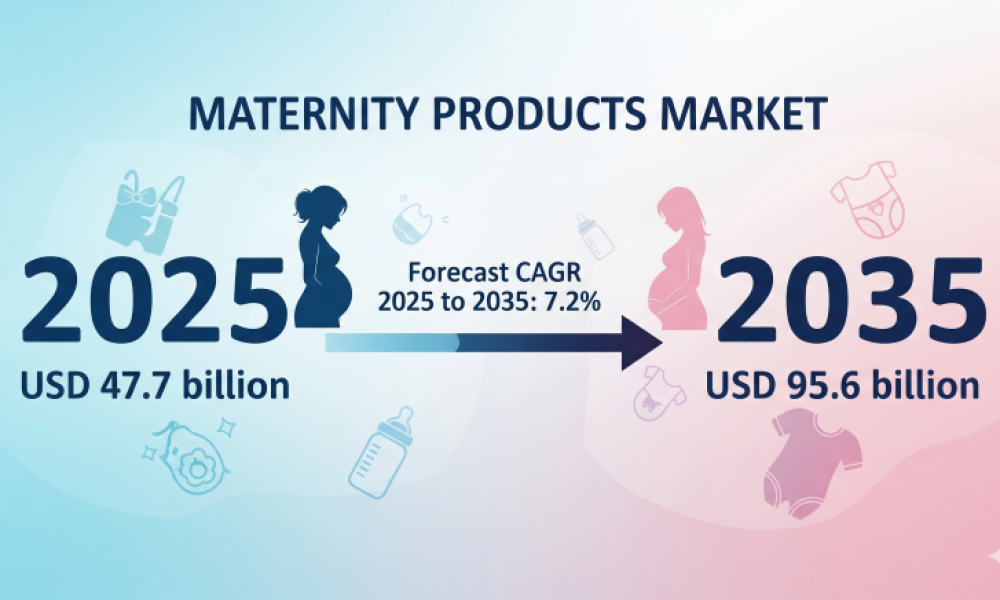
The global maternity products market is experiencing robust growth and is projected to reach USD 95.6 billion by 2035, up from an estimated USD 47.7 billion in 2025. This represents a compound annual growth rate (CAGR) of 7.2% over the forecast period. As maternal health and wellness continue to garner attention, the demand for maternity products that prioritize comfort, safety, and convenience is expected to drive this expansion.
The market’s upward trajectory is characterized by gradual annual growth, with values rising from USD 47.7 billion in 2025 to USD 51.1 billion in 2026, and reaching USD 58.8 billion by 2028. This steady growth reflects an increased reliance on specialized products for maternal care, including personal care, nutrition, healthcare, and apparel. As more women seek products that offer both functionality and comfort during pregnancy, manufacturers and retailers focusing on quality, safety, and design are well-positioned to capitalize on the rising demand.
Unlock detailed analytics – Request your personalized report now! https://www.futuremarketinsights.com/reports/sample/rep-gb-24827
Market Segmentation and Leading Product Categories
The maternity products market is diverse, with key segments such as maternal apparel, personal care, nutritional supplements, and maternity accessories. Of these, maternal apparel holds the largest share, expected to account for 42.3% of the market in 2025. The demand for comfortable, stylish, and adaptable clothing that caters to the physical changes during pregnancy is driving growth in this segment. Apparel companies are integrating breathable materials, expandable waistbands, and post-pregnancy features to appeal to modern consumers who balance work, travel, and social life.
In terms of application, the pregnancy phase is forecasted to dominate, accounting for 63.8% of market demand in 2025. Products in this category include supportive items such as ergonomic belts, maternity pads, and skincare solutions that ensure maternal comfort and health during pregnancy.
Technological Innovations and Consumer Trends
The rise of e-commerce and innovations in product design are significantly contributing to the expansion of the maternity products market. Consumers are increasingly opting for multifunctional, stylish products that combine practicality with fashion. This is especially evident in the maternity apparel segment, where technological advancements in fabrics and designs are enhancing both comfort and aesthetic appeal.
A key trend within the maternity products market is the growing demand for eco-friendly, hypoallergenic, and skin-friendly offerings. As consumers become more health-conscious, there is a notable shift toward organic fabrics and chemical-free personal care products. Brands that integrate these environmentally considerate features are gaining a competitive edge and fostering increased brand loyalty.
Regional Growth and Key Markets
The maternity products market is witnessing significant expansion across various regions, with North America, Asia-Pacific, and Europe leading the charge. China and India are particularly promising growth markets, driven by rising maternal health awareness, expanding healthcare infrastructure, and growing disposable income.
In China, the market is expected to grow at a robust 9.7% CAGR, the highest among leading nations. Factors such as urbanization, government-supported maternal care programs, and the increasing adoption of maternity products are contributing to this rapid growth. Similarly, India is seeing a growth rate of 9%, with expanding retail and e-commerce channels supporting increased access to maternity goods.
The U.S. market, while growing at a slower pace (6.1% CAGR), continues to emphasize premium and technologically advanced maternity products, with strong demand for maternity wear, prenatal supplements, and baby care products.
Download Brochure for Full Insights: https://www.futuremarketinsights.com/reports/brochure/rep-gb-24827
Competitive Landscape
The competitive landscape of the maternity products market is diverse, with leading brands such as H&M, A Pea in the Pod, and ASOS competing to provide comfortable, stylish, and functional products for expecting mothers. These companies are differentiating themselves by offering versatile designs that blend style with practicality. For instance, H&M Mama focuses on affordable, adaptable maternity wear, while A Pea in the Pod targets luxury buyers with its fashion-forward collections.
Other notable players such as Cake, HATCH, JoJo Maman Bébé, and Isabella Oliver are introducing specialized products, including maternity lingerie, nursing wear, and eco-friendly maternity clothing. Retailers like PinkBlush and Seraphine emphasize trendy, season-specific collections, while Gap, Old Navy, and Motherhood provide accessible, everyday maternity solutions.
The rise of e-commerce platforms and subscription services is also reshaping the market, making it easier for consumers to access a wide range of maternity products from the comfort of their homes. This trend is driving competition as brands work to improve their online presence and product availability.
About Future Market Insights (FMI)
Future Market Insights, Inc. (ESOMAR certified, recipient of the Stevie Award, and a member of the Greater New York Chamber of Commerce) offers profound insights into the driving factors that are boosting demand in the market. FMI stands as the leading global provider of market intelligence, advisory services, consulting, and events for the Packaging, Food and Beverage, Consumer Technology, Healthcare, Industrial, and Chemicals markets. With a vast team of over 400 analysts worldwide, FMI provides global, regional, and local expertise on diverse domains and industry trends across more than 110 countries.



