
Definition
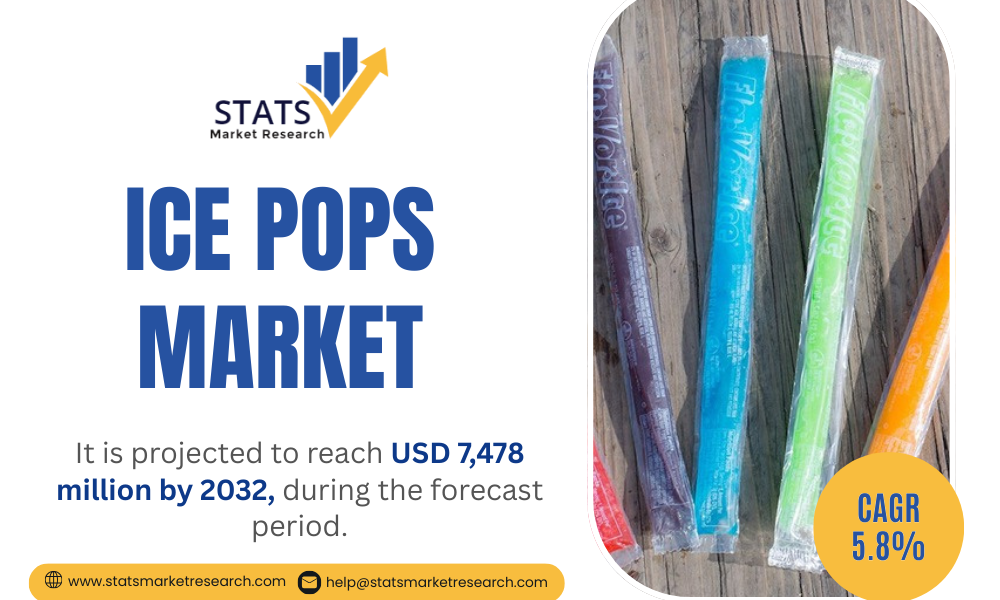
The Global Ice Pops Market represents a distinct segment of the frozen desserts industry, comprising portable, liquid-based frozen treats designed for individual consumption. Ice pops are formed by quiescent freezing—a process that solidifies a liquid into a single frozen block, often around a stick (popsicles) or within a plastic tube (freezer pops). Unlike aerated desserts like ice cream, which are whipped to incorporate air, ice pops maintain a crystalline texture and a dense, refreshing mouthfeel.
Ice pops cater to all age groups, but they are particularly popular among children, teenagers, and working professionals due to their convenient, single-serve format. The market is segmented primarily into popsicles and tube-style freezer pops, with popsicles dominating 87% of the global market owing to their nostalgic appeal and portability.
The product portfolio has evolved to include health-conscious options, such as low-sugar, fruit-based, organic, and functional ice pops fortified with vitamins, electrolytes, or probiotics. These innovations respond to consumer demand for better-for-you frozen snacks, especially in health-aware demographics. Major market participants, including Nestlé, Unilever, Yili, and Mengniu, play significant roles in shaping global demand while introducing product innovations and expanding distribution networks.
Recent Developments in the Ice Pops Market
The ice pops market is experiencing a significant evolution, moving beyond simple, sugary treats to cater to a more health-conscious consumer base. A key development is the strong trend toward “better-for-you” options, with a surge in products made from natural ingredients, real fruit, and without artificial additives. Many brands are now offering low-sugar, organic, vegan, and gluten-free ice pops to meet diverse dietary needs and preferences. Another notable innovation is the rise of functional ice pops, which are infused with vitamins, probiotics, or electrolytes to offer added health benefits. Furthermore, manufacturers are experimenting with unique and exotic flavor combinations, such as pineapple jalapeño and lavender, to appeal to adult consumers seeking a more sophisticated frozen snack.
Major Distribution Channels
The distribution of ice pops is heavily reliant on an effective cold chain network to reach consumers in their freshest state. The largest and most dominant channel remains traditional brick-and-mortar retail, particularly through supermarkets and hypermarkets. These large stores offer a wide variety of brands and flavors, capitalizing on consumer convenience during grocery shopping. Convenience stores and gas stations are also critical, as they drive a significant number of impulse purchases. In recent years, online retail has emerged as a major growth channel, with e-commerce platforms and food delivery services making it easier for brands to reach consumers directly. Additionally, smaller, artisanal ice pop brands are leveraging direct-to-consumer models, including farmers’ markets and dedicated retail kiosks, to build a loyal customer base.
Market Size
Global Ice Pops Market was valued at USD 5,071 million in 2024 and is projected to grow to USD 7,478 million by 2032, reflecting a CAGR of 5.8% during the forecast period.
Download FREE Sample of this Report @ https://www.statsmarketresearch.com/download-free-sample/8057264/global-ice-pops-forecast-market
This steady growth reflects the consistent demand for refreshing frozen snacks across urban and tropical regions.
Historically, the market has benefited from several factors:
- Urbanization and changing lifestyles that increase consumption of portable, single-serve snacks.
- Rising disposable incomes, particularly in emerging markets such as China, India, and Southeast Asia.
- Product innovation in flavors, textures, and health-conscious formulations.
Regionally, Asia-Pacific dominates production, accounting for over 50% of global output, led by manufacturers like Yili, Mengniu, and Lotte Confectionery. Meanwhile, multinational corporations including Nestlé and Unilever collectively control 52% of the global market, leveraging extensive distribution networks and brand loyalty.
Health-oriented products such as fruit juice-based popsicles by GoodPop and Chloe’s Fruit have demonstrated strong sales growth, exceeding 20% annual growth, highlighting the market’s responsiveness to clean-label and functional product innovations.
Seasonal trends remain significant, with 65-70% of sales occurring in summer months, which affects production planning and logistics. Despite these challenges, technological advancements in cold chain management and freezer innovations have enabled manufacturers to maintain supply during off-peak periods.
Market Dynamics (Drivers, Restraints, Opportunities, and Challenges)
Drivers
- Rising Demand for Convenient and Refreshing Snacks
Ice pops fulfill the need for quick, portable, and refreshing snacks, especially in urban environments where busy lifestyles demand ready-to-eat solutions. Their single-serve format minimizes waste and simplifies consumption, making them ideal for school-aged children and working professionals. - Health-Conscious Product Innovation
Manufacturers are capitalizing on consumer preferences for low-sugar, organic, fruit-based, and functional ice pops. These innovations target health-conscious adults while retaining traditional consumers. Examples include GoodPop’s 100% fruit juice pops and Chloe’s Fruit reduced-sugar offerings, both achieving notable sales increases. - Climate Influence and Seasonal Demand
Rising temperatures and heatwaves across regions drive spikes in ice pop consumption during summer months, particularly in tropical and subtropical climates.
Restraints
- Seasonality and Perishability
Ice pop sales are heavily season-dependent, with most revenue generated in summer. Off-season periods create inventory management challenges and underutilized manufacturing capacity. - Price Sensitivity in Emerging Markets
Consumers in Southeast Asia, Africa, and parts of Latin America prioritize affordability over premium offerings, limiting market penetration for functional and organic variants. Rising raw material costs (sugar, fruit concentrates, and packaging) further constrain profit margins. - Cold Chain and Logistical Costs
Maintaining frozen storage and transport is critical, leading to high operational costs, especially for smaller manufacturers with limited infrastructure.
Opportunities
- Expansion into Commercial and Foodservice Channels
Restaurants, hotels, and catering businesses are adopting ice pops as upscale, portion-controlled desserts, resulting in 12-15% annual growth in these channels. Custom-shaped and branded ice pops offer marketing advantages in the commercial sector. - Asia-Pacific Urbanization and Middle-Class Growth
Rapid urbanization and rising disposable incomes in China, India, and Southeast Asia are expected to contribute over 40% of global market growth by 2032. Strategic partnerships with local distributors enhance accessibility and affordability. - Premium and Artisanal Segment Growth
Gourmet and craft ice pops are creating premium pricing opportunities, with some products priced 3-5 times higher than conventional options in specialty retail and e-commerce channels.
Challenges
- Competition from Alternative Frozen Snacks
Gelato bars, yogurt sticks, and plant-based ice creams are competing for similar consumer segments. Maintaining differentiation requires continuous R&D investment. - Sustainability Pressures
Environmental concerns regarding single-use plastic sticks and wrappers necessitate a transition to biodegradable packaging, which can increase production costs by 15-20%. - Supply Chain Vulnerabilities
Dependence on stable freezer logistics makes ice pop distribution susceptible to power outages, transportation delays, and supply chain disruptions, impacting seasonal revenue.
Regional Analysis
- Asia-Pacific: Dominates global production with over 50% market share, driven by China and India. Urbanization, rising incomes, and increasing health awareness are key growth factors.
- North America: High demand for premium and organic ice pops, supported by brand recognition of Nestlé, Unilever, and GoodPop.
- Europe: Focused on organic, reduced-sugar, and sustainable variants, with strong retail penetration and increasing private-label competition.
- Latin America: Emerging growth in urban centers; affordability and distribution are key factors.
- Middle East & Africa: Nascent adoption but potential exists in urbanized regions and tourist destinations.
Get the Complete Report & TOC @ https://www.statsmarketresearch.com/global-ice-pops-forecast-market-8057264
Competitor Analysis
The global ice pops market is moderately concentrated, with multinational companies dominating alongside regional players and emerging organic brands:
- Nestlé S.A. (Switzerland): Iconic brands like Popsicle and Fruttare, extensive global distribution.
- Unilever (U.K./Netherlands): Fruttare and other frozen snack lines, heavy marketing investment.
- Yili Group (China): Localized flavors and functional ice pops, aggressive pricing in Asia.
- Mengniu Dairy (China): Strong regional presence with innovative fruit-based options.
- Meiji Holdings (Japan): Premium fruit formulations targeting health-conscious consumers.
- Akagi Nyugyo Co., Ltd. (Japan): Innovative packaging and product formats.
- GoodPop (U.S.): 100% fruit juice, organic, and vegan options.
- Chloe’s Fruit (U.S.): Clean-label reduced-sugar products with premium positioning.
Other notable competitors include Daqing Ruby Ice Cream, Lotte Confectionery, The Jel Sert Company, Jinan Qunkang Food, Alamance Foods, Mr Freeze (U.K.), and Deebees Organics (Canada).
Global Ice Pops: Market Segmentation Analysis
This report provides a deep insight into the global Ice Pops market, covering all its essential aspects. This ranges from a macro overview of the market to micro details of the market size, competitive landscape, development trend, niche market, key market drivers and challenges, SWOT analysis, value chain analysis, etc.
The analysis helps the reader to shape the competition within the industries and strategies for the competitive environment to enhance the potential profit. Furthermore, it provides a simple framework for evaluating and assessing the position of the business organization. The report structure also focuses on the competitive landscape of the Global Ice Pops market. This report introduces in detail the market share, market performance, product situation, operation situation, etc., of the main players, which helps the readers in the industry to identify the main competitors and deeply understand the competition pattern of the market.
In a word, this report is a must-read for industry players, investors, researchers, consultants, business strategists, and all those who have any kind of stake or are planning to foray into the Ice Pops market in any manner.
Market Segmentation (by Application)
- Individual
- Commercial
Market Segmentation (by Type)
- Popsicles
- Freezer pops
Key Company
- Nestlé S.A. (Switzerland)
- Unilever (U.K./Netherlands)
- Inner Mongolia Yili Industrial Group (China)
- China Mengniu Dairy Company Limited (China)
- Meiji Holdings (Japan)
- Akagi Nyugyo Co., Ltd. (Japan)
- Daqing Ruby Ice Cream Co. (China)
- Lotte Confectionery (South Korea)
- The Jel Sert Company (U.S.)
- Jinan Qunkang Food (China)
- Alamance Foods, Inc. (U.S.)
- GoodPop (U.S.)
- Chloe’s Fruit (U.S.)
- Mr Freeze (U.K.)
- Deebees Organics (Canada)
Geographic Segmentation
- Asia-Pacific: China, India, Japan, South Korea, Southeast Asia
- North America: U.S., Canada, Mexico
- Europe: U.K., Germany, France, Italy, Spain
- Latin America: Brazil, Argentina, Chile, others
- Middle East & Africa: UAE, South Africa, Saudi Arabia, others
FAQ
What is the current market size of the Ice Pops market?
The global Ice Pops market was valued at USD 5,071 million in 2024 and is projected to reach USD 7,478 million by 2032.
Which are the key companies operating in the Ice Pops market?
Key players include Nestlé, Unilever, Yili, Mengniu, Meiji Holdings, Akagi Nyugyo, GoodPop, Chloe’s Fruit, Lotte Confectionery, and The Jel Sert Company.
What are the key growth drivers in the Ice Pops market?
Growth is driven by rising demand for convenient snacks, health-conscious product innovations, increasing disposable incomes, urbanization, and climate-driven seasonal demand.
Which regions dominate the Ice Pops market?
Asia-Pacific leads production and consumption, followed by North America and Europe. Emerging markets in Latin America also present significant growth potential.
What are the emerging trends in the Ice Pops market?
Key trends include health-conscious and functional ice pops, organic and fruit-based formulations, premium artisanal products, sustainable packaging, and digital marketing initiatives.
About Us
☎️ International: +1 (332) 2424 294
📄 Website: www.statsmarketresearch.com
Join us on LinkedIn:- https://www.linkedin.com/company/statsmarketresearch




