
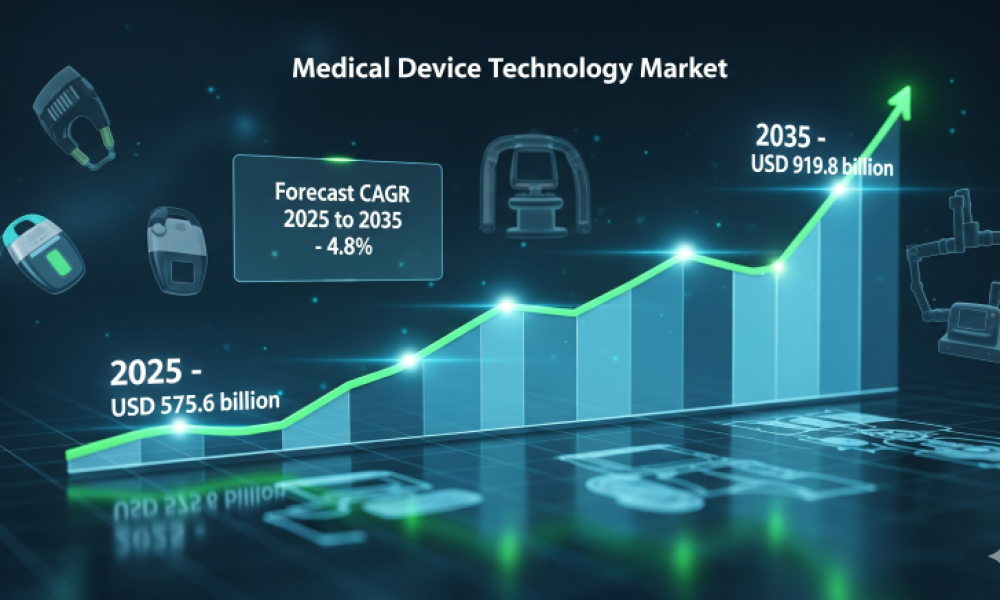
The global Medical Device Technology Market is on track to grow from USD 575.6 billion in 2025 to an impressive USD 919.8 billion by 2035, with a compound annual growth rate (CAGR) of 4.8% over the forecast period. This steady growth is fueled by the rising demand for cutting-edge healthcare solutions, an aging global population, and technological advancements across medical device categories. The market’s future success hinges on innovation in areas like artificial intelligence (AI), remote monitoring, and minimally invasive surgical tools.
Unlock detailed analytics – Request your personalized report now! https://www.futuremarketinsights.com/reports/sample/rep-gb-423
Key Drivers and Growth Catalysts
The medical device technology market is experiencing robust expansion driven by the growing need for sophisticated healthcare equipment and services worldwide. Hospitals, clinics, outpatient care centers, and academic research institutions are increasing their investments in state-of-the-art medical technologies that promise better clinical outcomes, operational efficiency, and enhanced patient care. The demand is especially strong in regions like North America, Asia-Pacific, and Europe, which continue to dominate in terms of market revenue.
The aging population and the increasing prevalence of chronic diseases like cardiovascular conditions, diabetes, and musculoskeletal disorders are among the key factors propelling market growth. These health challenges are driving up the demand for both diagnostic and therapeutic medical devices. In response, companies are continually investing in R&D to develop advanced technologies such as AI-powered diagnostic tools, robotic-assisted surgery devices, and smart implants.
Technological Innovations and Segment Insights
One of the most significant developments in the sector is the integration of AI and machine learning into medical devices, which is revolutionizing healthcare delivery. These technologies enhance diagnostic accuracy, enable real-time patient monitoring, and improve overall treatment efficiency. The expansion of telemedicine and remote monitoring solutions, particularly accelerated by the COVID-19 pandemic, is expected to further expand market opportunities for wearable health devices, remote diagnostic tools, and home-based monitoring systems.
Leading Segments in the Medical Device Market
The orthopedic devices segment is expected to maintain its leadership, accounting for 26.3% of the market share in 2025. The rise in musculoskeletal disorders, particularly among the elderly, has spurred demand for implants, prosthetics, and minimally invasive surgical solutions. The increasing focus on smart implants and customized orthopedic devices is enhancing patient recovery and mobility, further solidifying the segment’s dominance.
Another key segment, diagnostic imaging devices, including MRI, X-ray, and ultrasound systems, remains indispensable in modern healthcare settings. These devices are crucial in diagnosing a wide range of conditions, from cancers to heart diseases, which supports their significant share in the market.
Hospitals continue to be the largest end-user segment, representing 32.1% of market revenue in 2025. Hospitals invest heavily in medical devices to enhance patient safety, improve clinical outcomes, and streamline workflows. With advancements in surgical technologies, real-time data integration, and advanced imaging, hospitals remain the focal point for technological adoption.
Competitive Landscape
The competitive landscape in the medical device technology market is intensely dynamic, with several global giants competing for dominance. Medtronic (Ireland), Johnson & Johnson Services, Inc. (USA), and Siemens Healthineers (Germany) are some of the key players in the market. These companies continue to dominate through strategic mergers and acquisitions, partnerships, and sustained investments in R&D. They focus on enhancing product portfolios to cater to the evolving demands of healthcare providers and patients.
While the industry is led by established players, smaller, nimble startups focusing on niche innovations such as 3D printing in medical devices and implantable bioelectronics are gaining traction. For example, in the United States, 3D printing technologies are revolutionizing how custom medical devices are created, offering patients more personalized treatment options. Similarly, in the United Kingdom, implantable bioelectronics are gaining ground, particularly for treating chronic pain and neurological conditions.
Regional Analysis and Emerging Markets
The market growth trajectory varies significantly by region, with China and India leading the way in terms of market expansion. China is projected to maintain the highest CAGR at 6.5%, driven by increasing healthcare infrastructure investments and the adoption of advanced medical technologies. India, with a CAGR of 6.0%, is also emerging as a strong player, particularly in the wearable health monitoring devices segment, which is witnessing a surge in demand due to the country’s expanding healthcare needs and digital health solutions.
In contrast, developed markets such as Germany and the United States will continue to expand steadily. The U.S. market, valued at USD 199.7 billion in 2025, is expected to grow at a CAGR of 4.1%, benefiting from strong healthcare investments, digital health integration, and the continued focus on improving healthcare access and outcomes.
Download Brochure for Full Insights: https://www.futuremarketinsights.com/reports/brochure/rep-gb-423
Challenges and Opportunities
Despite the overall positive market outlook, the medical device technology market faces challenges such as stringent regulatory approvals and the high costs associated with compliance. Regulatory complexities, particularly across different regions, can delay the market entry of new devices and increase development costs for manufacturers.
However, the rise of telemedicine, driven by the global shift toward remote healthcare services, presents significant opportunities. Manufacturers are focusing on developing remote patient monitoring systems, wearable sensors, and other telehealth solutions to support virtual consultations and continuous patient care. The integration of AI into medical devices is also creating exciting opportunities for improving diagnostic accuracy and healthcare delivery efficiency.
About Future Market Insights (FMI)
Future Market Insights, Inc. (ESOMAR certified, recipient of the Stevie Award, and a member of the Greater New York Chamber of Commerce) offers profound insights into the driving factors that are boosting demand in the market. FMI stands as the leading global provider of market intelligence, advisory services, consulting, and events for the Packaging, Food and Beverage, Consumer Technology, Healthcare, Industrial, and Chemicals markets. With a vast team of over 400 analysts worldwide, FMI provides global, regional, and local expertise on diverse domains and industry trends across more than 110 countries.



