
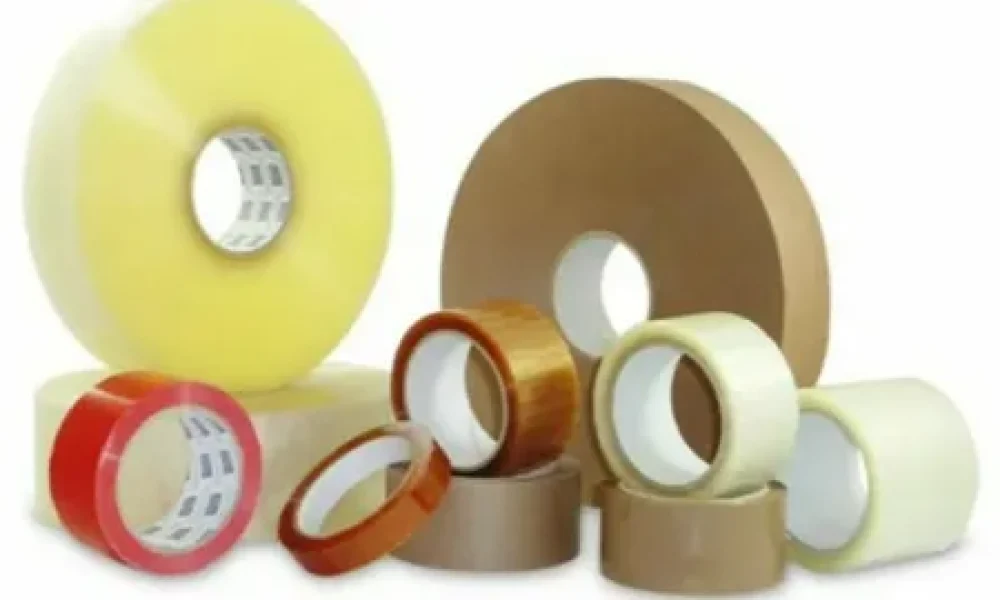
The global cellophane tape market is on a steady growth trajectory, projected to rise from USD 2.2 billion in 2025 to USD 3.3 billion by 2035, at a compound annual growth rate (CAGR) of 4.1%. This momentum reflects consistent year-on-year gains, underpinned by the booming e-commerce sector, widespread demand for office and stationery supplies, and a strong shift toward biodegradable and green tape solutions.
As everyday essentials, cellophane tapes are indispensable across industries – from packaging and logistics to retail, education, and office supplies. What’s changing, however, is how manufacturers are innovating to meet shifting sustainability goals and consumer expectations.
Quick Market Snapshot
2025 Market Size: USD 2.2 billion
2035 Forecast Size: USD 3.3 billion
CAGR (2025–2035): 4.1%
Leading Product Segment: Transparent Tapes (46% in 2025)
Top Growth Regions: Asia-Pacific, North America, Europe
Key Players: Henkel (Sellotape), Panfix, Bagla Group, Twin Tech India, Shree Shubh Industries, Globe Industries Corporation, Louis Tape
Request Your Sample Now: https://www.futuremarketinsights.com/reports/sample/rep-gb-22516
E-Commerce, Logistics, and Office Supplies Fuel Expansion
The packaging industry remains the single largest consumer of cellophane tapes, accounting for around 40% of total market demand. This dominance is fueled by the growing need for carton sealing, labeling, and product protection in retail and e-commerce logistics.
Stationery and office supplies follow with 25% market share, demonstrating the resilience of traditional paper-based workflows in schools, workplaces, and homes despite digital adoption. Meanwhile, retail and consumer goods (15%) and logistics & transportation (10%) continue to expand their tape usage as global trade and consumer shipments grow.
“Carton sealing applications alone made up 61% of cellophane tape consumption in 2024, and with e-commerce orders showing no signs of slowing, tapes are becoming central to fulfillment reliability,” said an industry analyst at Markets Horizon.
Transparency and Acrylic Adhesives Lead the Way
Transparent tapes remain the workhorse of the industry, holding 46% of market share in 2025. They are prized for their clarity, anti-yellowing durability, and versatility across everything from school kits to professional packaging. Over 71% of consumer tape purchases under $5 fall into this category, showing their dominance in low-cost, high-volume retail.
Meanwhile, acrylic adhesives represent the most popular formulation, holding 51% global share thanks to their superior bonding strength, temperature resistance, and non-toxic nature. Compared to rubber-based alternatives, acrylic adhesives retain 85% of bond strength over 12 months, making them the adhesive of choice for online retail and logistics operators.
Roll Format Dominates, but Specialty Variants Rising
Roll-format tapes remain the preferred choice globally, representing 67% of usage. Their wide availability in different sizes makes them the backbone of consumer and industrial packaging applications. Jumbo rolls for e-commerce fulfillment centers, for example, saw 18% year-over-year growth in 2024.
At the same time, specialty formats – including decorative, pre-cut, and tamper-evident tapes – are gaining momentum in education, retail, and medical packaging, reflecting a diversification of end-use needs.
Office Supplies and Education Anchor End-Use Demand
The office supply sector leads with a 39% share, reflecting heavy institutional procurement of tape bundles and dispenser systems. Schools and universities remain significant buyers as well, with over 80% of education kits across Asia-Pacific including transparent tape.
Printable and label-protection variants are also growing, especially in retail where visibility and durability matter.
Eco-Friendly Innovation: Biodegradable Tapes in Focus
Sustainability is reshaping the industry as biodegradable cellophane tapes gain adoption, especially in Western Europe and Japan. These products use cellulose backings and starch-based adhesives, reducing reliance on synthetic plastics. Germany and the Netherlands have already introduced procurement preferences for plastic-free packaging materials.
Biodegradable tape rolls, while 34% more expensive than synthetic versions, are seeing strong growth in environmentally conscious markets.
Regional Growth Dynamics: BRICS Lead the Way
The global market is forecast to grow at 4.1% CAGR, but performance varies across regions:
India: Fastest-growing market at 4.8% CAGR, fueled by FMCG packaging, textbook distribution, and a rising middle-class consumer base.
China: Expanding at 4.5% CAGR, driven by manufacturing and e-commerce logistics, with custom-printed tapes becoming popular for branding.
United States: Near-global average growth of 4.0%, led by e-commerce packaging and specialty tapes for electronics and defense logistics.
Canada & Germany: Moderate growth at 3.8% and 3.7% CAGR, respectively, with higher emphasis on biodegradable and cellulose-based products.
Get the Report Brochure Now: https://www.futuremarketinsights.com/reports/brochure/rep-gb-22516
Market Leaders and New Entrants: Competing Through Innovation
The industry is moderately consolidated, led by Henkel (Sellotape), which holds 21% global share with its iconic consumer and industrial brands. Henkel continues to expand its eco-friendly tape range, strengthening its hold on both traditional and sustainable segments.
Panfix and Bagla Group are highly competitive players in Asia, leveraging aggressive pricing and strong distribution networks. Twin Tech India and Shree Shubh Industries, newer entrants, are making waves with customizable and printed tape offerings that appeal to regional retailers and FMCG companies.
Export-oriented firms like Louis Tape and Globe Industries Corporation are capitalizing on bulk production and competitive pricing to expand their footprint across global trade hubs.
“Smaller converters are proving that agility matters – whether in custom printing, quick delivery, or eco-friendly innovation. They are pushing larger incumbents to rethink their strategies,” noted a regional trade analyst.
Recent Industry Developments
3M (2024): Launched the Scotch® Box Lock™ Packaging Tape, featuring solvent-free adhesive and made in a zero-waste facility. Designed for universal compatibility, it reduces application time by 25% in e-commerce packaging.
Zeus Group (2025): Acquired Empire Tapes (UK), strengthening its European portfolio in industrial adhesive technologies and expanding into high-performance tape solutions.
Q.E.P. Co., Inc. (2025): Reinforced its commitment to domestic tape manufacturing in the U.S., positioning ROBERTS® as a reliable, American-made alternative in an increasingly globalized market.
Outlook: Innovation, Expansion, and Sustainability
Looking ahead to 2035, the cellophane tape market will continue to evolve from a commodity product to a value-driven essential shaped by sustainability, automation, and branding needs. Established players are investing in new adhesive chemistries and recyclable backings, while emerging manufacturers are scaling local production to serve rapidly growing demand in Asia and Latin America.
With transparent tapes holding strong, biodegradable innovations rising, and logistics demands fueling high-volume consumption, the global market is set to thrive – bridging tradition with innovation in one of the world’s most essential everyday products.



