
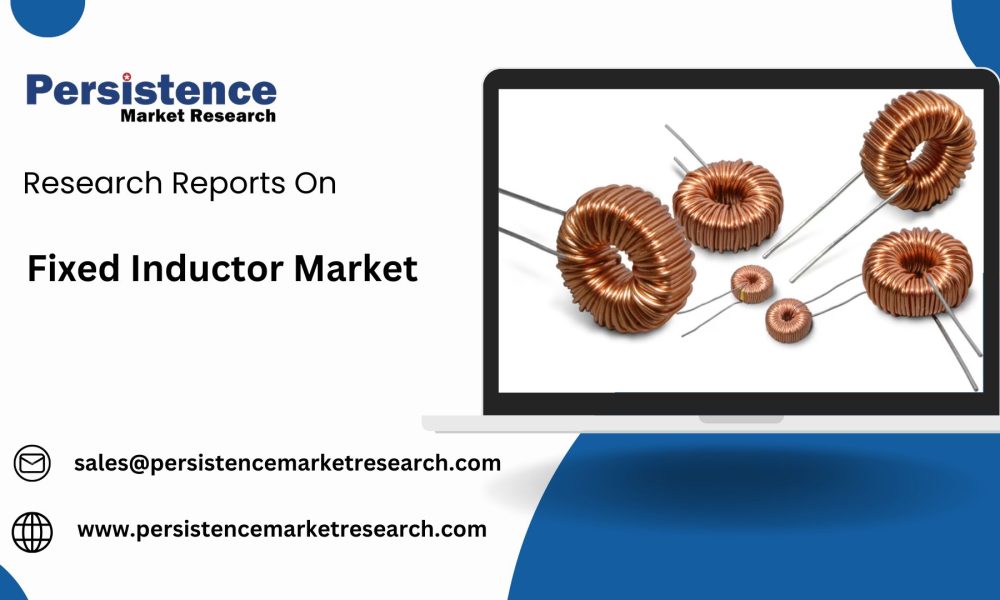
The global fixed inductor market is poised for substantial expansion over the next decade. Valued at US$4.5 billion in 2025, the market is projected to reach US$6.8 billion by 2032, growing at a healthy CAGR of 6.1%. This growth trajectory is fueled by surging demand from consumer electronics, automotive, and telecommunications sectors, all of which increasingly rely on compact, efficient, and high-performance components.
Fixed inductors are essential in power management, signal filtering, and energy storage across diverse electronic circuits. The market is benefitting significantly from rapid advancements in miniaturization and material science technologies, aligning with the global push toward smaller, smarter, and more efficient devices. With the rise of smartphones, electric vehicles (EVs), and 5G infrastructure, fixed inductors are becoming indispensable.
Understanding Fixed Inductors and Their Role
A fixed inductor is an electronic component that stores energy in a magnetic field when electrical current flows through it. Unlike variable inductors, fixed inductors offer a constant inductance value, ensuring stability and predictability in circuit designs.
They are primarily used for:
- Power supply regulation – managing current flow in devices.
- Signal filtering – reducing noise and interference in communication systems.
- Energy storage – maintaining steady performance in electronic applications.
Their ability to perform reliably in consumer electronics, telecommunications systems, medical equipment, and automotive electronics underscores their rising demand in today’s increasingly digitalized world.
Market Growth Drivers
Several factors are shaping the global fixed inductor market landscape:
- Booming Consumer Electronics Industry
With more than 6.8 billion smartphone users worldwide, demand for reliable electronic components is soaring. Fixed inductors are critical in power supply circuits, RF modules, and filtering systems of smartphones, tablets, wearables, and IoT devices.
- Miniaturized inductors now cater to slim smartphone designs.
- IoT expansion requires more energy-efficient, low-noise components.
- Rise of Electric Vehicles (EVs) and Automotive Electronics
The shift toward electrification in transportation is a significant growth driver. Fixed inductors are integral in EV powertrains, battery management systems, infotainment, and advanced driver-assistance systems (ADAS).
- Governments worldwide are incentivizing EV adoption, fueling production.
- Demand for high-efficiency wire-wound inductors is rising in automotive circuits.
- Deployment of 5G Infrastructure
As global telecom providers invest heavily in 5G networks, the need for reliable and efficient fixed inductors is skyrocketing. They ensure seamless high-speed connectivity by filtering signals and managing power in telecom base stations, routers, and network equipment.
- 5G adoption is expected to cover 1.9 billion subscribers by 2029.
- This will fuel significant inductor consumption in network equipment manufacturing.
- Technological Advancements in Inductor Materials
Manufacturers are focusing on nano-crystalline and ferrite materials, which enhance performance while reducing size. Miniaturization without compromising efficiency is a key trend, especially in wearables and ultra-compact consumer devices.
- Global Push for Industrial Automation
Industries are rapidly digitizing, leading to greater adoption of sensors, controllers, and power electronics that rely heavily on inductors. From smart factories to robotics, the demand pipeline remains strong.
Key Industry Highlights
- Leading Region: Asia Pacific dominates with 40.2% market share in 2025, driven by electronics manufacturing hubs in China, Japan, and South Korea.
- Fastest-Growing Region: North America, supported by automotive electronics advancements in the U.S. and Canada, is set to record the highest CAGR.
- Government Investment Plans: China’s 14th Five-Year Plan (2021–2025) prioritizes electronics manufacturing, further strengthening inductor demand in industrial and consumer applications.
- Dominant Inductor Type: Wire-Wound Inductors hold 53.4% of the market share, thanks to their high efficiency and suitability for power-intensive tasks.
- Leading Application: Consumer Electronics remains the largest application area, contributing 42.3% of total revenue by 2025.
Elevate your business strategy with comprehensive market data. Request a sample report now: https://www.persistencemarketresearch.com/samples/32984
Regional Insights
- Asia Pacific – The Market Leader
Asia Pacific commands the largest share, accounting for 40.2% of the market in 2025. This dominance is attributed to:
- Large-scale consumer electronics production in China, South Korea, and Japan.
- Presence of global tech giants like Samsung, Sony, Huawei, and Xiaomi.
- Rising demand for EVs in China and Japan.
China’s government policies to enhance domestic semiconductor and electronics manufacturing also provide a robust foundation for market growth.
- North America – Fastest Growing Region
North America is emerging as the fastest-growing fixed inductor market, driven by:
- Rapid penetration of EVs and hybrid vehicles in the U.S. and Canada.
- Strong investments in 5G deployment and advanced telecommunications infrastructure.
- Increased demand for defense electronics and medical devices.
The U.S. government’s push toward semiconductor manufacturing autonomy further supports regional market expansion.
- Europe – Technology-Driven Growth
Europe’s fixed inductor market benefits from:
- Stringent sustainability regulations in automotive manufacturing.
- Growth in industrial automation and robotics.
- Strong foothold of luxury automotive brands incorporating advanced electronic systems.
Germany and France are the largest contributors, focusing on innovation in power electronics.
- Middle East & Africa – Emerging Opportunities
Although smaller in size, the MEA market is expected to see opportunities in:
- Smart city projects and 5G rollouts in Gulf nations.
- Growth of renewable energy projects requiring efficient electronic systems.
- Latin America – Steady Growth
Latin America’s demand is fueled by:
- Expanding telecom infrastructure in Brazil and Mexico.
- Rising smartphone penetration.
- Early adoption of electric mobility solutions.
Market Segmentation Insights
By Type:
- Wire-Wound Inductors (53.4% share) – High power handling, durable, and efficient.
- Multilayer Inductors – Compact and widely used in smartphones.
- Film Inductors – Preferred for miniaturized, high-frequency applications.
By Application:
- Consumer Electronics (42.3% revenue share) – Smartphones, laptops, IoT devices, and wearables.
- Automotive – EV systems, ADAS, infotainment.
- Telecommunications – 5G base stations, routers, switches.
- Industrial Automation – Robotics, smart factory equipment.
- Medical Devices – Diagnostic and monitoring systems.
Competitive Landscape
The global fixed inductor market is moderately fragmented, with leading players focusing on product innovation, capacity expansion, and regional diversification. Key strategies include:
- Development of miniaturized and high-frequency inductors.
- Partnerships with automotive OEMs and telecom providers.
- Expansion into emerging markets with strong electronics demand.
Prominent Players Include:
- TDK Corporation
- Murata Manufacturing Co., Ltd.
- Taiyo Yuden Co., Ltd.
- Vishay Intertechnology, Inc.
- Coilcraft, Inc.
- Panasonic Corporation
- Sumida Corporation
These players are heavily investing in R&D to improve efficiency, reduce size, and expand product portfolios.
Future Outlook: What Lies Ahead?
The fixed inductor market is on track for sustained growth through 2032. Key future trends include:
- Miniaturization & High-Frequency Inductors: Increasing demand for compact devices will drive innovation in smaller, yet high-performing inductors.
- EV Expansion: As global EV adoption accelerates, automotive-grade inductors will remain a vital growth avenue.
- 5G & Beyond: With 6G research already underway, inductors will continue to play a pivotal role in telecom infrastructure.
- Sustainability & Green Electronics: Eco-friendly designs and recyclable materials will become key differentiators.
- Integration with IoT & AI Devices: Inductors will support the massive ecosystem of interconnected smart devices.
Conclusion
The global fixed inductor market is undergoing a period of strong and sustainable growth, fueled by megatrends in consumer electronics, EV adoption, and telecom infrastructure. With a projected value of US$6.8 billion by 2032, the industry is ripe for innovation, particularly in miniaturization, material advancements, and automotive integration.
While Asia Pacific will continue to dominate production, North America is set to be the growth hotspot due to technological adoption in EVs and telecom. Companies investing in next-generation inductors that are compact, efficient, and environmentally friendly will find themselves well-positioned to capitalize on this expanding market.
Related Reports:




