
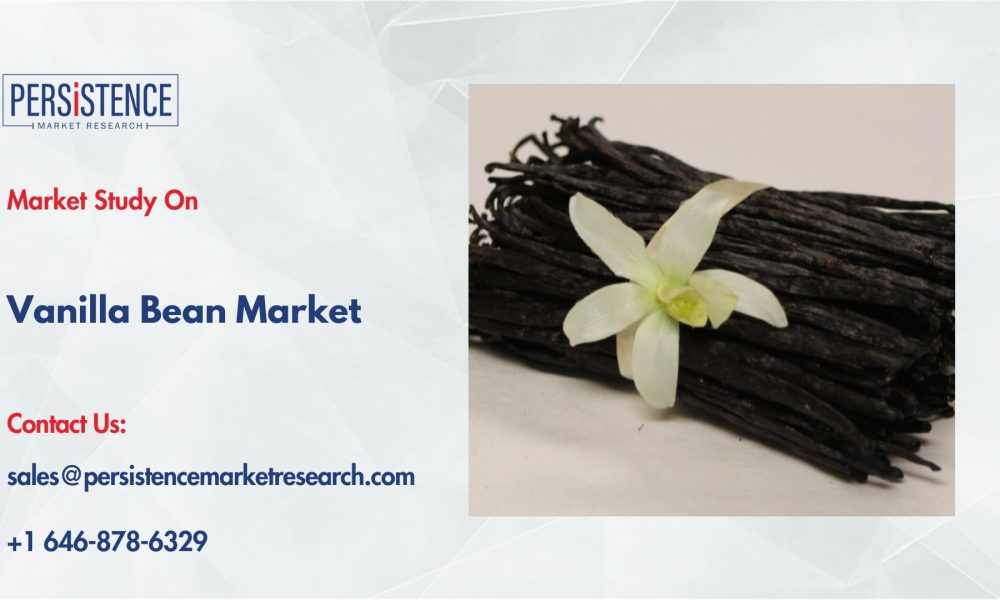
Overview of the Global Vanilla Bean Market
The global vanilla bean market is witnessing significant growth due to the increasing demand for natural flavors and premium ingredients in the food and beverage industry. Vanilla beans, derived from the pods of the Vanilla planifolia plant, are highly valued for their unique aromatic properties and versatile applications in culinary, confectionery, and cosmetic products. In 2025, the market is projected to reach a valuation of US$ 1,337.3 million and is expected to grow to US$ 2,005.1 million by 2032, registering a robust CAGR of 5.8% during the forecast period. This steady growth reflects the rising preference among consumers for natural and high-quality flavoring agents over synthetic alternatives.
Market growth is primarily driven by the expanding applications of vanilla beans across multiple end-user industries, including baked goods, dairy products, beverages, and personal care items. The leading product type in this market is natural vanilla beans, which hold a higher market share due to their authenticity and superior flavor profile. Geographically, North America emerges as a dominant region, largely due to the presence of a strong food and beverage manufacturing base, high consumer awareness of natural flavors, and the prevalence of premium confectionery and bakery products. This region’s strong purchasing power and consistent demand for natural ingredients make it a key growth hub for the global vanilla bean market.
Key Highlights from the Report
- The global vanilla bean market is projected to grow from US$ 1,337.3 million in 2025 to US$ 2,005.1 million by 2032.
• Natural vanilla beans are the leading product type due to rising consumer preference for authentic flavors.
• North America is expected to remain the largest regional market during the forecast period.
• The food and beverage industry drives the highest demand for vanilla beans globally.
• Rising awareness of clean-label products is fueling market growth across all regions.
• Increasing investments in sustainable vanilla farming practices are influencing market dynamics positively.
Market Segmentation
The global vanilla bean market can be segmented based on product type, form, end-user, and distribution channel. By product type, the market is primarily divided into natural vanilla beans and synthetic vanilla, with natural vanilla dominating due to higher consumer preference for authentic flavoring. Based on form, vanilla beans are available as whole beans, vanilla powder, vanilla extract, and pastes, each catering to different culinary and industrial applications. End-user segmentation includes the food and beverage industry, cosmetics and personal care, pharmaceuticals, and others, with the food and beverage segment accounting for the largest share due to the wide use of vanilla in bakery, confectionery, and dairy products. Additionally, the market is also segmented by distribution channel, including offline retail, online retail, and foodservice, reflecting evolving consumer purchasing behaviors and the growing prominence of e-commerce in the specialty ingredients market.
𝐆𝐞𝐭 𝐚 𝐒𝐚𝐦𝐩𝐥𝐞 𝐏𝐃𝐅 𝐁𝐫𝐨𝐜𝐡𝐮𝐫𝐞 𝐨𝐟 𝐭𝐡𝐞 𝐑𝐞𝐩𝐨𝐫𝐭 (𝐔𝐬𝐞 𝐂𝐨𝐫𝐩𝐨𝐫𝐚𝐭𝐞 𝐄𝐦𝐚𝐢𝐥 𝐈𝐃 𝐟𝐨𝐫 𝐚 𝐐𝐮𝐢𝐜𝐤 𝐑𝐞𝐬𝐩𝐨𝐧𝐬𝐞): https://www.persistencemarketresearch.com/samples/21652
Regional Insights
Regionally, the global vanilla bean market is segmented into North America, Europe, Asia-Pacific, Latin America, and the Middle East & Africa. North America leads the market due to its mature food and beverage industry, higher consumer awareness of natural ingredients, and increasing demand for premium desserts and bakery products. Europe is another significant market, driven by the preference for organic and clean-label food products and robust confectionery consumption. The Asia-Pacific region is witnessing rapid growth due to expanding bakery chains, increased disposable incomes, and rising adoption of Western cuisines. Meanwhile, Latin America and the Middle East & Africa are emerging markets with growing consumer interest in natural and authentic flavorings, supported by favorable trade policies and agricultural initiatives promoting vanilla cultivation.
Market Drivers
The growth of the global vanilla bean market is primarily driven by the rising demand for natural flavors across multiple industries. Increasing consumer awareness about the harmful effects of artificial flavoring agents has created a surge in demand for naturally derived vanilla. Additionally, the expanding global bakery, confectionery, and dairy sectors are fueling consumption of vanilla beans, particularly in premium products where flavor authenticity is critical. The cosmetic and personal care industries also contribute to growth, as vanilla is widely used for its aroma in perfumes, lotions, and other skincare products. Furthermore, sustainability initiatives and improved cultivation practices are enhancing vanilla quality and supply stability, thereby boosting overall market growth.
Market Restraints
Despite significant growth potential, the vanilla bean market faces certain challenges. The high cost of natural vanilla, largely due to labor-intensive cultivation and limited production regions, acts as a key restraint. Price volatility, often influenced by climatic conditions, pests, and geopolitical factors in major producing countries, also affects market stability. Additionally, the market experiences competition from synthetic vanilla, which offers a lower-cost alternative, limiting the growth of natural vanilla beans in price-sensitive regions. Supply chain disruptions and the slow expansion of sustainable farming practices further contribute to market constraints, highlighting the need for strategic interventions to ensure consistent growth.
Market Opportunities
The global vanilla bean market presents numerous opportunities for growth, particularly in emerging regions such as Asia-Pacific and Latin America. Rising disposable incomes and changing consumer preferences toward premium and natural products are expected to drive increased adoption of vanilla in various applications. Product innovation, including the development of specialty vanilla varieties and value-added derivatives such as vanilla extracts and pastes, offers significant revenue potential. Collaborations with local farmers and investments in sustainable farming practices can ensure a consistent supply of high-quality vanilla beans, thereby supporting long-term market expansion. Additionally, the growing popularity of clean-label, organic, and vegan products provides a substantial opportunity for vanilla-based formulations across the food, beverage, and cosmetic industries.
Reasons to Buy the Report
- Comprehensive analysis of market size, growth trends, and projections from 2025 to 2032.
- Detailed insights into market segmentation by product type, end-user, and distribution channel.
- In-depth regional analysis, highlighting growth potential and emerging markets.
- Identification of key growth drivers, restraints, and opportunities to inform strategic decisions.
- Company profiling and competitive landscape analysis to assess market positioning and strategies.
Frequently Asked Questions (FAQs)
How Big is the Global Vanilla Bean Market in 2025?
Who are the Key Players in the Global Vanilla Bean Market?
What is the Projected Growth Rate of the Global Vanilla Bean Market from 2025 to 2032?
What is the Market Forecast for the Global Vanilla Bean Market in 2032?
Which Region is Estimated to Dominate the Vanilla Bean Industry through the Forecast Period?
Company Insights
- Nielsen-Massey Vanillas Inc.
• Symrise AG
• Firmenich SA
• Givaudan SA
• Kalsec Inc.
• International Flavors & Fragrances Inc.
• Barry Callebaut AG
Recent Developments:
• In 2024, Symrise AG launched a sustainable vanilla sourcing initiative to support farmers in Madagascar and Indonesia.
• Givaudan SA introduced a new range of natural vanilla extracts targeting the premium confectionery and bakery markets in North America and Europe.
Conclusion
The global vanilla bean market is poised for substantial growth from 2025 to 2032, driven by increasing consumer preference for natural and authentic flavors, expansion in the food and beverage sector, and rising adoption in cosmetics and personal care applications. While challenges such as high costs and supply volatility exist, emerging opportunities in product innovation, sustainable farming, and expanding markets in Asia-Pacific and Latin America provide significant potential for stakeholders. Companies investing in sustainable sourcing, quality enhancement, and consumer-focused product development are likely to gain a competitive edge in this dynamic and lucrative market.
Read More Related Reports:




