
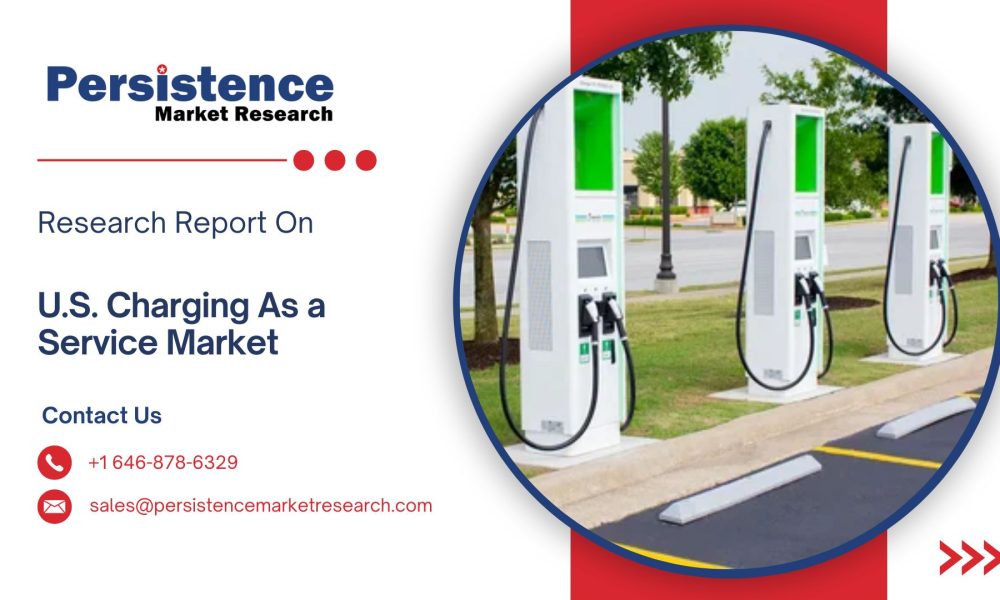
The U.S. Charging as a Service (CaaS) market is experiencing exponential growth, driven by rapid adoption of electric vehicles (EVs) and increasing investments in sustainable energy infrastructure. As per Persistence Market Research, the market size is predicted to reach US$ 14,570.9 Mn by 2032, up from US$ 2,309.6 Mn in 2025, demonstrating a robust CAGR of approximately 30.1% over the forecast period. This growth underscores the increasing reliance on innovative charging solutions and services that cater to both commercial and residential users.
Overview of the Market
The U.S. Charging as a Service market has emerged as a critical segment within the broader EV ecosystem. With rising environmental concerns, stringent government regulations on emissions, and favorable incentives for electric vehicle adoption, the market has witnessed rapid acceleration. Charging as a Service offers flexible solutions for fleet operators, commercial entities, and individual consumers who seek hassle-free access to EV charging infrastructure without the burden of ownership and maintenance.
Get a Sample Copy of Research Report (Use Corporate Mail id for Quick Response): https://www.persistencemarketresearch.com/samples/35445
Market statistics highlight the immense potential of the U.S. CaaS market. The valuation is expected to surge from US$ 2,309.6 Mn in 2025 to US$ 14,570.9 Mn in 2032, translating into a CAGR of 30.1%. Leading segments driving growth include managed charging solutions, subscription-based services, and on-demand fast charging networks. Geographically, the market is concentrated in regions with high EV adoption rates, supportive state policies, and dense urban populations. California remains the frontrunner, fueled by aggressive EV mandates and extensive public-private collaborations.
The key growth drivers behind the market include increasing EV penetration, urbanization, rising awareness of carbon footprint reduction, and advancements in smart charging technology. The leading segment in terms of revenue generation is subscription-based charging services, as they provide convenience, cost-effectiveness, and scalability for users. The dominance of certain geographical regions is largely due to infrastructure readiness, government incentives, and consumer adoption trends, positioning the U.S. as a strategic market for international and domestic players.
Key Highlights from the Report
➤ U.S. CaaS market is projected to reach US$ 14,570.9 Mn by 2032.
➤ The market size was valued at US$ 2,309.6 Mn in 2025.
➤ CAGR is expected to be approximately 30.1% from 2025 to 2032.
➤ Leading segment includes subscription-based and managed charging services.
➤ California is the leading region driving market growth due to high EV adoption.
➤ Market growth is propelled by government incentives and advancements in charging technology.
Market Segmentation
The U.S. Charging as a Service market can be segmented based on product type, end-user, and charging infrastructure. By product type, the market includes managed charging solutions, fast chargers, and smart networked stations. Managed charging solutions dominate due to their ability to optimize energy use and reduce costs for fleet operators. Fast chargers are gaining popularity for their time-saving benefits, especially in urban hubs and highways, where rapid EV turnaround is essential. Smart networked stations integrate IoT technology for real-time monitoring, predictive maintenance, and user-friendly mobile applications.
By end-user, the market caters to residential users, commercial enterprises, and fleet operators. Commercial enterprises are increasingly adopting subscription-based services to minimize operational costs, while fleet operators benefit from scalable managed charging solutions to optimize vehicle utilization. Residential users are gradually embracing home-based charging networks through service models that allow flexible payment and installation options. This segmentation ensures comprehensive coverage of all stakeholders within the EV ecosystem, driving both adoption and revenue generation.
Regional Insights
The U.S. Charging as a Service market exhibits significant regional variation. California leads the market due to early EV adoption, favorable regulatory frameworks, and high population density in metropolitan areas. Other states, including New York, Texas, and Florida, are witnessing accelerated growth as public and private investments in EV charging infrastructure increase. Key metropolitan hubs are becoming focal points for pilot programs, public-private partnerships, and technological innovation in charging services.
The northeastern and western regions are investing heavily in fast-charging networks and smart charging stations to address range anxiety among EV users. Meanwhile, states in the Midwest are gradually adopting CaaS models, driven by the need to support logistics fleets and commercial transportation. These regional trends reflect the uneven but accelerating adoption of EV infrastructure across the United States, providing opportunities for service providers to expand strategically.
Market Drivers
The primary drivers of the U.S. Charging as a Service market include rising EV adoption, technological advancements, and increasing government support. The growth of EVs directly fuels demand for flexible charging solutions that reduce upfront investment costs and operational complexities. Subscription-based and managed charging solutions are particularly appealing, as they offer end-users predictable expenses and scalable services. Technological developments, such as smart charging networks, cloud-based monitoring, and predictive maintenance, enhance efficiency and reliability, making CaaS an attractive proposition for businesses and consumers alike.
Environmental concerns also contribute significantly to market growth. Policies aimed at reducing greenhouse gas emissions have prompted manufacturers, fleet operators, and municipalities to adopt EVs and associated charging services. Financial incentives, including tax credits, grants, and subsidies, further encourage investment in CaaS infrastructure. Overall, the combination of regulatory support, technological innovation, and increasing consumer demand is propelling the market toward substantial growth in the coming years.
Market Restraints
Despite the promising outlook, several restraints could impact the U.S. Charging as a Service market. High installation costs for advanced charging stations remain a significant barrier, particularly for small and medium-sized enterprises. Limited interoperability between different charging networks can deter potential users, as seamless access to charging infrastructure is critical for user satisfaction. Additionally, the uneven adoption of EVs across regions can result in underutilized infrastructure in certain areas, affecting profitability for service providers.
Power grid limitations and concerns over energy availability pose additional challenges. The increased load from widespread EV adoption may require significant upgrades to existing grid infrastructure, raising operational and capital costs. Privacy and cybersecurity concerns related to networked charging solutions also present risks, as sensitive user data and transactional information are increasingly stored digitally. Addressing these barriers is crucial to ensuring sustainable growth and widespread acceptance of CaaS in the U.S.
Market Opportunities
The U.S. Charging as a Service market offers substantial opportunities for players across the value chain. Expanding EV adoption provides scope for innovative business models, including subscription services, pay-per-use schemes, and managed fleet solutions. Collaborations between technology providers and infrastructure developers can enhance service offerings, improve user experience, and drive market penetration. Opportunities also exist in integrating renewable energy solutions, such as solar-powered charging stations, to cater to environmentally conscious consumers.
Urbanization and smart city initiatives present additional avenues for growth. Public-private partnerships to deploy fast-charging networks in urban centers and along highways can mitigate range anxiety and accelerate EV adoption. Furthermore, advancements in IoT, AI, and cloud-based solutions provide opportunities to offer predictive maintenance, energy management, and usage analytics, enhancing both operational efficiency and user satisfaction. Strategic investments and technology-driven innovations position the U.S. CaaS market for continued expansion through the forecast period.
Reasons to Buy the Report
- Comprehensive analysis of the U.S. Charging as a Service market with forecast data from 2025 to 2032.
- Detailed insights into market segmentation by product type, end-user, and geography.
- Evaluation of key growth drivers, challenges, and emerging opportunities.
- Strategic information on market trends, competitive landscape, and technological innovations.
- Actionable intelligence to support investment decisions, market entry, and expansion strategies.
Company Insights
Key players operating in the U.S. Charging as a Service market include:
- ChargePoint, Inc.
- EVgo Services LLC
- Blink Charging Co.
- Tesla, Inc.
- ABB Ltd.
Recent developments:
- EVgo Services LLC announced the expansion of its fast-charging network in California, aiming to add 100 new stations by 2025.
- ChargePoint, Inc. launched a subscription-based managed charging service for commercial fleet operators, integrating IoT-enabled monitoring and predictive maintenance.
Explore more related market insights and reports by visiting our website.




