
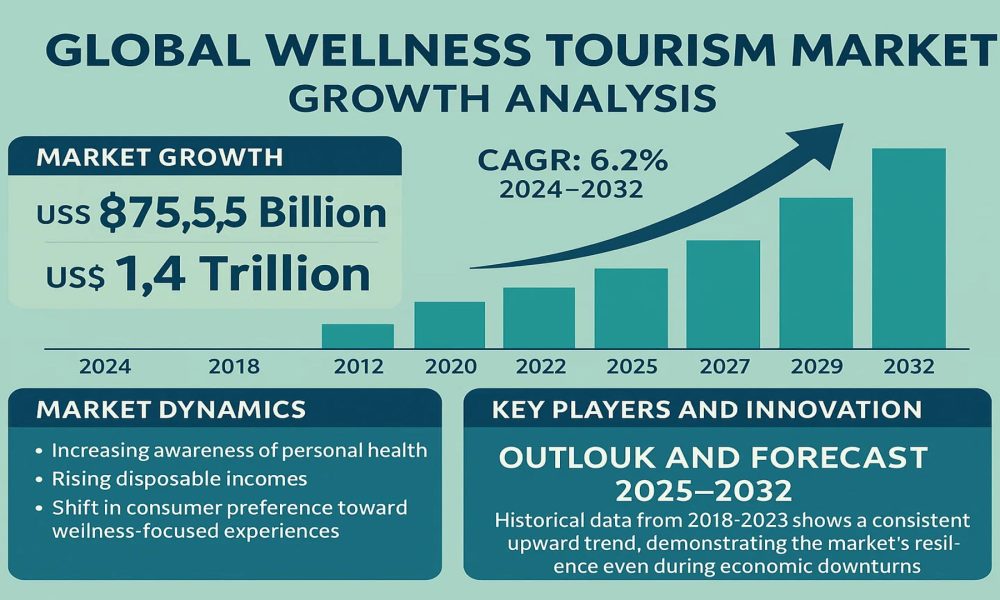
According to a new report from Intel Market Research, the global wellness tourism market was valued at US$ 875.5 billion in 2024 and is projected to reach US$ 1.4 trillion by 2032, growing at a steady CAGR of 6.2% during the forecast period (2024-2032). This growth trajectory reflects increasing global health consciousness, rising disposable incomes, and a fundamental shift in travel preferences toward wellness-oriented experiences.
📥 Download Sample Report:
Global Wellness Tourism Market – View Detailed Research Report
What is Wellness Tourism?
Wellness tourism represents travel associated with the pursuit of maintaining or enhancing personal wellbeing. Unlike traditional tourism, it focuses on holistic health experiences including spa retreats, medical tourism, yoga and meditation programs, and nature-based wellness activities. This sector has evolved beyond luxury spas to incorporate evidence-based health interventions and culturally rooted wellness practices.
The industry’s expansion is validated by 2023 data showing that 88% of wellness trips were domestic, while international wellness travel accounted for nearly 95 million trips globally. What makes this segment particularly valuable is that wellness tourists spend 41% more than typical international travelers, demonstrating the premium nature of this market.
Key Market Drivers
1. Post-Pandemic Health Prioritization
The COVID-19 pandemic served as a wake-up call for global health consciousness. Recent surveys indicate that 72% of travelers now prioritize health and wellness when planning trips, compared to just 42% pre-pandemic. This behavioral shift has catalyzed demand for:
- Immune-boosting retreats
- Stress-reduction programs
- Preventive healthcare tourism
- Digital detox experiences
2. Economic Growth in Emerging Markets
Rising middle-class populations in Asia-Pacific and Latin America are driving market expansion. Countries like China, India, and Brazil are witnessing explosive growth in domestic wellness tourism as disposable incomes increase. The Middle East demonstrates particularly strong momentum, with wellness tourism spending growing 61.5% annually between 2020-2022.
3. Corporate Wellness Investments
Forward-thinking companies are increasingly incorporating wellness retreats into employee benefits. This corporate segment now accounts for nearly 15% of the market, with programs focusing on:
- Executive stress management
- Team-building wellness experiences
- Post-pandemic mental health recovery
Market Challenges
Despite strong fundamentals, the industry faces several hurdles:
- Premium Pricing: High costs limit accessibility, with luxury wellness retreats averaging $1,200-$3,500 per night
- Standardization Issues: Lack of universal quality standards for wellness programs creates consumer skepticism
- Skilled Workforce Shortages: Demand for certified wellness practitioners outpaces supply in key markets
- Greenwashing Concerns: Increased scrutiny of environmental claims requires authentic sustainability practices
Opportunities Ahead
The market presents compelling growth avenues:
1. Technology Integration
Innovations like AI-driven wellness assessments and VR meditation experiences are creating new service offerings. Digital platforms now enable:
- Personalized wellness itineraries
- Remote pre/post-trip consultations
- Wearable integration for continuous health monitoring
2. Emerging Destinations
While traditional hotspots like Switzerland and Thailand remain popular, new destinations are gaining traction:
- Portugal’s thermal spring circuits
- South Korea’s advanced medi-spas
- Costa Rica’s eco-wellness lodges
3. Generational Targeting
Different age groups show distinct preferences:
| Generation | Preferred Experiences |
| Millennials | Adventure wellness, digital detox |
| Gen X | Medical screenings, longevity programs |
| Boomers | Thermal baths, gentle movement retreats |
Regional Market Insights
- North America: Dominates with 34% market share, led by U.S. spa resorts and Canadian wilderness retreats
- Europe:
- Germany leads in medical tourism infrastructure
- Switzerland maintains premium positioning with alpine wellness
- Mediterranean countries strong in thalassotherapy
- Asia-Pacific:
- Thailand and Bali lead in affordable luxury wellness
- India emerging as Ayurveda hub
- Japan’s onsens attract premium clients
Market Segmentation
By Service Type
- Beauty & Anti-Aging (28% market share)
- Medical Wellness (21%)
- Mindfulness & Spiritual (18%)
- Fitness & Weight Management (15%)
- Thermal/Mineral Springs (10%)
- Other (8%)
By Traveler Type
- Primary Purpose (62%) – Travel specifically for wellness
- Secondary Purpose (38%) – Wellness activities during other trips
By Booking Channel
- Specialized wellness platforms (27%)
- Direct with providers (38%)
- Traditional OTAs (35%)
Competitive Landscape
The market features diverse players across segments:
- Luxury Hospitality Brands: Four Seasons, Aman, Six Senses
- Specialized Chains: Canyon Ranch, Kamalaya, Chiva-Som
- Medical Tourism Providers: Bumrungrad International, Clemenceau Medical City
- Emerging Innovators: Remote year-round wellness communities, eco-wellness startups
Recent strategic developments include:
- Hyatt’s 2023 acquisition of wellness resort group Miraval
- Accor’s partnership with wellness technology platform Mindbody
- Marriott’s expansion of “Wellness Inclusive” resort concepts
Recent Developments in the Global Wellness Tourism Market
Hybrid wellness models: Resorts blend medical wellness (diagnostics, longevity testing) with holistic therapies (yoga, Ayurveda, breathwork) to create outcome-oriented retreats.
Personalization via tech: Wider use of wearables, VO₂/HRV testing, and AI-guided programs to tailor sleep, stress, and metabolic protocols for travelers.
Longevity & biohacking retreats: Growth in programs focused on metabolic health, cold/heat exposure, red-light therapy, and nutraceutical regimens.
Sustainable, nature-based offerings: Eco-certified spas, farm-to-table nutrition, forest bathing, and low-impact accommodations attract eco-conscious travelers.
Corporate wellness travel: Companies sponsor offsites centered on burnout recovery, mindfulness, and resilience training as part of benefits strategies.
Integrative mental well-being: Evidence-based mindfulness, CBT-informed workshops, and digital mental-health check-ins embedded into retreat itineraries.
Women’s health programs: Menopause support, hormone health, and pelvic floor/women’s fitness tracks expand the addressable market.
Thermal & mineral springs revival: Upgrades and repositioning of traditional bath/spa towns as premium preventative health destinations.
Destination diversification: APAC (India, Thailand, Indonesia) accelerates Ayurveda/yoga/med-spa capacity; EMEA leverages Mediterranean and alpine wellness; LATAM grows nature/volcanic spa niches.
Partnerships & branding: Hospitality groups co-create signature wellness lines (sleep suites, circadian lighting, recovery rooms) and partner with fitness/healthtech brands.
Certification & standards: More operators pursue wellness-real-estate and spa certifications to signal quality, hygiene, and outcomes.
Package innovation: “Detox + digital detox,” “sleep optimization,” “metabolic reset,” and “post-op recovery” travel bundles gain traction.
Indicative Key Players & Ecosystem Notes
Hospitality & Resorts: Luxury and destination wellness brands (integrating spas, medical checks, performance labs).
Clinics & Med-Wellness: Integrative clinics offering diagnostics, longevity testing, and physician oversight.
Tech & Platforms: Wearables, HRV/sleep analytics apps, remote coaches, and booking platforms specializing in wellness stays.
Thermal/Mineral Springs Operators: Modernized facilities targeting prevention and recovery tourism.
Retreat Operators & Coaches: Niche operators for mindfulness, nutrition, women’s health, and corporate programs.
2025–2032 Outlook (Snapshot)
Demand drivers: Aging populations, chronic stress/burnout, preventive health focus, and growing middle-class spend on experiences.
Product trends: Outcome-based programs (sleep, metabolic, stress), data-driven personalization, and eco-centric design.
Pricing/mix: Premiumization at the top; mid-market growth via shorter, high-impact “mini-retreats.”
Risks: Economic slowdowns, regulatory scrutiny around medical claims, and talent shortages (therapists, clinicians).
Opportunities: Corporate wellness contracts, insurance-adjacent/pre-hab offerings, and emerging-market capacity build-outs.
Report Deliverables
- In-depth analysis of 15+ wellness tourism sub-segments
- Market size projections through 2032 with COVID-19 impact analysis
- Competitive benchmarking of 25+ major players
- Emerging technology and sustainability trends
- Demographic preference mapping
📘 Get Full Report Here:
Global Wellness Tourism Market – View Detailed Research Report
About Intel Market Research
Intel Market Research is a leading provider of strategic intelligence, offering actionable insights in biotechnology, pharmaceuticals, and healthcare infrastructure. Our research capabilities include:
- Real-time competitive benchmarking
- Global clinical trial pipeline monitoring
- Country-specific regulatory and pricing analysis
- Over 500+ healthcare reports annually
Trusted by Fortune 500 companies, our insights empower decision-makers to drive innovation with confidence.
🌐 Website: https://www.intelmarketresearch.com
📞 International: +1 (332) 2424 294
📞 Asia-Pacific: +91 9169164321
🔗 LinkedIn: Follow Us




