
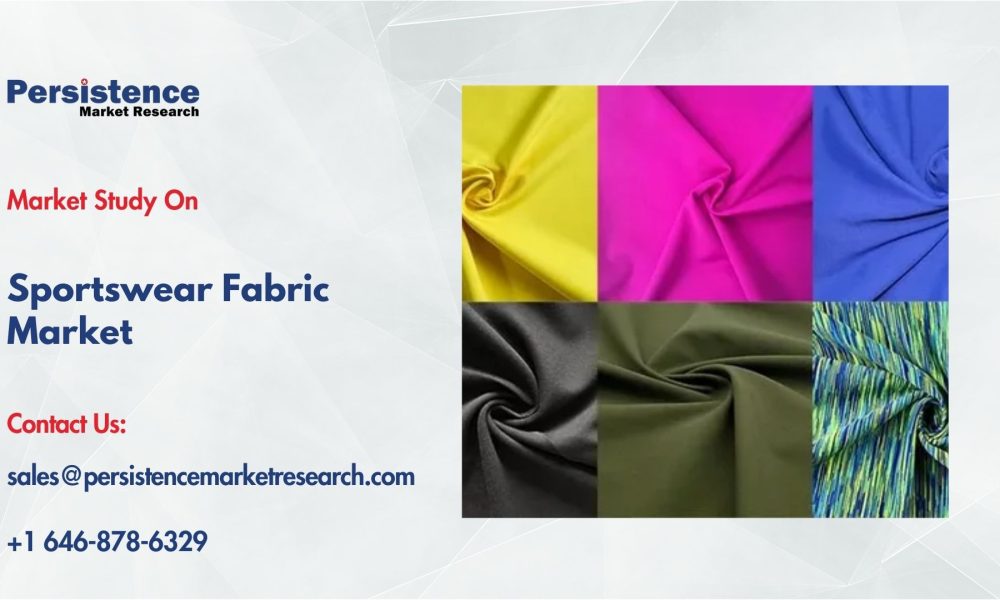
Overview of the Market
The global sportswear fabric market is witnessing robust growth, driven by increasing consumer awareness about fitness, the rising popularity of athleisure, and innovations in fabric technology. Sportswear fabrics, which include performance-enhancing textiles designed for athletic and activewear, are experiencing heightened demand from professional athletes, casual fitness enthusiasts, and lifestyle consumers alike. Advanced fabrics that offer moisture-wicking, breathability, stretchability, and durability are reshaping consumer expectations, making comfort, performance, and sustainability critical factors in purchasing decisions.
Market statistics indicate that the global sportswear fabric market size is likely to be valued at US$ 28.8 billion in 2025 and is expected to reach US$ 40.5 billion by 2032, registering a CAGR of 5.0% during the forecast period. The growth is primarily fueled by the rising adoption of sports and fitness activities worldwide, increasing health-consciousness among consumers, and the expansion of the global sportswear industry, particularly in emerging economies. Among segments, synthetic fabrics such as polyester and nylon dominate due to their lightweight nature, moisture management properties, and cost-effectiveness. Geographically, North America leads the market owing to high consumer purchasing power, strong brand presence, and the popularity of active lifestyles, while Asia-Pacific is emerging as a high-growth region due to rapid urbanization, increasing disposable income, and expanding e-commerce penetration.
Key Highlights from the Report
- The global sportswear fabric market is projected to reach US$ 40.5 billion by 2032.
• Synthetic fabrics hold the largest share in the market due to superior performance attributes.
• Rising demand for eco-friendly and sustainable fabrics is reshaping the market.
• North America remains the leading region, driven by health-conscious consumers and sports culture.
• The athleisure trend continues to boost demand for high-performance fabrics.
• Asia-Pacific is emerging as a key growth market with rising fitness adoption and urbanization.
Market Segmentation
The sportswear fabric market is segmented based on product type, end-user, and distribution channel. In terms of product type, synthetic fabrics such as polyester, nylon, and spandex dominate, offering enhanced elasticity, durability, and moisture-wicking properties. Natural fabrics like cotton and bamboo, though less dominant, are gaining traction due to rising consumer preference for sustainable and eco-friendly materials. By end-user, the market is categorized into professional sports, casual activewear, and athleisure. Professional sports dominate the market, driven by the need for high-performance fabrics in competitive environments. Casual activewear and athleisure segments are witnessing rapid growth due to changing fashion trends and the adoption of fitness-oriented lifestyles. Furthermore, distribution channels, including offline retail, online platforms, and brand-owned stores, play a pivotal role in shaping market dynamics, with e-commerce seeing accelerated growth due to convenience and accessibility.
Regional Insights
North America is the largest market for sportswear fabrics, supported by a high level of sports participation, advanced textile manufacturing capabilities, and the presence of prominent brands investing heavily in innovative fabrics. Europe also maintains a strong position due to a growing focus on sustainability and eco-conscious fabric adoption. Meanwhile, Asia-Pacific is emerging as a high-potential market owing to rapid urbanization, rising disposable incomes, and growing fitness culture in countries like China, India, and Japan. The region’s expanding sportswear industry and increased penetration of global sports brands further contribute to the market’s growth. Latin America and the Middle East & Africa, though smaller in market size, are witnessing gradual growth driven by increased sports awareness and infrastructural developments in fitness and recreational activities.
𝐆𝐞𝐭 𝐚 𝐒𝐚𝐦𝐩𝐥𝐞 𝐏𝐃𝐅 𝐁𝐫𝐨𝐜𝐡𝐮𝐫𝐞 𝐨𝐟 𝐭𝐡𝐞 𝐑𝐞𝐩𝐨𝐫𝐭 (𝐔𝐬𝐞 𝐂𝐨𝐫𝐩𝐨𝐫𝐚𝐭𝐞 𝐄𝐦𝐚𝐢𝐥 𝐈𝐃 𝐟𝐨𝐫 𝐚 𝐐𝐮𝐢𝐜𝐤 𝐑𝐞𝐬𝐩𝐨𝐧𝐬𝐞): https://www.persistencemarketresearch.com/samples/30859
Market Drivers
The growth of the global sportswear fabric market is primarily fueled by the rising demand for high-performance textiles that enhance athletic performance. Increasing health consciousness and fitness awareness among consumers are driving the adoption of activewear and athleisure, which require fabrics that offer breathability, moisture management, and flexibility. Technological advancements in textile manufacturing, such as anti-microbial, quick-drying, and UV-protective fabrics, are further stimulating market demand. In addition, the growing trend of sustainable and eco-friendly fabrics, combined with increased investment from sportswear brands in fabric innovation, is accelerating market expansion. Rising participation in professional sports, outdoor activities, and lifestyle fitness regimes also contributes significantly to market growth, creating a strong pipeline for continuous demand.
Market Restraints
Despite the positive growth trajectory, certain factors restrain the global sportswear fabric market. High costs associated with advanced performance fabrics can limit accessibility for price-sensitive consumers, particularly in developing regions. Moreover, the complexity of integrating sustainable materials into existing manufacturing processes can act as a barrier for smaller textile producers. Supply chain disruptions, fluctuations in raw material availability, and rising competition from counterfeit or low-quality sportswear fabrics may also impact market dynamics. Additionally, rapid technological changes necessitate continuous investment in research and development, which can pose challenges for smaller players seeking to remain competitive in the global market.
Market Opportunities
Significant opportunities exist in the sportswear fabric market, particularly through innovation and diversification. Growing consumer demand for eco-friendly fabrics presents a chance for manufacturers to invest in sustainable textile solutions such as recycled polyester, organic cotton, and bamboo blends. The expanding athleisure segment, which combines comfort and style for casual wear, offers a promising growth avenue. Technological advancements, including smart textiles, wearable-integrated fabrics, and fabrics with enhanced UV and anti-microbial properties, provide further avenues for differentiation. Emerging markets in Asia-Pacific, Latin America, and the Middle East represent untapped potential due to rising disposable income, urbanization, and increasing sports and fitness participation. Strategic collaborations between textile manufacturers and sportswear brands can also accelerate innovation, enhance brand recognition, and expand market reach.
Reasons to Buy the Report
- Comprehensive analysis of market size, trends, and growth drivers.
- Detailed segmentation insights by product type, end-user, and distribution channel.
- In-depth regional analysis and emerging market opportunities.
- Competitive landscape overview including key players and recent developments.
- Actionable insights for stakeholders to optimize business strategies and investments.
Frequently Asked Questions (FAQs)
- How Big is the Global Sportswear Fabric Market?
- Who are the Key Players in the Global Market for Sportswear Fabric?
- What is the Projected Growth Rate of the Sportswear Fabric Market?
- What is the Market Forecast for Sportswear Fabric for 2032?
- Which Region is Estimated to Dominate the Sportswear Fabric Industry through the Forecast Period?
Company Insights
The global sportswear fabric market is highly competitive, with key players focusing on innovation, sustainability, and strategic partnerships to strengthen their market positions. Leading companies operating in the market include:
- Nike, Inc.
• Adidas AG
• Puma SE
• Under Armour, Inc.
• Lululemon Athletica Inc.
• Columbia Sportswear Company
• Toray Industries, Inc.
• Invista, LLC
• Hyosung Corporation
• Asics Corporation
Recent Developments
- Nike launched a new line of sustainable sportswear fabrics incorporating recycled polyester and organic cotton to reduce environmental impact.
- Adidas partnered with Toray Industries to develop advanced performance fabrics featuring enhanced moisture-wicking and stretchable properties for professional athletes.
Conclusion
The global sportswear fabric market is poised for substantial growth, driven by rising fitness consciousness, technological advancements in performance textiles, and increasing adoption of athleisure and sustainable fabrics. With the market expected to reach US$ 40.5 billion by 2032, stakeholders have significant opportunities to capitalize on emerging trends, expand into high-growth regions, and leverage innovations in eco-friendly and high-performance textiles. North America remains the dominant market, while Asia-Pacific presents the most promising growth potential. Companies focusing on innovation, strategic partnerships, and sustainable practices are likely to emerge as leaders in this rapidly evolving industry, ensuring continued expansion and profitability over the forecast period.
Explore the Latest Trending Research Reports:




