
Definition
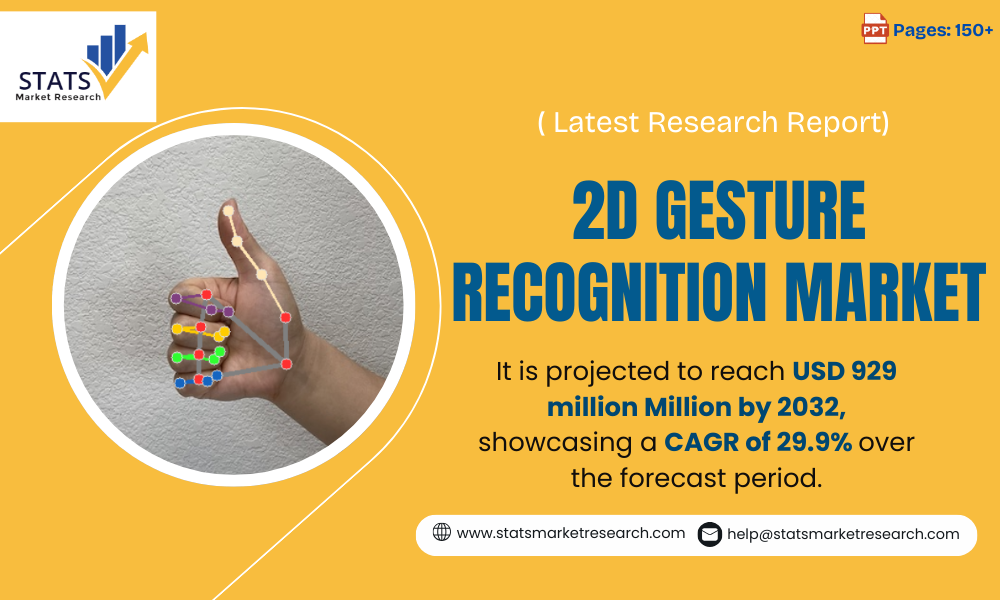
2D gesture recognition technology is a branch of human-computer interaction (HCI) that allows computers and devices to interpret human gestures using standard two-dimensional cameras. Unlike 3D systems that rely on depth sensors, 2D systems analyze static images or video frames to detect predefined gestures, such as hand postures or simple swipes. This cost-effective technology primarily focuses on recognizing basic static gestures and dynamic motions, enabling touchless interfaces for a variety of applications.
Key features and benefits include:
- Cost Efficiency: Eliminates the need for expensive depth-sensing hardware used in 3D systems.
- Ease of Integration: Compatible with conventional cameras already embedded in smartphones, smart TVs, and laptops.
- AI and Computer Vision Enabled: Advanced algorithms allow for real-time recognition and responsive user interfaces.
- Applications Across Industries: Used in consumer electronics, automotive infotainment, healthcare systems, industrial automation, and gaming.
The technology supports both static gesture recognition (e.g., hand shapes, predefined symbols) and dynamic gesture recognition (e.g., swipes, slides, rotations). Its affordability, combined with growing AI-driven enhancements, positions 2D gesture recognition as a rapidly expanding segment of the touchless interface market.
Recent Developments
The 2D gesture recognition market is experiencing rapid growth driven by the demand for touchless interfaces, especially in the wake of public health concerns that have made hygienic interactions a priority. A major development is the integration of advanced artificial intelligence (AI) and machine learning algorithms, which has significantly improved the accuracy, speed, and reliability of gesture recognition systems. This has allowed for more intuitive and natural user interactions in a variety of devices. Furthermore, there’s a trend toward developing more compact and energy-efficient solutions, making it feasible to embed this technology in a wider range of consumer electronics, from smartphones and smart TVs to wearable devices and gaming consoles. The automotive and healthcare sectors are also seeing major developments, with gesture control being used for vehicle infotainment systems and sterile, non-contact medical equipment operation.
Major Distribution Channels
Distribution for 2D gesture recognition technology is primarily handled through a few key channels, reflecting the B2B and B2C nature of the market. Direct sales from component manufacturers to original equipment manufacturers (OEMs) are crucial, as companies like Intel and Qualcomm license their gesture recognition software and hardware directly to device makers for integration into their products. Another significant channel is through authorized electronic component distributors, who provide a wide range of gesture recognition sensors, cameras, and software development kits (SDKs) to engineers and smaller businesses for prototyping and development. The rise of e-commerce platforms has also become a vital distribution channel, making these components more accessible to a global audience. Finally, the licensing of software through B2B partnerships with consumer electronics, automotive, and healthcare companies is a major distribution model, allowing for the widespread adoption of gesture recognition technology without the need for physical hardware distribution.
Market Size
The global 2D gesture recognition market was valued at USD 155 million in 2024 and is projected to grow to USD 929 million by 2032, achieving a CAGR of 29.9%.
Key Market Insights:
- Geographic Trends: North America leads with 47% market share, followed by China and Europe.
- Application Adoption: Consumer electronics dominate, driven by smartphones, tablets, and smart TVs.
- Technological Shifts: AI and machine learning advancements have improved gesture recognition accuracy beyond 95% for calibrated systems.
- Historical Context: The adoption was accelerated by COVID-19, as demand for touchless interfaces surged across public and private sectors.
The market trajectory is strongly influenced by the integration of gesture recognition in mobile devices, industrial control systems, and emerging automotive infotainment solutions. With ongoing AI algorithm development and hardware improvements, the technology is poised to penetrate sectors previously dominated by 3D solutions.
Download FREE Sample of this Report @ https://www.statsmarketresearch.com/download-free-sample/8057644/global-d-gesture-recognition-forecast-market
Market Dynamics
Drivers
Rising Adoption in Consumer Electronics
Gesture recognition provides touchless control in devices such as smartphones, tablets, and smart TVs, improving user convenience and hygiene. Premium devices increasingly feature gesture-based interfaces to differentiate products, offering intuitive navigation without physical interaction.
Technological Advancements in AI and Machine Learning
AI and deep learning improvements have significantly enhanced recognition speed and accuracy. Edge computing allows complex gesture recognition without relying on cloud processing, reducing latency—a key requirement in industrial automation and automotive systems. Hybrid systems combining 2D cameras with additional sensors are increasingly common. For instance, automotive manufacturers integrate proximity sensors with 2D cameras for in-vehicle infotainment gesture control.
Pandemic-Driven Touchless Interaction Demand
COVID-19 accelerated interest in contactless interfaces. Studies indicate that over 65% of consumers now prefer touch-free interactions in public settings, driving adoption in healthcare, retail, and public transportation sectors.
Restraints
Limited Gesture Library and Accuracy Constraints
2D systems are limited by planar image analysis, recognizing typically 10-15 gestures reliably. False positives occur more frequently than in 3D systems, particularly under variable lighting conditions. Accuracy issues hinder adoption in critical applications like medical devices or industrial control.
Competition from Alternative Interface Technologies
Voice recognition, advanced touchscreens, and haptic feedback systems compete with gesture-based interfaces. Voice command adoption in automotive sectors grew by 40% year-over-year, challenging 2D gesture growth.
Additional Restraints:
- Hardware Limitations: Standard cameras struggle in low-light or cluttered environments.
- Privacy Concerns: Continuous camera monitoring raises concerns in public and consumer applications.
Opportunities
Industrial Automation
Gesture recognition can enhance safety and productivity in manufacturing environments, especially in clean rooms or hazardous areas where hands-free control is essential. Pilot programs report up to 30% productivity improvements in assembly tasks using gesture interfaces.
Emerging Markets
Developing economies in Asia, Latin America, and Africa present opportunities for cost-effective 2D systems. Metro systems in Southeast Asia have implemented gesture-based ticket kiosks, reducing maintenance costs by 40% compared to traditional touchscreens.
Challenges
Standardization and Interoperability Issues
Lack of universal gesture libraries and recognition protocols complicates implementation. Developers must adapt software for proprietary systems, increasing cost and limiting cross-platform adoption.
Continuous R&D Requirement
With 3D technologies becoming more affordable, 2D gesture recognition requires constant algorithm improvement to maintain relevance, straining smaller companies financially. Annual R&D expenditure is rising by 25% to keep pace.
Other Challenges:
- User Adaptation Curve: Approximately 30% of users abandon gesture systems if initial interactions fail.
- Power Consumption: Continuous camera operation impacts battery life in mobile devices.
Regional Analysis
North America
- Market leader with 47% share
- Adoption driven by consumer electronics, healthcare, and automotive sectors
- Key players: Microchip Technology, Microsoft
Europe
- Growth from automotive and industrial automation
- Focus on AI integration and multi-modal gesture systems
Asia-Pacific
- Rapid adoption due to infrastructure modernization and urban transport projects
- Emerging cost-sensitive markets prefer 2D solutions over premium 3D systems
Latin America & Middle East/Africa
- Niche growth in public transportation and industrial automation
- Governments support smart city initiatives integrating touchless interfaces
Competitor Analysis
The 2D gesture recognition market is moderately consolidated:
- Microchip Technology (U.S.) – Market leader with ~22% share in North America; strong R&D and semiconductor expertise
- Microsoft (U.S.) – Leverages Kinect technology for consumer and enterprise applications
- Baidu (China) – AI research enhances algorithmic performance; diversified portfolio
- Megvii (China) – AI-driven gesture solutions and security applications
- Ultraleap (U.K.) – Multi-modal gesture systems integrating voice and facial recognition
- Other Notable Players: GestureTek (Canada), Sensetime (China), Zienon (Japan), PointGrab (Israel), Crunchfish (Sweden), Holtek (Taiwan), Ezxr Advanced Tech (China), Motion Gestures (U.S.), Intel (U.S.)
Market strategies focus on AI-driven recognition, multi-modal integration, strategic partnerships, and entry into automotive, industrial, and smart home markets.
Get the Complete Report & TOC @ https://www.statsmarketresearch.com/global-d-gesture-recognition-forecast-market-8057644
Global 2D Gesture Recognition: Market Segmentation Analysis
This report provides a deep insight into the global 2D Gesture Recognition market, covering all its essential aspects. This ranges from a macro overview of the market to micro details of the market size, competitive landscape, development trend, niche market, key market drivers and challenges, SWOT analysis, value chain analysis, etc.
The analysis helps the reader to shape the competition within the industries and strategies for the competitive environment to enhance potential profit. Furthermore, it provides a simple framework for evaluating and assessing the position of the business organization. The report structure also focuses on the competitive landscape of the Global 2D Gesture Recognition market. This report introduces in detail the market share, market performance, product situation, operation situation, etc., of the main players, which helps the readers in the industry to identify the main competitors and deeply understand the competition pattern of the market.
In a word, this report is a must-read for industry players, investors, researchers, consultants, business strategists, and all those who have any kind of stake or are planning to foray into the 2D Gesture Recognition market in any manner.
Market Segmentation (by Application)
- Consumer Electronics
- Gaming
- Industrial and Building Automation
- Healthcare
- Others
Market Segmentation (by Type)
- Static Gesture Recognition
- Hand Postures
- Predefined Symbol Recognition
- Dynamic Gesture Recognition
Key Company
- Microchip Technology (U.S.)
- Megvii (China)
- Microsoft (U.S.)
- Baidu (China)
- GestureTek (Canada)
- Sensetime (China)
- Ultraleap (U.K.)
- Zienon (Japan)
- PointGrab (Israel)
- Crunchfish (Sweden)
- Holtek (Taiwan)
- Ezxr Advanced Tech (China)
- Motion Gestures (U.S.)
- Intel (U.S.)
Geographic Segmentation
- North America
- Europe
- Asia Pacific
- Latin America
- Middle East & Africa
FAQ Section
Q1: What is the current market size of the 2D Gesture Recognition market?
The market was valued at USD 155 million in 2024 and is projected to reach USD 929 million by 2032, at a CAGR of 29.9%.
Q2: Which are the key companies operating in the 2D Gesture Recognition market?
Key players include: Microchip Technology, Microsoft, Baidu, Megvii, Ultraleap, GestureTek, Sensetime, and Intel.
Q3: What are the key growth drivers in the 2D Gesture Recognition market?
- Adoption in consumer electronics and smart devices
- AI and machine learning advancements for improved recognition
- Increasing demand for touchless interfaces post-pandemic
Q4: Which regions dominate the 2D Gesture Recognition market?
North America dominates with 47% market share, followed by China and Europe. Asia-Pacific is an emerging high-growth market.
Q5: What are the emerging trends in the 2D Gesture Recognition market?
- Hybrid gesture systems combining cameras with other sensors
- Multi-modal interfaces integrating voice and facial recognition
- Industrial and automotive adoption for hands-free operations
- AI-driven algorithm enhancements for greater accuracy and reliability
About Us
☎️ International: +1 (332) 2424 294
📄 Website: www.statsmarketresearch.com
Join us on LinkedIn:- https://www.linkedin.com/company/statsmarketresearch




