
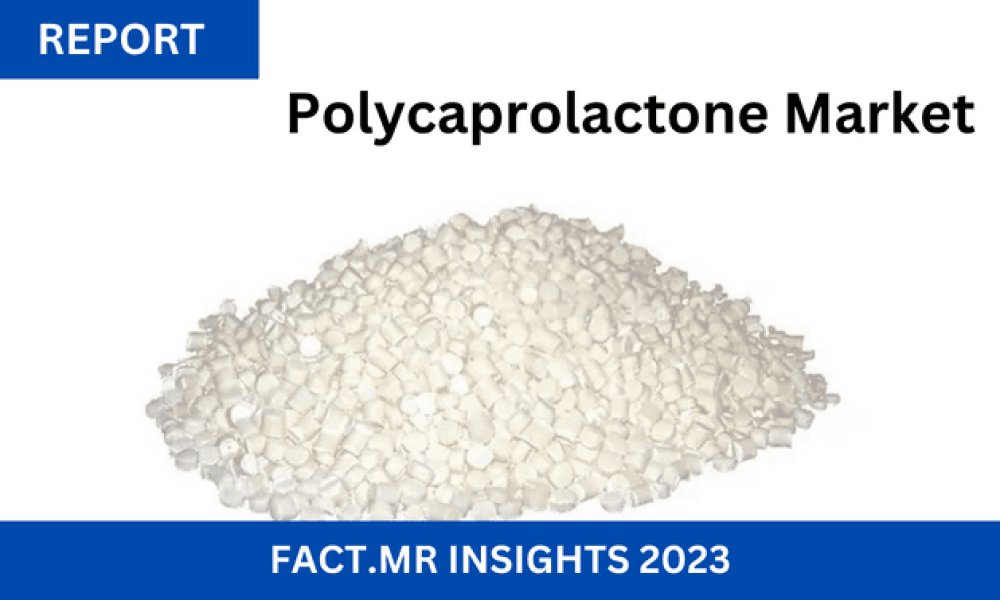
The global market for polycaprolactone is currently valued at US$ 494.8 million in 2023, with expectations of a robust compound annual growth rate (CAGR) of 9.2%. By the conclusion of 2033, it is projected to surge to a value of US$ 1,193.1 million.
Polycaprolactone (PCL) is inherently semi-crystalline and possesses biodegradable properties. This hydrophobic polyester is characterized by its impressive toughness and biocompatibility, making it a versatile choice for a wide array of biomedical applications, including tissue repair scaffolding, tissue engineering, drug delivery systems, and drug carriers, among various others.
Download a Sample Copy of This Report:
https://www.factmr.com/connectus/sample?flag=S&rep_id=4754
In an era defined by environmental consciousness and sustainability, the world of plastics and polymers is undergoing a significant transformation. One material that has been gaining increasing attention in recent years is Polycaprolactone, a biodegradable and versatile polymer with a wide range of applications.
Polycaprolactone: A Sustainable Solution
Polycaprolactone, often abbreviated as PCL, is a synthetic polymer with properties that make it highly attractive for industries seeking eco-friendly alternatives to traditional plastics. Its growing popularity can be attributed to several key factors:
- Biodegradability: Polycaprolactone is inherently biodegradable, which means it can break down into environmentally friendly byproducts over time. This feature is particularly appealing as it addresses the global issue of plastic pollution.
- Versatility: PCL exhibits excellent compatibility with a variety of other polymers, making it a valuable additive in many plastic and polymer formulations. This versatility allows for the creation of a wide range of biodegradable products.
- Medical and Pharmaceutical Applications: Polycaprolactone is widely used in the medical and pharmaceutical fields for applications such as drug delivery systems, tissue engineering, and orthopedic implants. Its biocompatibility and biodegradability are key advantages in these sectors.
- 3D Printing: PCL has gained significant popularity in 3D printing, enabling the creation of biodegradable and customizable products. Its low melting point and excellent printability make it an ideal choice for hobbyists and professionals alike.
- Packaging Solutions: The demand for eco-friendly packaging materials has driven the adoption of Polycaprolactone in the packaging industry. Its ability to reduce the environmental impact of packaging materials is a significant market driver.
Market Trends and Analysis
As the popularity of Polycaprolactone continues to grow, several market trends and analyses provide valuable insights:
- Rising Global Awareness: With increasing environmental awareness and regulations aimed at reducing plastic waste, the demand for biodegradable materials like Polycaprolactone is expected to rise.
- Research and Development: Ongoing research into Polycaprolactone’s properties and applications is expanding its potential uses, which will likely fuel market growth.
- Market Growth in the Medical Sector: The medical and pharmaceutical industries are anticipated to be major contributors to the growth of the Polycaprolactone market, with applications in medical devices and tissue engineering on the rise.
- Emerging Markets: Developing countries are beginning to adopt Polycaprolactone in various applications, offering opportunities for market expansion in regions that were previously untapped.
- Increased Investment: Companies and investors are recognizing the potential of Polycaprolactone, leading to increased investment in production and research, further driving market growth.
- Collaborations and Partnerships: Collaboration between research institutions, manufacturers, and industries is fostering innovation and market expansion in the Polycaprolactone sector.
Prominent Players’ Key Strategies
Leading manufacturers in the field of polycaprolactone include Perstorp Holding AB, BASF SE, Diacel Corporation, Sigma Aldrich Corporation (Merck), Durect Corporation, Corbion Purac (Corbion N.V.), Shenzhen Esun Industrial Co., Ltd., Haihang Industries Co., Ltd., and Polyscienes, Inc., among others.
These manufacturers are increasingly adopting eco-friendly production processes to comply with stringent regulations. Additionally, they focus on developing standardized products that meet specific end-use requirements, contributing to the growth of the polycaprolactone market. Furthermore, an emphasis on enhancing sales channels is a key strategy to improve the overall profitability of these industry leaders.
Segmentation of Polycaprolactone Industry Research
- By Manufacturing Process :
- Ring-Opening Polymerization (ROP)
- Polycondensation of Carboxylic Acid
- By Form :
- Pellets
- Nanosphere
- Microsphere
- By Application :
- Coating and Thermoplastic Polyurethane (TPU)
- Healthcare
- Others
- By Region :
- North America
- Latin America
- Europe
- East Asia
- South Asia & Oceania
- MEA
Get Customization on this Report:
https://www.factmr.com/connectus/sample?flag=RC&rep_id=4754
The growing popularity of Polycaprolactone represents a significant step towards a more sustainable future, where plastic products are designed with their end-of-life impact in mind. As consumers and industries alike prioritize environmental responsibility, the market for Polycaprolactone is poised for continued expansion, making it a noteworthy player in the journey towards a greener and more sustainable world.
Contact:
US Sales Office
11140 Rockville Pike
Suite 400
Rockville, MD 20852
United States
Tel: +1 (628) 251-1583, +353-1-4434-232
Email: [email protected]




