
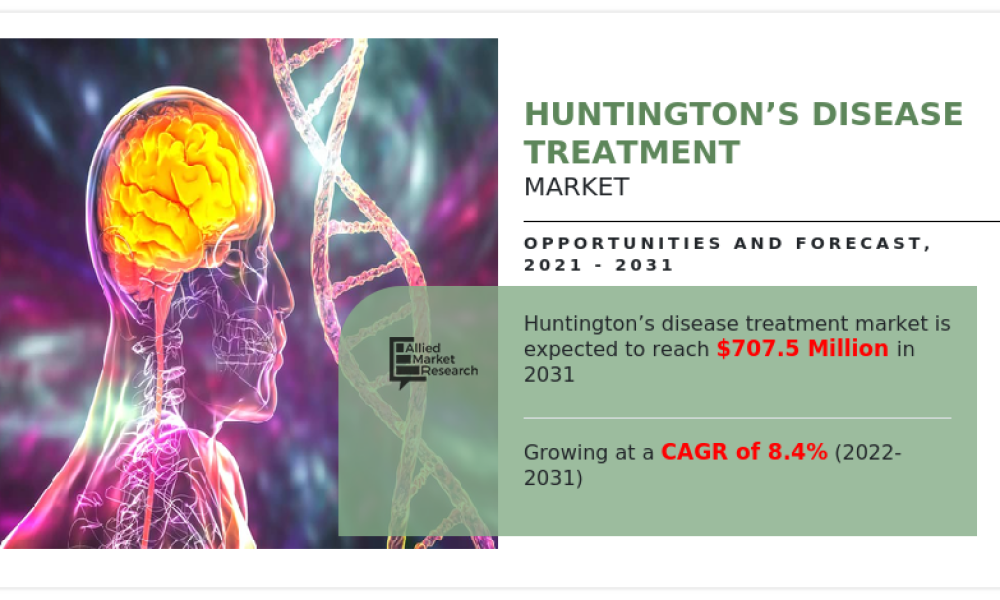
The global Huntington’s disease treatment market, valued at $315.2 million in 2021, is projected to nearly double, reaching $707.5 million by 2031. This growth reflects a CAGR of 8.4% from 2022 to 2031, fueled by increasing prevalence, growing awareness, and advances in drug development aimed at improving patient quality of life.
Understanding Huntington’s Disease
Huntington’s disease (HD) is a rare, inherited neurodegenerative disorder that causes the progressive breakdown of nerve cells in the brain. Symptoms typically manifest between ages 30 and 50 and include motor skill impairment, cognitive decline, and psychiatric disturbances. While there is currently no approved disease-modifying therapy, treatment focuses on managing symptoms to improve functional capacity and quality of life.
Early symptoms can vary widely, ranging from mood changes and depression to involuntary movements. For some, motor impairments appear first; for others, psychological symptoms precede physical changes. This variation underscores the complexity of treatment approaches and the urgent need for innovative therapies.
Get a Sample Copy of this Report: https://www.alliedmarketresearch.com/request-sample/A17522
Key Growth Drivers
The Huntington’s disease treatment market is witnessing momentum due to several critical factors:
Rising Prevalence and Early Diagnosis
Improved genetic testing and diagnostic capabilities have increased early detection rates, allowing patients to begin treatment sooner and manage symptoms more effectively.Demand for Advanced Drug Types
Ongoing research into novel compounds and disease-modifying therapies is expanding the treatment pipeline. Currently approved drugs like tetrabenazine and deutetrabenazine remain vital in controlling involuntary movements, but the race is on for next-generation solutions.Clinical Trials and Strong Pipeline
Pharmaceutical companies are investing heavily in R&D, with multiple candidates in late-stage trials. These innovations are expected to reshape the treatment landscape in the coming decade.Expanding Healthcare Access
Emerging markets are increasing investments in healthcare infrastructure, opening new opportunities for market penetration.
Challenges Hindering Market Growth
While optimism is high, the industry faces hurdles:
Complexity of Disease Management – Symptom variability makes treatment personalization challenging.
High Treatment Costs – Specialized drugs and long-term therapy place a financial burden on patients.
Limited Therapeutic Options – With no curative treatment available, the market remains heavily reliant on symptom control drugs.
COVID-19 Impact
The pandemic temporarily slowed growth in the Huntington’s disease treatment market. Hospital resources were redirected to COVID-19 patients, creating delays in non-essential consultations and treatment plans. Drug manufacturing and supply chain disruptions further strained the sector.
However, the crisis also accelerated the shift toward home-based care and telemedicine, a trend that could improve long-term disease management by enhancing accessibility for patients with mobility challenges.
Market Segmentation Overview
By Drug Type:
Approved Drugs: Includes tetrabenazine and deutetrabenazine, which accounted for the largest share in 2021 and are expected to see the highest CAGR.
Off-Label Drugs: Used when approved options are insufficient for symptom control.
By Age Group:
Below 50 Years: Dominated the market due to higher incidence in this demographic.
Above 50 Years: Growing segment as life expectancy increases.
By Distribution Channel:
Drug Store & Retail Pharmacies: Currently the largest segment, offering convenience and over-the-counter guidance.
Online Pharmacies: Expected to post the fastest growth, driven by e-commerce adoption and home delivery services.
By Region:
North America: Leads the global market thanks to advanced healthcare infrastructure, high diagnosis rates, and strong pharmaceutical presence.
Asia-Pacific: Poised for significant growth due to increasing patient numbers, rising healthcare investments, and government initiatives.
Opportunities for Investors
The development of disease-modifying drugs represents the most promising opportunity. Companies focusing on gene therapies, neuroprotective agents, and novel small molecules have the potential to disrupt the market and address the unmet needs of HD patients. In addition, strategic collaborations between biotech firms, academic institutions, and healthcare providers are accelerating innovation.
Competitive Landscape
Key players are intensifying efforts to expand product portfolios and strengthen market presence. Strategic initiatives include mergers and acquisitions, R&D investments, and regional expansions. Notable companies in the market include:
Annexon Biosciences
Bausch Health Companies Inc.
Dr. Reddy’s Laboratories Ltd.
Eli Lilly and Company
Hikma Pharmaceuticals PLC
Lupin
Medesis Pharma SA
Mitochon Pharmaceuticals
Neurocrine Biosciences Inc.
Novartis
PTC Therapeutics, Inc.
SOM Biotech
Sun Pharmaceuticals
Teva Pharmaceutical Industries Ltd.
UniQure
Vaccinex, Inc.
These companies are actively pursuing innovative treatment approaches, from repurposing existing drugs to pioneering gene-editing therapies.
Future Outlook
By 2031, the Huntington’s disease treatment market will not only be larger but also more scientifically diverse. The integration of genomic research, AI-driven drug discovery, and patient-centric digital health solutions will pave the way for earlier intervention and improved outcomes.
The combination of rising awareness, patient advocacy, and scientific breakthroughs suggests that the next decade could bring transformative changes for those living with Huntington’s disease.




