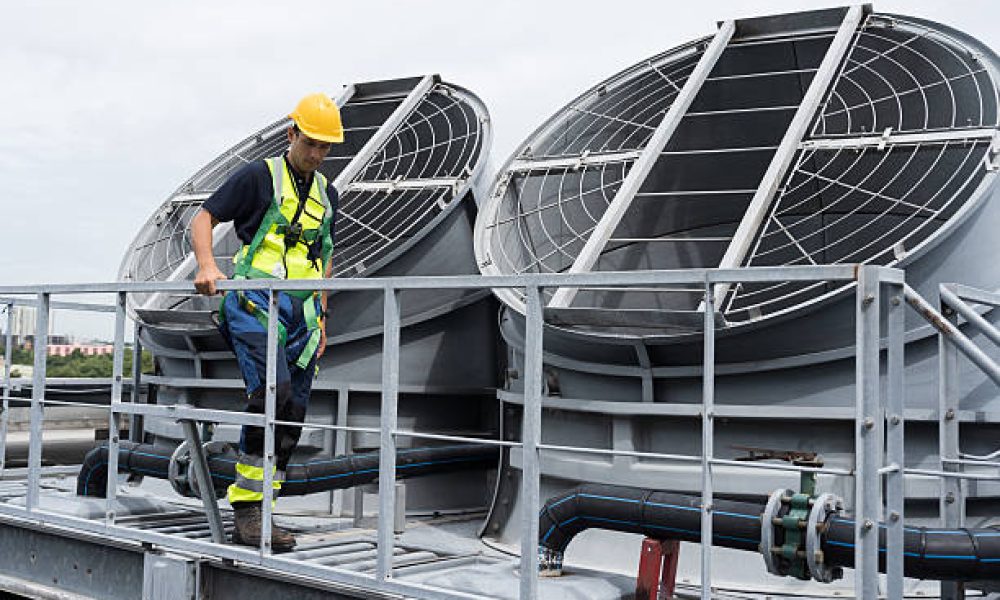
Prophecy Market Insights has released a robust 150+ page report titled “Air Quality Control System Market Analysis and Forecast till 2035,” delivering a deep dive into the industry’s growth outlook, technology trends, regional dynamics, and key players. The global Air Quality Control System (AQCS) Market is projected to exceed USD 211.6 Billion by 2035, growing at a CAGR of 7.0% from its 2024 base.
📌 Access Full Report Now: Request Sample Report
Market Overview
Growing concerns over air pollution, industrial emissions, and climate change have made air quality control systems essential across numerous industries. These systems play a pivotal role in monitoring, filtering, and neutralizing pollutants to ensure compliance with international air quality standards and safeguard public health.
Governments and regulatory bodies such as the EPA, EEA, and WHO are tightening emission norms, propelling the demand for cutting-edge technologies like electrostatic precipitators, fabric filters, scrubbers, and selective catalytic reduction systems.
Key Market Highlights
Market Size in 2024: ~USD 103.5 Billion
Market Forecast by 2035: >USD 211.6 Billion
CAGR (2024–2035): 7.0%
Market Segmentation
✅ By Product Type:
Indoor
Ambient
Indoor AQCS is gaining demand in residential, commercial, and hospital settings due to rising awareness about indoor air quality (IAQ). Ambient systems dominate large-scale industries and outdoor pollution mitigation.
✅ By Technology:
Electrostatic Precipitators (ESP)
Flue Gas Desulfurization (FGD)
Scrubbers
Selective Catalytic Reduction (SCR)
Fabric Filters
Fabric filters and ESPs are extensively adopted in power generation and cement industries, while SCR is gaining traction in the chemical sector for NOx emission control.
✅ By Pollutant Type:
Gases
Dust Particles
Multi-Pollutants
The multi-pollutant category is expanding rapidly due to the need for integrated systems capable of handling complex industrial emissions.
✅ By End User:
Power Generation Industry
Cement Industry
Iron & Steel Industry
Chemical Industry
Others
Power generation leads the demand owing to high emissions from coal and gas-based plants, followed by steel and cement manufacturers.
✅ By Region:
North America
Europe
Asia Pacific
Latin America
Middle East & Africa
Asia Pacific leads the global market, driven by heavy industrialization in China, India, and Southeast Asia. North America is focusing on retrofitting older plants with energy-efficient AQCS solutions, while Europe is emphasizing green infrastructure and compliance.
Market Growth Drivers
🌬️ Stringent Air Emission Regulations across industries globally
🔬 Technological Innovation in particulate and gas removal systems
🌆 Urbanization & Industrialization, especially in emerging economies
🔋 Energy Sector Modernization, especially coal-fired and thermal plants
💨 Awareness of Indoor Air Pollution and demand for clean air solutions
Market Challenges
High installation and operational cost of advanced systems
Maintenance complexity and limited access to skilled operators
Inconsistent regulatory enforcement in underdeveloped regions
Market Opportunities
Integration with IoT and AI for real-time monitoring and automation
Rising investment in smart cities and sustainable construction
Expanding air filtration demand in data centers and green buildings
Government incentives and carbon credit schemes
Competitive Landscape
The market is highly competitive, with global and regional players focusing on technological upgrades, partnerships, and compliance-driven innovation.
Key Companies Profiled:
MITSUBISHI HEAVY INDUSTRIES, LTD.
GE Vernova
Babcock & Wilcox Enterprises, Inc.
Donaldson Company, Inc.
Air Distribution Technologies, Inc.
Lechler
Aeroqual
Stratgem Projects
HORIBA
GEA Group Aktiengesellschaft
Alstom SA
Duconenv.com
Daikin
Trox SE
Canadian Mining Life
🔧 Strategic Developments:
GE Vernova launched a new hybrid ESP-SCR solution with 30% higher pollutant removal efficiency.
Mitsubishi Heavy Industries introduced compact AQCS for distributed energy plants.
Donaldson Company expanded in Asia through joint ventures in India and Vietnam.
Why This Report Matters
This detailed study serves as a decision-making resource for:
Industrial manufacturers and power producers seeking to reduce emissions
Environmental engineers and system integrators evaluating technology trends
Policy makers and regulators enforcing air quality standards
Investors and strategic planners exploring growth sectors
With segmentation, competitor profiling, and forward-looking data, this report helps businesses identify profitable opportunities and align with environmental priorities.
Key Insights
Indoor air quality solutions are expected to grow rapidly in healthcare and education sectors.
Retrofitting old industrial facilities offers long-term cost savings and compliance.
Multi-pollutant control systems are gaining traction among large conglomerates.
Emerging markets like Southeast Asia and Sub-Saharan Africa represent untapped opportunities.
Frequently Asked Questions (FAQs)
Q1. What is the projected market value of the AQCS market by 2035?
A1. The market is expected to reach USD 211.6 Billion by 2035.
Q2. What are the most widely used AQCS technologies?
A2. ESP, FGD, Fabric Filters, SCR, and Wet Scrubbers dominate the market.
Q3. Which industries are key end-users of air quality control systems?
A3. Power generation, cement, steel, chemical, and mining industries are major users.
Q4. Which region dominates the AQCS market?
A4. Asia Pacific, driven by rapid industrial growth and regulatory frameworks.
Q5. Who are the top players in the global AQCS market?
A5. Mitsubishi Heavy Industries, GE Vernova, Donaldson, Babcock & Wilcox, among others.
Author
Authored by Shweta R., Business Development Specialist at Prophecy Market Insights.
This analysis is built upon comprehensive primary interviews and secondary data, offering a forward-looking perspective on the Air Quality Control System Market. It is tailored to help stakeholders navigate the regulatory, technological, and economic complexities shaping the industry.