Authored by Riya B. More, Research Associate at Prophecy Market Insights
Comprehensive 141-page report featuring market forecasting, strategic analysis, and key industry developments
Prophecy Market Insights presents a comprehensive new market intelligence report titled:
“Bone Graft Substitutes Market, By Type (Allograft: Machined Allograft and Demineralized Bone Matrix; Bone Graft Substitute: Bone Morphogenic Proteins (BMP), Synthetic Bone Grafts; Cell-based Matrices), By Application (Spinal Fusion, Trauma, Joint Reconstruction, Dental Bone Grafting, Craniomaxillofacial), and Region – Global Forecast 2024–2034.”
The Bone Graft Substitutes Market is evolving rapidly, driven by technological innovations in bone regeneration, increasing orthopedic procedures, and growing demand for minimally invasive surgeries. These substitutes offer critical support for bone healing when autografts are not viable, creating a scalable and reliable solution for trauma, spinal injuries, and complex reconstructions.
Bone Graft Substitutes Market Segmentation Overview
By Type:
Allograft
Machined Allograft
Demineralized Bone Matrix
Bone Graft Substitute
Bone Morphogenic Proteins (BMP)
Synthetic Bone Grafts
Cell-based Matrices
By Application:
Spinal Fusion
Trauma
Joint Reconstruction
Dental Bone Grafting
Craniomaxillofacial
By Region:
North America
Europe
Asia Pacific
Latin America
Middle East & Africa
Key Market Participants
Arthrex Inc., Baxter International Inc., Johnson & Johnson (DePuy Synthes), Medtronic Plc., Integra LifeSciences Holdings Corporation, Musculoskeletal Transplant Foundation, Stryker Corporation, Wright Medical Group N.V., NuVasive Inc., Zimmer Biomet Holdings Inc..
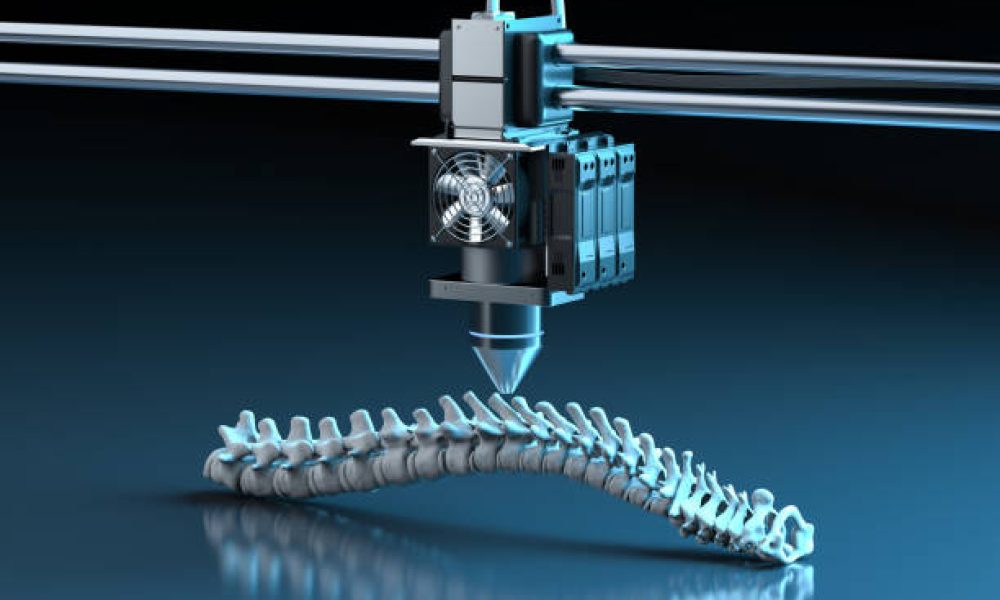
These companies are at the forefront of innovation, focusing on regenerative technologies, 3D-printed bone scaffolds, and biological graft enhancement. Collaborations with biotechnology firms and research labs are expanding product pipelines and clinical trial portfolios.
Strategic Market Insights
The Bone Graft Substitutes Market is experiencing a significant shift from traditional bone grafting methods to synthetic and cell-based alternatives due to their high biocompatibility, reduced infection risk, and improved patient recovery timelines.
Key Growth Drivers:
Increasing incidence of bone disorders and trauma injuries
Aging population and rise in orthopedic surgeries
Advancements in biomaterials and 3D-printed scaffolds
Growing demand for minimally invasive bone repair procedures
Challenges:
High costs associated with novel grafting materials
Risk of disease transmission in allografts
Limited access to high-tech graft products in low-income regions
Opportunities:
Development of personalized bone graft solutions
Strategic collaborations for stem cell-based matrices
Growth potential in emerging healthcare markets
Recent Industry Developments
Medtronic Plc. has launched a next-generation synthetic bone graft designed for complex spinal fusion surgeries, combining ceramic matrices with bioactive proteins. Baxter International is investing in regenerative medicine R&D to strengthen its orthopedic portfolio, while Stryker Corporation has unveiled a bioresorbable scaffold aimed at promoting natural bone remodeling.
DePuy Synthes, a division of Johnson & Johnson, recently expanded its trauma and CMF (Cranio-Maxillofacial) segment by introducing customizable bone grafts for facial reconstruction surgeries. Integra LifeSciences has partnered with academic institutions to develop advanced cell-based matrix solutions for joint repair and trauma healing.
Frequently Asked Questions (FAQs)
Q1. What is a bone graft substitute?
A bone graft substitute is a medical product used to replace or enhance missing or damaged bone. It serves as a scaffold to aid natural bone growth and healing in surgical procedures.
Q2. When are bone graft substitutes used?
These substitutes are commonly used in spinal fusion, dental surgeries, joint reconstruction, trauma cases, and craniofacial surgeries when autologous bone grafts are not feasible.
Q3. What types of bone graft substitutes exist?
The market includes allografts, synthetic bone grafts, bone morphogenic proteins (BMP), and cell-based matrices. Each type offers unique benefits depending on clinical requirements.
Q4. Are synthetic bone grafts safe and effective?
Yes, synthetic bone grafts are bioengineered to mimic natural bone and are widely regarded as safe and effective, with reduced risk of infection and disease transmission.
Q5. What regions are leading in adoption?
North America currently leads the market due to advanced healthcare infrastructure and early adoption of regenerative technologies. Asia Pacific is expected to grow rapidly due to increasing orthopedic surgical procedures and healthcare investments.
Download PDF Report:
https://www.prophecymarketinsights.com/market_insight/Insight/request-pdf/4298
Conclusion
The Bone Graft Substitutes Market is entering a new era, driven by clinical innovation, rising surgical volumes, and the growing need for safe and efficient bone regeneration alternatives. With key players investing in biomaterial science and product development, the market is well-positioned for sustained growth in the years ahead.