
Overview
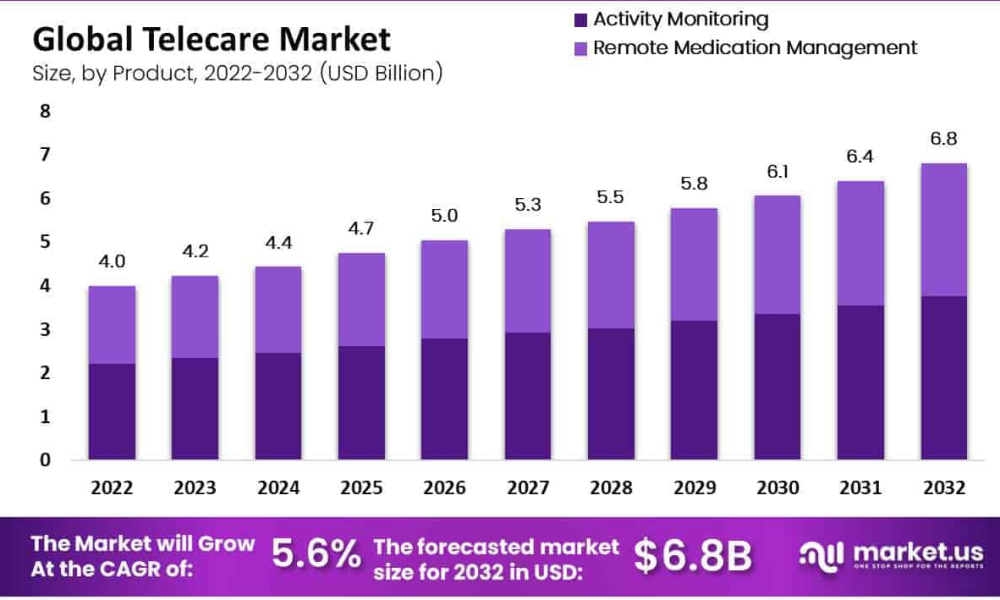
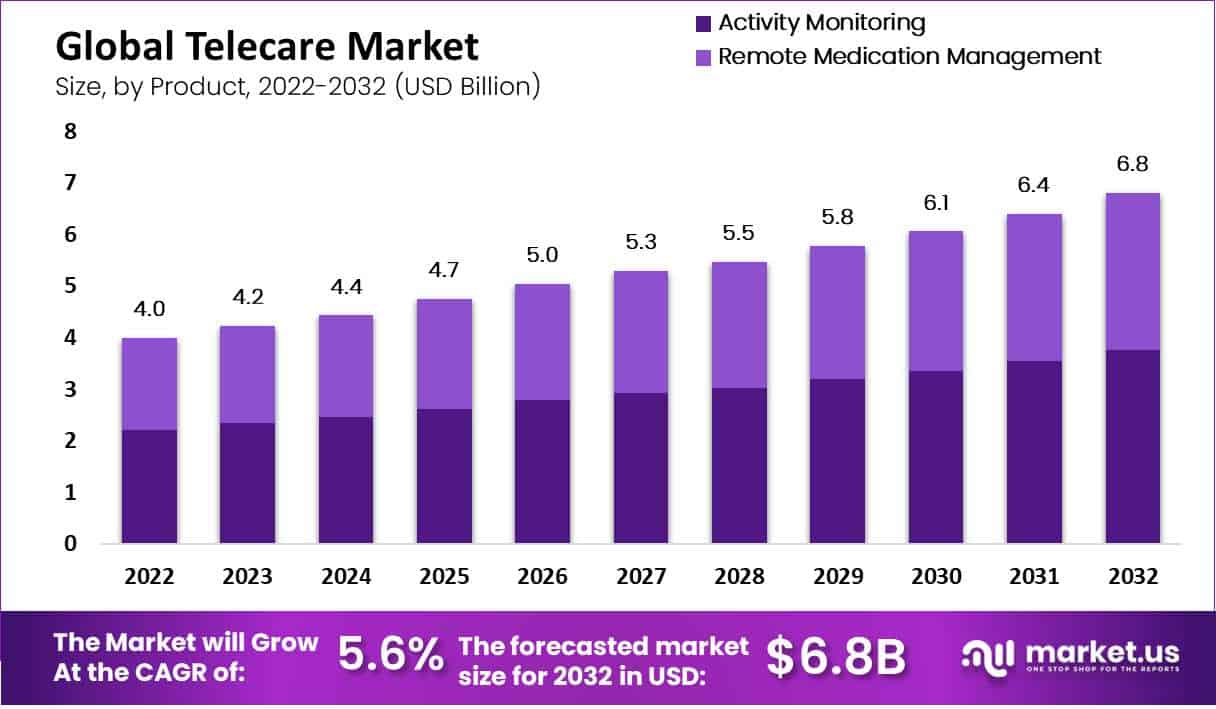
In 2022, the Global Telecare Market was valued at approximately USD 4 billion. It is expected to reach USD 6.8 billion by 2032, expanding at a CAGR of 5.6% from 2023 to 2032. Telecare systems deliver healthcare remotely using digital tools. These include wearable sensors and communication devices. Patients in rural or hard-to-reach areas can access medical services more easily. Healthcare professionals monitor patient data in real time. This improves diagnosis and decision-making. The system offers convenience and timely interventions, especially in emergency cases.
Telecare systems help manage chronic conditions like diabetes, heart disease, and respiratory disorders. They support real-time monitoring and early medical response. This helps reduce hospital visits and long-term healthcare costs. Patients benefit from virtual consultations through video, voice calls, or messaging platforms. The services are especially helpful for elderly patients or those with mobility limitations. Such systems increase efficiency in managing long-term care. Overall, telecare contributes to better health outcomes and reduces stress on physical healthcare infrastructure.
The growing aging population is a key driver of telecare adoption. Elderly individuals increasingly rely on remote monitoring to live safely at home. Rising prevalence of chronic diseases also boosts demand. Patients need regular care and consistent health tracking. Technological advancements in smart sensors, mobile apps, and wearable devices improve service delivery. Governments are also promoting telecare through funding and supportive policies. These initiatives aim to expand healthcare access and reduce the burden on public health systems.
Despite these benefits, certain barriers limit market growth. Awareness remains low in many regions. Some patients and caregivers are not familiar with telecare options. Healthcare professionals may lack adequate training to use these technologies. The cost of telecare services can be high, especially without insurance coverage. This makes adoption harder in developing countries. Infrastructure challenges such as unreliable internet or lack of devices further hinder implementation. These issues must be addressed to support wider adoption.
Privacy and security concerns are another major challenge. Telecare systems involve the digital transfer of sensitive health information. This data can be vulnerable to cyberattacks. Strict data protection laws in various countries also complicate international expansion. Patients may hesitate to share their health data remotely. Ensuring secure data storage and transmission is crucial. Trust in telecare technologies needs to be strengthened. Overcoming these issues will be vital to achieving the market’s full growth potential over the forecast period.
Key Takeaways
- The global telecare market is projected to grow at a 5.6% CAGR, reaching USD 6.8 billion by 2032 from USD 4 billion in 2022.
- Telecare enables remote healthcare delivery through technology, offering emergency response, teleconsultation, and real-time health monitoring services to patients at home.
- Market growth is driven by rising elderly populations, increasing chronic illnesses, and government investments in advanced digital healthcare infrastructure.
- Adoption is limited by high implementation costs, low public awareness, privacy concerns, and inadequate access to technology in underdeveloped regions.
- Activity monitoring dominates the telecare market, holding 59% share by using motion sensors to detect irregular health patterns in daily routines.
- Philips Healthcare, Tunstall Healthcare, and Medtronic are recognized as the leading companies shaping innovation and expansion in the global telecare sector.
- Remote medication management is emerging as a high-growth area, supported by increased demand for personalized care and digital drug adherence tools.
- COVID-19 significantly accelerated telecare adoption, increasing interest in wearable devices, AI integration, and government-backed digital healthcare initiatives.
- Technological progress—including 5G, IoT, and AI—continues to expand telecare capabilities, enabling faster, smarter, and more connected health service delivery.
- North America leads the market with a 47% share, primarily driven by the United States’ robust health tech adoption and digital infrastructure.
Get Sample: https://market.us/report/telecare-market/request-sample/
Regional Analysis
North America holds the leading position in the global telecare market, accounting for approximately 47% of the total market share. The region continues to dominate due to rapid technological adoption in healthcare, high healthcare spending, and increasing demand for personalized care. These factors are driving the growth of telecare services. North America is expected to maintain its top position in the coming years. The growing preference for remote healthcare services and digital health solutions further strengthens the region’s leadership in the international telecare market.
Within North America, the United States is the largest contributor to regional revenue. The country’s strong healthcare infrastructure and early adoption of advanced technologies make it a key market for telecare solutions. The implementation of the Affordable Care Act (ACA) has also played a vital role in boosting demand. By aiming to improve healthcare quality while reducing costs, the ACA supports the wider adoption of telecare services. This creates a favorable environment for growth and innovation in U.S. telecare systems.
Segmentation Analysis
Based on product segmentation, the activity monitoring segment currently holds the largest share of the telecare market, accounting for 59%. This segment includes the use of wearable sensors and monitoring devices to track daily activities, such as movement patterns and sleep cycles. The collected data is analyzed to identify irregularities that may signal health concerns. As chronic disease rates rise and the global population ages, the demand for such monitoring continues to grow. It enables older individuals to live independently while still receiving appropriate care and supervision.
The ongoing growth of the activity monitoring segment can be attributed to its ability to support independent living and proactive healthcare. The market is becoming increasingly competitive, with both established and emerging companies offering innovative products. Key players include Philips Healthcare, Tunstall Healthcare, and Medtronic. Moreover, there is a rising preference for personalized solutions. Technologies such as artificial intelligence and machine learning are being integrated into these devices to provide customized insights, alerts, and health interventions based on individual user data.
While activity monitoring leads in current market share, the remote medication management segment is projected to grow at the highest CAGR in the coming years. This segment includes services like medication reminders, reconciliation, and patient education. These functions are delivered using digital platforms such as video conferencing, mobile health applications, and remote patient monitoring systems. Remote medication management plays a key role in enhancing medication adherence, reducing hospital readmissions, and supporting patients with chronic or complex conditions across home-care settings.
Key Players Analysis
A strong competitive environment is forming among major players due to the increasing use of mobile health technologies in home care. These solutions help older and vulnerable individuals live safely and independently. They also reduce risks by supporting real-time monitoring and remote health management. Leading companies are actively developing low-cost digital health platforms to meet growing consumer demand. This push for innovation is helping key players maintain their global market position. The emphasis is on affordability, accessibility, and usability across a wide range of patient needs.
Top market players are also pursuing strategic mergers, acquisitions, and partnerships. These approaches are intended to enhance technological capabilities and expand their reach in emerging markets. Companies such as Teladoc Health Inc, Abbott Laboratories, Johnson & Johnson, AstraZeneca PLC, and F. Hoffmann-La Roche Ltd are at the forefront of such developments. By integrating advanced digital tools and data platforms, these firms are reshaping how care is delivered. They are creating solutions that respond faster and more efficiently to patients’ changing conditions.
Additional leading companies include Novartis AG, Bristol-Myers Squibb, GlaxoSmithKline plc, Merck & Co., and Pfizer Inc. Digital innovators like Apple Inc, Google Inc, Samsung Electronics, Qualcomm Technologies, and AT&T also play key roles. Other active participants include Allscripts, Airstrip Technologies, and Orange. These firms invest heavily in connected care systems and patient engagement tools. Their goal is to enhance care outcomes, reduce hospital visits, and ensure better chronic disease management through mobile platforms and real-time health data integration.
Conclusion
In conclusion, the global telecare market is showing strong potential due to increasing demand for remote healthcare services. Aging populations, chronic illness, and technology adoption are pushing this growth forward. Telecare systems help patients receive timely care while staying at home. They improve patient monitoring, reduce hospital visits, and support personalized care. While some challenges remain—like high costs, privacy issues, and limited awareness—ongoing innovation and government support are helping to overcome these barriers. Leading companies are expanding their offerings with advanced digital tools and strategic partnerships. Overall, telecare is expected to play a key role in improving healthcare delivery and supporting long-term patient well-being.
Get in Touch with Us:
Market.us (Powered By Prudour Pvt. Ltd.)
Address: 420 Lexington Avenue, Suite 300, New York City, NY 10170, United States.
Contact No: +1 718 874 1545 (International), +91 78878 22626 (Asia).
Email: [email protected]
View More



