
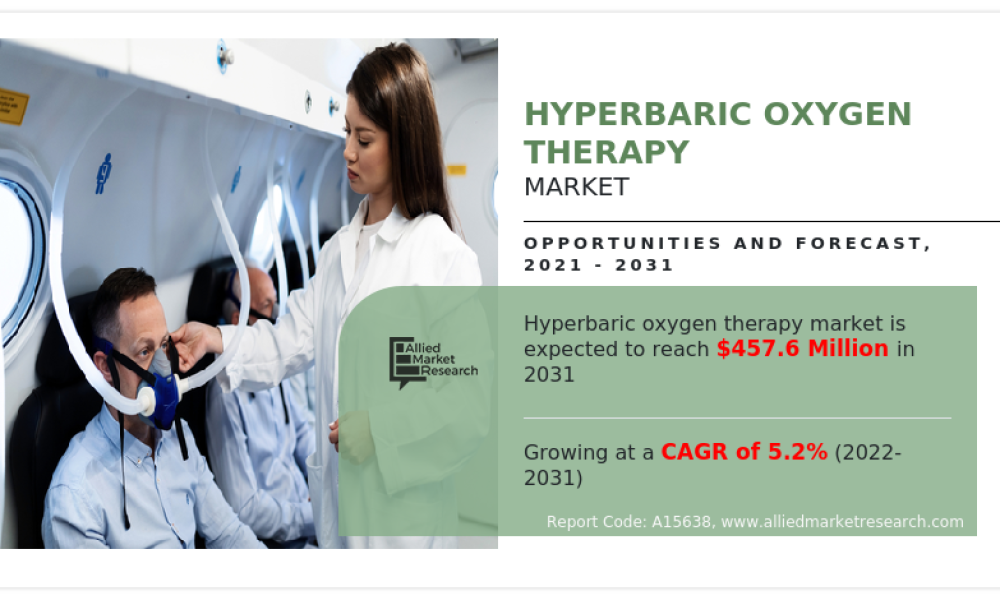
The global hyperbaric oxygen therapy (HBOT) market is gaining traction as a critical modality in advanced wound management and complex health conditions. Valued at $275.1 million in 2021, the market is projected to reach $457.6 million by 2031, growing at a CAGR of 5.2% from 2022 to 2031. This growth is fueled by technological advancements, an increase in chronic wound cases, expanding medical tourism, and rising global awareness of the clinical benefits of HBOT.
What is Hyperbaric Oxygen Therapy?
Hyperbaric oxygen therapy involves breathing 100% oxygen in a pressurized chamber, usually at 2 to 3 times the atmospheric pressure at sea level. This therapy increases the amount of oxygen the blood can carry, helping tissues starved for oxygen due to injury or disease to recover more rapidly. HBOT is commonly used to treat chronic wounds, diabetic foot ulcers, carbon monoxide poisoning, radiation injuries, decompression sickness, and gangrene.
Market Drivers
1. Rising Incidence of Diabetes and Chronic Wounds
Globally, diabetes cases are surging, with the International Diabetes Federation estimating over 643 million diabetics by 2030. Diabetic foot ulcers, a serious complication of uncontrolled diabetes, often require advanced wound care like HBOT. The therapy promotes angiogenesis and tissue regeneration, improving outcomes for non-healing wounds.
2. Technological Advancements
New-age hyperbaric chambers offer automated pressure control, enhanced safety, real-time monitoring, and portable models for home use. These innovations are making HBOT more accessible and user-friendly, encouraging adoption in both clinical and non-clinical settings.
3. FDA Approvals and Expanding Clinical Applications
The U.S. FDA has approved HBOT for 13 specific medical conditions. Moreover, ongoing research is exploring its potential in treating conditions like traumatic brain injury, stroke recovery, and long COVID, which may open new commercial opportunities for therapy providers and device manufacturers.
4. Adventure Tourism and Decompression Sickness
The growing popularity of scuba diving and deep-sea exploration has led to an increased risk of decompression sickness. HBOT is the primary treatment for this condition, supporting further demand growth as adventure tourism continues to rise.
Market Challenges
Despite its benefits, the HBOT market faces several barriers:
High Cost of Equipment and Treatment: HBOT chambers are capital-intensive, and treatment sessions are expensive, limiting access, especially in developing regions.
Limited Reimbursement Policies: In many countries, insurance does not fully cover HBOT, discouraging both patients and providers.
Post-Therapy Complications: Potential side effects such as barotrauma, oxygen toxicity, and claustrophobia may deter patient uptake.
COVID-19 Impact: The pandemic disrupted the market due to lockdowns and reduced patient visits. Many elective procedures and outpatient therapies, including HBOT, were deferred or canceled.
Market Segmentation Analysis
By Type
Monoplace Chambers: Accounted for the largest revenue share in 2021 and are expected to continue their dominance. These chambers are designed for one patient at a time, offering better comfort and safety, especially for those requiring frequent treatments.
Multiplace Chambers: Accommodate multiple patients and healthcare personnel, mainly used in hospital settings. While effective, they are more complex and costly.
Others: Includes portable chambers and experimental designs gaining interest in homecare and military applications.
By Application
Wound Healing: Dominated the market in 2021, driven by increasing demand for chronic wound treatment, including diabetic ulcers and post-surgical wounds. Sub-segments include:
Chronic Wounds
Acute Wounds
Decompression Sickness: A steady contributor to the market, supported by the global increase in underwater diving activities.
Others: Includes CO poisoning, radiation-induced injuries, and burns.
By End User
Hospitals: These remain the primary end users, accounting for the largest share in 2021. High patient volume, skilled personnel, and availability of advanced infrastructure support market growth.
Home Care: Expected to register the fastest CAGR during the forecast period due to the emergence of portable HBOT devices and rising demand for personalized care.
Others: Includes standalone HBOT centers and rehabilitation clinics that are increasingly being preferred for their convenience and cost-effectiveness.
Regional Insights
North America
North America held the largest market share in 2021, driven by:
Advanced healthcare infrastructure
Widespread adoption of HBOT in chronic disease management
Presence of key players and research institutions
Supportive regulatory framework and insurance coverage for approved indications
Asia-Pacific
Expected to show the fastest growth due to:
Rising diabetic population
Government initiatives to modernize healthcare systems
Increased investment in medical tourism in countries like India, Thailand, and Malaysia
Improved public awareness and access to advanced wound care
LAMEA (Latin America, Middle East, and Africa)
Although currently underpenetrated, the region is showing promise due to:
Growing healthcare infrastructure
Increasing investments by international medical device companies
Higher incidence of trauma and diabetic wounds
Competitive Landscape
Leading players are adopting strategies such as product innovation, strategic partnerships, mergers, and regional expansion. Key companies include:
Environmental Tectonics Corporation
Fink Engineering Pty Ltd
Sechrist Industries, Inc.
OxyHealth LLC
Perry Baromedical Corporation
Hyperbaric Modular Systems, Inc.
Tekna Hyperbaric Chambers
Unique Group FZC
Royal IHC
GWR Medical Inc.
These players are focusing on improving chamber design, integrating digital monitoring solutions, and expanding into emerging markets with portable and affordable HBOT systems.
Conclusion
The global hyperbaric oxygen therapy market is poised for steady growth, propelled by rising healthcare demands, especially in wound care and diabetic management. Although challenges like cost and limited awareness still exist, ongoing technological advancements and increasing clinical validation of HBOT’s benefits continue to widen its adoption.
With continued investment, regulatory support, and patient-centered innovations, HBOT is set to become a mainstream modality in both acute and chronic disease management by 2031




