
In recent years, gamification has emerged as a revolutionary tool in healthcare, blending the power of gaming with health management to improve patient outcomes, enhance engagement, and drive behavioral changes. As the world becomes increasingly digital, healthcare providers are integrating gaming elements into mobile health apps and digital platforms, creating new opportunities for patients and practitioners alike.
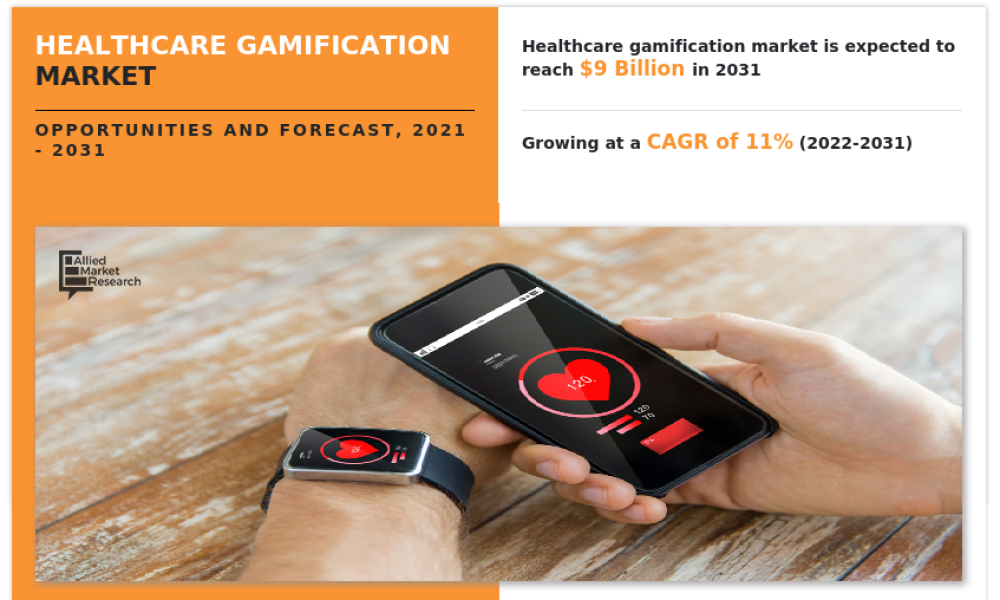
The global healthcare gamification market size was valued at $3.3 billion in 2021, and is projected to reach $9 billion by 2031, growing at a CAGR of 11% from 2022 to 2031. This significant growth is being fueled by rising smartphone adoption, increasing use of wearable devices, growing patient awareness, and the expanding role of digital health solutions.
What is Healthcare Gamification?
Healthcare gamification involves applying game mechanics such as rewards, challenges, competition, and achievements to health-related apps and platforms. The primary objective is to motivate and engage patients in managing their health proactively.
Applications of healthcare gamification include:
Behavioral modification: Encouraging healthier lifestyles and medication adherence.
Therapeutic support: Assisting patients with mental health and chronic disease management.
Patient education: Providing interactive learning experiences for patients and caregivers.
Clinical engagement: Enhancing participation in treatment plans and clinical trials.
Key Market Drivers
Several factors are contributing to the rapid expansion of the healthcare gamification market:
1️⃣ Rising Smartphone and Internet Penetration
The increasing availability of smartphones is a significant growth catalyst.
According to bankmycell.com, 6.3 billion people owned smartphones in 2021, projected to reach 7.33 billion by 2025.
Growing internet access in rural and developing regions further supports market growth.
2️⃣ Growing Popularity of Digital Health Apps
Health apps integrate gamification to monitor diet, physical activity, medication adherence, and vital signs.
Dietary intake monitoring apps are being used in dialysis patients to provide real-time feedback for personalized care.
Wearable devices and smartphones collect real-time health data, enabling tailored treatment plans.
3️⃣ Shift Toward Preventive Healthcare
Gamified apps help patients monitor their health and prevent disease progression.
Reduced hospital visits and remote disease management drive cost savings for both patients and providers.
4️⃣ Rise of Wearable Devices and Telehealth
Wearables track physical activity, heart rate, and sleep, integrating seamlessly with gamified health platforms.
Telemedicine adoption enables gamification in remote therapy and chronic disease management.
5️⃣ Increased Corporate Wellness Programs
Many enterprises are adopting gamification to promote employee wellness.
These programs incentivize physical activity, stress management, and overall well-being, boosting productivity and reducing absenteeism.
Market Restraints
Despite its potential, the healthcare gamification market faces several challenges:
Low user acceptance: Many patients remain unfamiliar with gamified health tools.
Lack of awareness: Limited knowledge about the benefits of gamification, particularly in developing nations.
Understanding patient psychology: Designing games that align with individual preferences remains complex.
Regulatory hurdles: Compliance with data privacy and healthcare regulations adds complexity for app developers.
Market Opportunities
The healthcare gamification market is positioned for robust growth due to several emerging opportunities:
Expansion of digital health monitoring tools.
Increasing adoption of wearable technologies.
Collaborations between healthcare providers and technology companies.
Integration of artificial intelligence and big data analytics for personalized gamified experiences.
For example, according to Rock Health (2018), 90% of American adults used digital health apps or wearable devices, and this trend has only accelerated post-pandemic.
Market Segmentation
The healthcare gamification market is segmented into Game Type, Application, End User, and Region:
🔬 By Game Type
Casual Games (Largest Share in 2021):
Simple, short, and entertaining games.
Popular among young patients and used to educate about disease management.
Enhance communication between healthcare providers and patients.
Serious Games (Fastest Growing Segment):
Developed using advanced 3D computer technologies.
Primarily used for patient education, behavior modification, and healthcare professional training.
Capable of positively influencing patient behavior for better outcomes.
Exercise Games:
Help promote physical activity.
Often used in rehabilitation and fitness programs.
🏥 By Application
Prevention (Dominant Segment):
Used for disease prevention and remote management.
Reduce hospital visits and healthcare costs.
Simulation-based games allow patients to visualize potential health risks.
Therapeutic (Fastest Growing Segment):
Applied in managing mental health conditions like depression, anxiety, PTSD, and ADHD.
Serve as effective distraction tools during pain management and therapy sessions.
Education:
Equip patients and caregivers with knowledge about disease progression, treatment options, and lifestyle modifications.
👥 By End User
Enterprise-Based (Largest Segment in 2021):
Driven by increasing employer-sponsored wellness programs.
Encourage healthier workforces and reduce healthcare expenses.
Consumer-Based (Fastest Growing Segment):
Focus on individualized health experiences.
Includes telemedicine, online therapy, and mobile apps for chronic disease management.
Regional Insights
🌏 Asia-Pacific (Leading Market)
Dominated the healthcare gamification market in 2021.
Factors driving growth include:
Rapid smartphone adoption.
Growing digital healthcare infrastructure.
Rising use of wearable health devices.
🌍 Europe (Fastest Growing Region)
Strong acceptance of gamified healthcare models.
Increasing prevalence of chronic diseases.
Widespread adoption of wearable health monitoring tools.
Competitive Landscape
Leading players in the healthcare gamification market are leveraging partnerships, acquisitions, and product innovations to gain market share:
Mango Health
Nike
Fitbit
Bunchball
Ayogo Health
Microsoft
Hubbub Health
EveryMove
Akili Interactive Labs
JawBone
These companies are continually developing innovative healthcare games to meet the growing demand for patient-centric healthcare solutions.
Future Outlook
As healthcare becomes more personalized and technology-driven, gamification will play a vital role in enhancing patient engagement and delivering better clinical outcomes. The integration of artificial intelligence, virtual reality, and advanced analytics will further transform the healthcare gamification landscape, making it a key component of next-generation healthcare delivery.




