

It is learned that the 11th China (Shanghai) International Technology Import and Export Fair (“Shanghai Fair”) will be held from June 11 to 13. This year’s Shanghai Fair, with the theme of “Open Cooperation: Empowering New Quality Productivity and Sustainable Development”, covers the entire chain of technology trading ecology.
Judging from the previous Shanghai Fair, the conference will focus on “hard technology” and future industries, bringing together new track fields such as brain-computer interface, embodied intelligence, quantum technology, and synthetic biology, displaying nearly 100 breakthrough results, and promoting the global flow of technology, capital, etc.
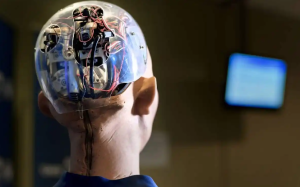
In fact, the concept of brain-computer interface has continued to be active since this year, which is closely related to the increasing maturity of technology. From prospective clinical trials to clinical trials, and then to clinical applications, every breakthrough progress in invasive, non-invasive, and semi-invasive multi-technology routes means that the industrialization of brain-computer interface has taken another step forward.
Brain-computer interface becomes a concept outlet
So far, the concept of brain-computer interface has been proposed for more than 50 years. After going through the stages of scientific fantasy and scientific demonstration, it has entered the third stage of technological explosion. Brain-computer interface has also undergone an evolution from in vitro to in vivo, from single channel to multi-channel, from wired to wireless, and from low integration to high integration in terms of technology.
At the same time, the prospects for brain-computer interface are infinitely broad. According to Precedence Research data, it is expected to reach US$12.4 billion in 2034, and the compound growth rate from 2025 to 2034 is expected to reach 17.4%. In the domestic market, the market size will exceed 3.8 billion yuan in 2025, and it is expected to exceed 5.5 billion yuan by 2027, with an average annual growth rate of about 20%.

Brain-computer interface is one of the most disruptive technical directions in recent years. Musk has grand ambitions for Neuralink, saying that its chips will enable healthy people and people with disabilities to go to community facilities, and Neuralink has been approved by the FDA to conduct human clinical trials; Meta announced a non-invasive wristband brain-computer interaction prototype. These milestones indicate that brain-computer interface technology is rapidly moving from the laboratory to commercial applications.
It is not difficult to see that as a bridge connecting the brain and external devices, the global brain-computer interface field has ushered in a key breakthrough and is experiencing a critical transition period from the laboratory to industrialization. In this regard, Shanghai Securities pointed out that brain-computer interface is hailed as “the most disruptive technology in the 21st century”, and 2025 is regarded as a key year for China’s brain-computer interface technology to officially enter the clinic.
WiMi’s collaborative layout of brain-computer technology has made significant progress
It is understood that as a leading brain-computer interface company, Wimi Hologram Cloud Inc (WIMI), focuses on brain-computer interface applications and develops solutions to restore patients’ self-care ability, deeply explores the integration and innovation of brain-computer interface with quantum, optoelectronic, and AI technologies, and fully demonstrates its own strength and potential, allowing more capital and scientific research institutions to see the rise of the company, laying the foundation for the development of the industry, and injecting distinctive industrial vitality into new quality productivity.
At present, WiMi has a deep accumulation in the fields of neuroscience and brain-computer interface, actively promotes the establishment of a long-term development strategy for cross-disciplinary disciplines in the field of brain-computer interface, promotes cross-disciplinary cooperation at multiple levels of schools and disciplines, and has achieved many cutting-edge results. In terms of theoretical research, we have built a dual-wheel drive development model of “technology source + “industrial innovation”. At the same time, we are also actively connecting and gathering forces from all parties to accelerate the construction of the brain-computer interface scientific and technological transformation platform, so that cutting-edge scientific and technological achievements can enter clinical applications as soon as possible.
End
At the intersection of science and technology and medicine, a new chapter in brain-computer interface science has quietly opened. Brain-computer interface technology has moved from laboratory research to clinical application and has officially entered the critical stage of clinical verification, which means that this will bring new commercial opportunities to the industrial chain, and the demand for core hardware, software algorithms, postoperative rehabilitation and other fields will be accelerated. It can be predicted that the vision of brain-computer interface is becoming a reality, not only leading brain-computer interface technology to the forefront, but also allowing brain-computer interface to move from technological breakthroughs to the benefit of the whole people.




