
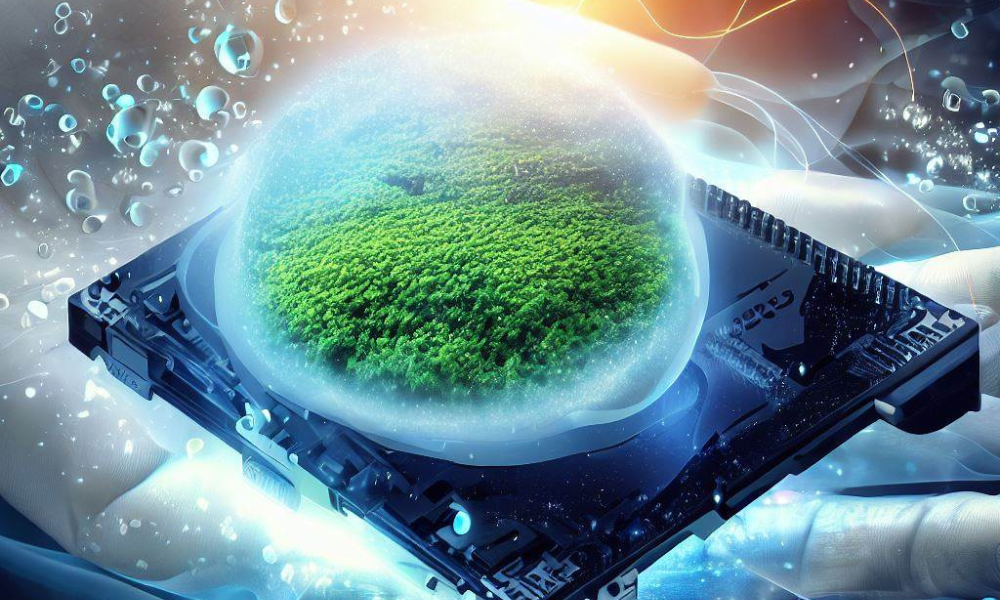
Undoubtedly, Brain-Computer Interface (BCI), as a cutting-edge technology in the field of neuroscience and technology, has been the focus of global attention. BCI is an emerging disruptive technology whose ultimate goal is the organic fusion of silicon-based devices and carbon-based life, realizing a new form of life evolution and new heights, which will set off a new round of technological waves.
As an important strategic direction of the new round of scientific and technological revolution and industrial change, BCI technology can establish a direct information pathway between the brain and external devices, realizing brain state monitoring and “idea” control, which is an important field facing the world’s scientific and technological frontiers, facing the main battlefield of the economy, and facing the people’s life and health, and it is also a future industrial field for fostering the new impetus for economic development and creating a new competitive advantage.
In fact, 2023 is an important year for BCIs, the 50th anniversary of the concept of BCIs, which was first described by American scientists in 1973 as a scientific concept and vision of brain-computer interfaces. Since then, the conceptual scope of BCIs has been continuously extended by the efforts of scientists from various countries.
Exploring the evolution of BCIs
Brain-computer interface is an indispensable hardcore technology for the future. If brain-computer interface is compared to a jigsaw puzzle, the first three key pieces of the puzzle are, in order: brain information acquisition, computer science and signal analysis technology, and neuroscience.
In 1924, the father of the EEG, German psychiatrist Hans Begel, first recorded electrical signal activity in the human brain, naming it brain waves. It was on the basis of this first piece of the puzzle that in 1938, the American neurologist Herbert Jasper, imagined the possibility of decoding language from brain waves, which is considered an early sci-fi depiction of brain-computer interfaces.
The second piece of the puzzle, the world’s first general-purpose computer, the ENIAC, was born in February 1946 at the University of Pennsylvania. In the decades that followed, computer science continued to advance and provided the basis for the development of digital signal processing and artificial intelligence.
The third piece of the puzzle is neuroscience and technology. in 1969, German professor Eberhard Erich Fetz utilized the principle of operant conditioning to validate that the activity of a single neuron in the motor cortex of a primate could produce a conditioned reflex for controlling an analog instrument pointer, which was the earliest practice of brain-computer interfacing achieved before the concept of brain-computer interfacing was formed.
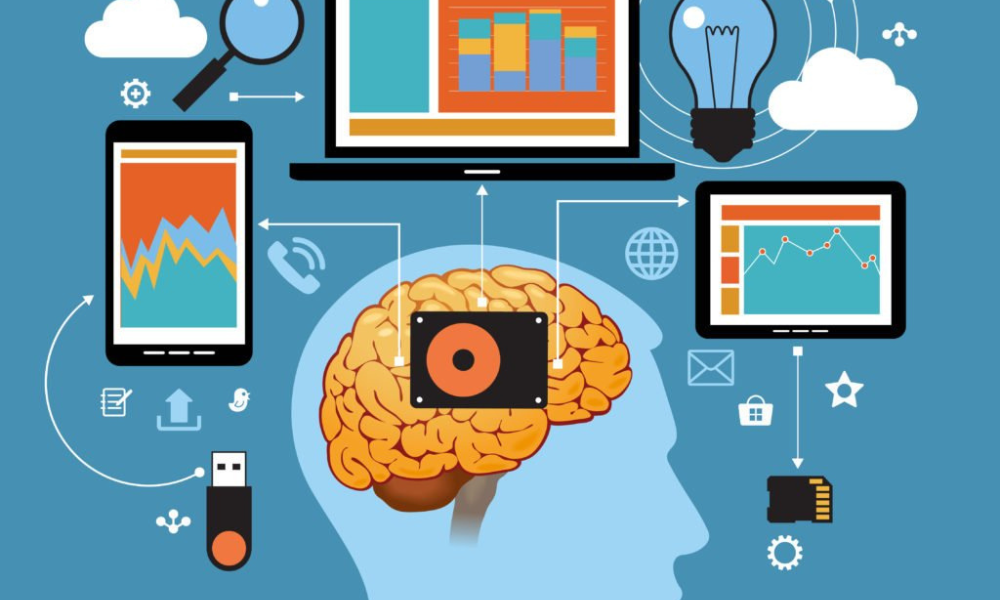
All disciplines influence each other and progress, the wheel of history came to 1973, American scientist Jacques Vidal put forward the concept and idea of brain-computer interface, that is, BCI. after that, until the 1990s, there are five independent groups in the world to re-invent the brain-computer interface. 1999, the first international conference on Brain-Computer Interfaces, among a dozen of similar concepts, recognized “BCI” as a specific professional term, and confirmed its scientific definition and evaluation criteria. In 1999, the First International Conference on Brain-Computer Interfaces recognized “BCI” as a specific professional term among a dozen similar concepts, and confirmed its scientific definition and evaluation criteria.
State of the Brain-Computer Interface Market
After 50 years of development, BCIs have been initially applied in the medical, industrial, educational, and entertainment fields, and have gained widespread attention in the scientific research and industrial fields. According to McKinsey’s estimation, the potential market size of global brain-computer interface medical applications is expected to reach 40 billion dollars in 2030-2040.
With the gradual increase in the exploration of brain-computer interface, its potential value began to reveal more and more, so that the conditions for it to become an independent field of research have also matured. Based on market judgment, brain-computer interface must be the core technology of the future, the industry is in an upward stage, so this article lists the relevant important stock recommendations.
Neuralink
Years ago, Musk was very optimistic about brain-computer interface technology, believing that it would have great potential to improve the human-computer interaction experience and help people treat certain neurological disorders. In 2016, he funded the establishment of Neuralink, a company dedicated to the research of brain-computer interface technology and its commercialization.
In May 2023, Neuralink, Musk’s brain-computer interface company, announced that after months of negotiating, it had finally received approval from the U.S. Food and Drug Administration (FDA) and would soon launch its first human trials. This means that the company’s process of commercializing brain-computer interface technology will enter an accelerated phase.
Meta(NASDAQ: META)
For Meta, Meta has also been working on developing a brain-computer interface that will allow people to communicate with others without having to speak in the future. Ultimately, they hope to develop a technology that will allow people to “speak” just by thinking – without the constraints of time or distance. This could be used, for example, in severe motor-perceptual impairments such as ALS, paraplegia and aphasia, to try to help these patients regain their health.
In addition, not long ago, the University of California, San Francisco team sponsored by Meta used non-invasive brain-computer interface to realize the experiment of reading content from brain activity and transforming it into text, thus making “idea typing” a reality. From this example, we can see that although non-invasive technology is theoretically less efficient than invasive technology, with the development of technology, Meta layout brain-computer interface is still a very great future.
Apple.Inc (NASDAQ: AAPL)
A non-invasive brain-computer interface device is also available in the just-launched Apple Vision Pro. It should be noted that the achievements of this pathway are now remarkable as well. After the headset’s release, Sterling Crispin, who was involved in the development of the technology associated with the Vision Pro for more than three years prior to 2021 according to his description as a neurotechnology prototyping researcher at Apple, called the Vision Pro “the pinnacle of the development of the entire industry” for AR/VR.
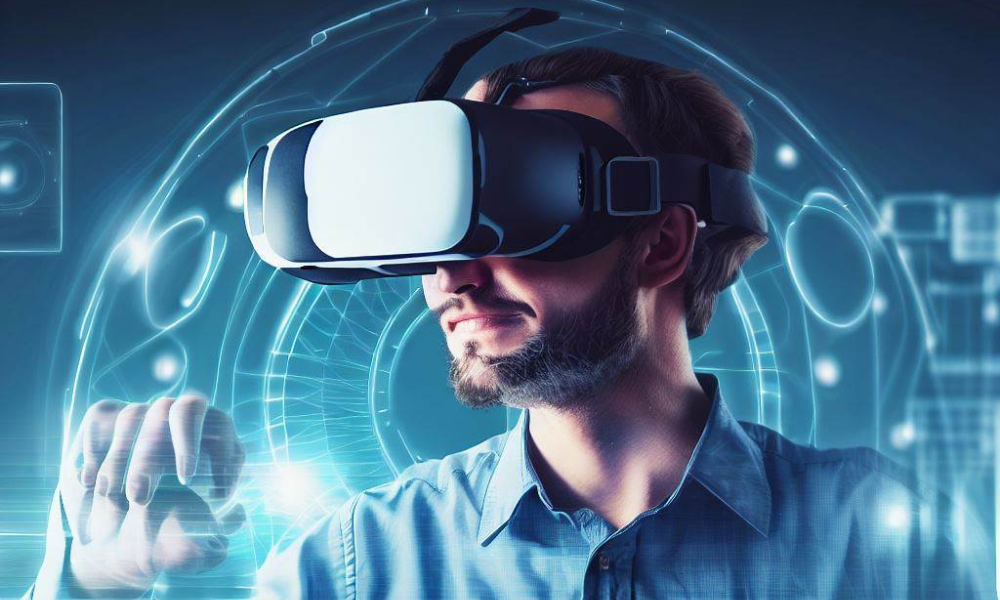
He also revealed quite a few “clarke techs” bout Vision Pro. The most amazing thing is that Vision Pro actually has a hidden BCI technology. Without the need for a chip implant, it can predict your brain behavior, proper “mind reading”. Apple’s headset can also detect mental states based on data from an individual’s body and brain.
Much of Crispin’s work at Apple, though, is bound by a non-disclosure agreement that prevents direct disclosure of the design’s broad themes and methods. But Apple has actually filed patents. One patent describes how machine learning, along with signals from your body and brain, can be used to predict how attentive, relaxed, or learning you are.Sterling Crispin describes these patents and tech, and perhaps in the future we’ll be able to see them in future iterations of the Vision Pro upgrade.
WiMi Hologram Cloud (NASDAQ: WIMI)
In the past few years, WiMi has been rapidly developing in many technical fields, such as computer vision, natural language processing and speech processing. The future development of brain-computer interface technology as an important economic development hand and carrier, WiMi has begun to layout the brain-computer interface research and development, to further lead the trend of scientific and technological innovation and scientific research direction, focusing on the key core issues of the collective wisdom of the research, and to serve the development of scientific and technological innovation is of great significance.
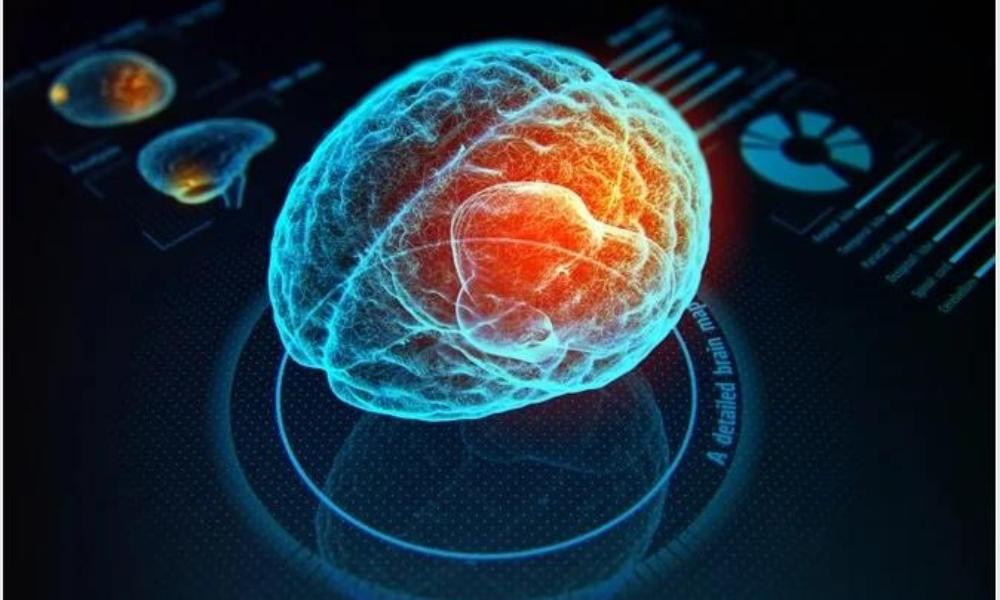
It is reported that with the rapid development of brain-computer interface technology in recent years, WiMi’s researchers have also integrated BCI technology into entertainment games to conduct in-depth research, so that in addition to medical applications, BCI technology can also become a form of consumer entertainment. WiMi has designed a game model using the P300 BCI to explore the use of EEG signals in real-world environments for a viable and natural game execution experience.
The novelty of this research is reflected in the design of BCI games and paradigms that integrate the rules of the game and the characteristics of the BCI system. In addition, WiMi introduces a Convolutional Neural Network (CNN) algorithm to achieve high accuracy in training samples. This BCI system not only provides a form of entertainment for users, but also offers more manipulation possibilities for the game, for example, BCI games can also allow to be used as a functional rehabilitation system to help patients with rehabilitation training.
Conclusion
Wang Zheng, Director of High Technology Department of Science and Technology Division of the Ministry of Industry and Information Technology, said that the brain-computer interface industry has gradually stepped into the public’s field of vision and will be widely used in the future, profoundly changing our production and life style. The Ministry of Industry and Information Technology will continue to take the brain-computer interface as an important breakthrough for future industrial development, and promote the high-quality development of the brain-computer interface industry by tamping the foundation with innovation, promoting the application with scenes, and creating an ecology with environment. Where will BCI go in the future? BCI is a brand-new “bridge” between the brain and the external environment, and it is also the core technology of artificial intelligence to the depth of intelligence, and perhaps its future development trend will be from a single discipline to the integration of multiple disciplines.




