
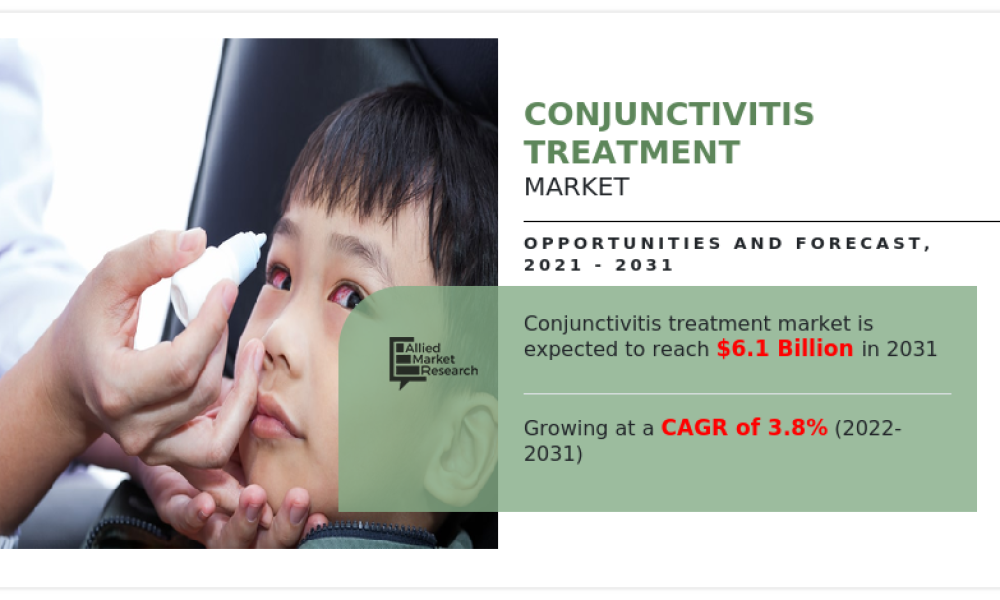
The global conjunctivitis treatment market, valued at $4.2 billion in 2021, is projected to reach $6.1 billion by 2031, growing at a CAGR of 3.8% from 2022 to 2031. Conjunctivitis, commonly known as “pink eye,” is an inflammation of the conjunctiva—the thin, transparent membrane covering the white part of the eye and the inner eyelids. This condition can result from infections (bacterial or viral), allergies, or irritants like smoke and pollution.
With rising allergy cases, increasing pollution levels, and advancements in eye care treatments, the market is experiencing significant growth. This article explores the key drivers, market segmentation, regional trends, and competitive landscape shaping the conjunctivitis treatment industry.
Key Market Drivers
1. Rising Prevalence of Allergic Conjunctivitis
Allergic conjunctivitis affects 30% of adults and 40% of children in the U.S. (Asthma and Allergy Foundation of America).
Common symptoms include redness, itching, burning, and excessive tearing.
Environmental pollutants, pollen, and pet dander contribute to increasing cases.
2. Increased R&D and Product Approvals
Pharmaceutical companies are investing in novel treatments for conjunctivitis.
Example: In October 2021, Ocular Therapeutix received FDA approval for DEXTENZA, expanding its use in treating ocular inflammation.
3. Growing Demand for Over-the-Counter (OTC) Treatments
Antihistamine eye drops (e.g., ketotifen fumarate) are gaining popularity.
Example: Bausch + Lomb launched Alaway Preservative-Free eye drops in February 2021.
4. Expansion in Emerging Markets
Asia-Pacific is witnessing rapid growth due to rising healthcare expenditure and increasing awareness.
India and China are key markets due to high pollution levels and a large patient pool.
Market Segmentation
By Disease Type
Allergic Conjunctivitis (Dominant segment)
Seasonal & Perennial types
Driven by rising allergens and pollution
Bacterial Conjunctivitis
Treated with antibiotic eye drops
Viral Conjunctivitis
Expected to grow due to increasing viral infections
By Drug Class
Anti-Allergic Drugs (Leading segment)
Includes antihistamines and mast cell stabilizers
Antibiotics
Used for bacterial infections
Antivirals
Gaining traction for viral conjunctivitis
Artificial Tears
Used for symptomatic relief
By Distribution Channel
Hospital Pharmacies (Largest share)
Due to prescription-based treatments
Retail Pharmacies
Growing due to OTC availability
Online Pharmacies
Rising due to convenience and home delivery
Regional Analysis
| Region | Market Share (2021) | Growth Drivers |
|---|---|---|
| North America | Largest Market | Advanced healthcare, high allergy prevalence, key players |
| Europe | Significant Share | Strong R&D, government healthcare support |
| Asia-Pacific | Fastest Growth | Rising pollution, increasing healthcare access |
| LAMEA | Emerging Market | Improving medical infrastructure |
North America leads due to high diagnosis rates and strong pharmaceutical presence.
Asia-Pacific is the fastest-growing region, driven by India and China.
Competitive Landscape
Major players in the conjunctivitis treatment market include:
AbbVie Inc.
Novartis AG
Johnson & Johnson
Bausch Health Companies Inc.
Santen Pharmaceuticals
Sun Pharmaceuticals
Key Strategies by Market Players
✔ Product Launches (e.g., Alaway Preservative-Free)
✔ Partnerships & Acquisitions
✔ Expansion in Emerging Markets
Future Outlook
The conjunctivitis treatment market is set to grow due to:
✅ Increasing allergy cases globally
✅ Advancements in drug formulations
✅ Rising awareness and diagnosis rates
✅ Expansion of OTC treatments
With technological advancements and increasing healthcare investments, the market is expected to witness steady growth, particularly in Asia-Pacific and North America.
Conclusion
The conjunctivitis treatment market is expanding due to rising allergic cases, pollution, and pharmaceutical innovations. With key players investing in R&D and expanding into emerging markets, the industry is poised for significant growth by 2031. Patients now have better access to advanced treatments, making eye care more effective and accessible worldwide.




