
Introduction
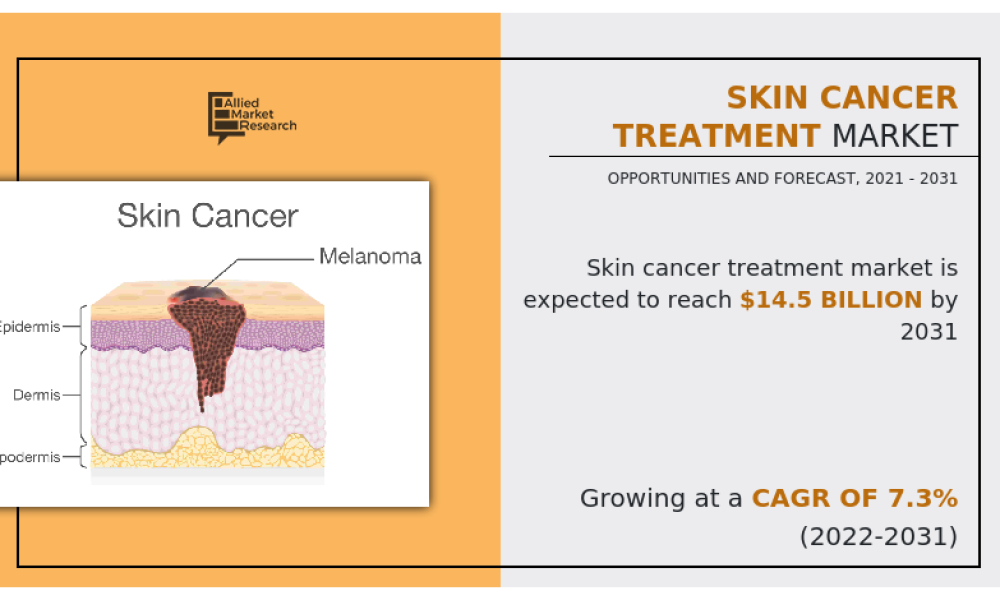
Skin cancer remains one of the most prevalent cancers worldwide, with its treatment market valued at $7.2 billion in 2021 and projected to reach $14.5 billion by 2031, growing at a CAGR of 7.3%. The increasing incidence of melanoma and non-melanoma skin cancers, advancements in immunotherapy and targeted therapies, and rising awareness about early detection and treatment are key drivers of this growth.
Understanding Skin Cancer
Skin cancer develops due to the abnormal growth of skin cells, primarily caused by UV radiation exposure. However, it can also occur in areas rarely exposed to sunlight, such as:
Palms and soles
Under fingernails or toenails
Genital areas
Types of Skin Cancer
Melanoma – The most aggressive form, originating in melanocytes.
Non-Melanoma – Includes basal cell carcinoma (BCC) and squamous cell carcinoma (SCC), which are more common but less deadly.
Get a Sample Copy of this Report: https://www.alliedmarketresearch.com/request-sample/A17526
Key Market Drivers
1. Rising Incidence of Skin Cancer
5.4 million people are diagnosed with BCC and SCC annually in the U.S. alone (American Cancer Society, 2020).
Melanoma cases are increasing globally due to higher UV exposure and tanning trends.
2. Advancements in Treatment Modalities
Immunotherapy – Boosts the immune system to fight cancer (e.g., Keytruda, Opdivo).
Targeted Therapy – Attacks specific cancer cell mutations (e.g., BRAF inhibitors).
Chemotherapy – Traditional but declining due to side effects.
3. Government and Private Sector Initiatives
Novartis AG’s COMBI-AD trial (2020) tested Tafinlar + Mekinist for BRAF-mutated melanoma, showing long-term efficacy.
Increased R&D investments by pharmaceutical giants like Pfizer, Merck, and Roche.
4. Growing Awareness and Early Detection
Public health campaigns emphasize sun protection and regular skin checks.
Telemedicine and AI-based diagnostics are improving early detection rates.
Market Restraints
High treatment costs (immunotherapy can exceed $100,000 per year).
Side effects of chemotherapy (nausea, fatigue, immune suppression).
Limited access in developing regions due to affordability issues.
Market Segmentation
By Type
Melanoma – Dominates the market due to aggressive nature and high treatment demand.
Non-Melanoma – Expected to grow fastest due to increasing SCC and BCC cases.
By Therapy
Immunotherapy – Leading segment due to high efficacy and fewer side effects.
Targeted Therapy – Fastest-growing due to precision medicine advancements.
Chemotherapy – Declining due to toxicity concerns.
By Distribution Channel
Hospitals & Clinics – Major treatment hubs.
Retail Pharmacies – Dominant in 2021 due to accessibility.
Online Providers – Fastest-growing due to telemedicine and e-pharmacies.
Regional Insights
North America (Market Leader)
High adoption of advanced therapies.
Strong presence of key players (Amgen, Bristol Myers Squibb, Merck).
Increasing melanoma cases.
Europe
Strict regulations on sunbed usage.
Growing government-funded skin cancer programs.
Asia-Pacific (Fastest-Growing Region)
Rising healthcare investments.
Increasing awareness and improving diagnostics.
LAMEA (Latin America, Middle East, Africa)
Limited access to advanced treatments.
Untapped market potential.
Competitive Landscape
Major players shaping the market include:
Amgen Inc.
Bristol Myers Squibb
Roche (F. Hoffman-La Roche Ltd.)
Novartis AG
Pfizer Inc.
Sun Pharmaceuticals
Key Strategies
Mergers & Acquisitions (e.g., Pfizer’s acquisition of Array BioPharma).
Clinical Trials & Drug Approvals (e.g., Merck’s Keytruda expansions).
Partnerships with diagnostic firms to enhance early detection.
Future Outlook
Personalized medicine (gene-based therapies) will revolutionize treatment.
AI and machine learning will improve diagnostic accuracy.
Emerging markets (India, China, Brazil) will see rapid growth due to improving healthcare infrastructure.
Conclusion
The skin cancer treatment market is expanding rapidly, driven by rising cases, innovative therapies, and increased awareness. While cost and side effects remain challenges, advancements in immunotherapy and targeted treatments offer hope. With North America leading and Asia-Pacific emerging as a high-growth region, the future of skin cancer treatment looks promising.
Key Takeaways (Bullet Points)
✔ Market Size: $7.2B (2021) → $14.5B (2031) | CAGR: 7.3%
✔ Top Drivers: Rising melanoma cases, immunotherapy demand, government initiatives.
✔ Leading Therapy: Immunotherapy (less side effects, high efficacy).
✔ Fastest-Growing Region: Asia-Pacific (healthcare investments, awareness).
✔ Key Players: Novartis, Merck, Pfizer, Roche, Bristol Myers Squibb.
✔ Future Trends: AI diagnostics, personalized medicine, emerging market growth.
By staying informed on these trends, patients, healthcare providers, and investors can better navigate the evolving skin cancer treatment landscape.




