
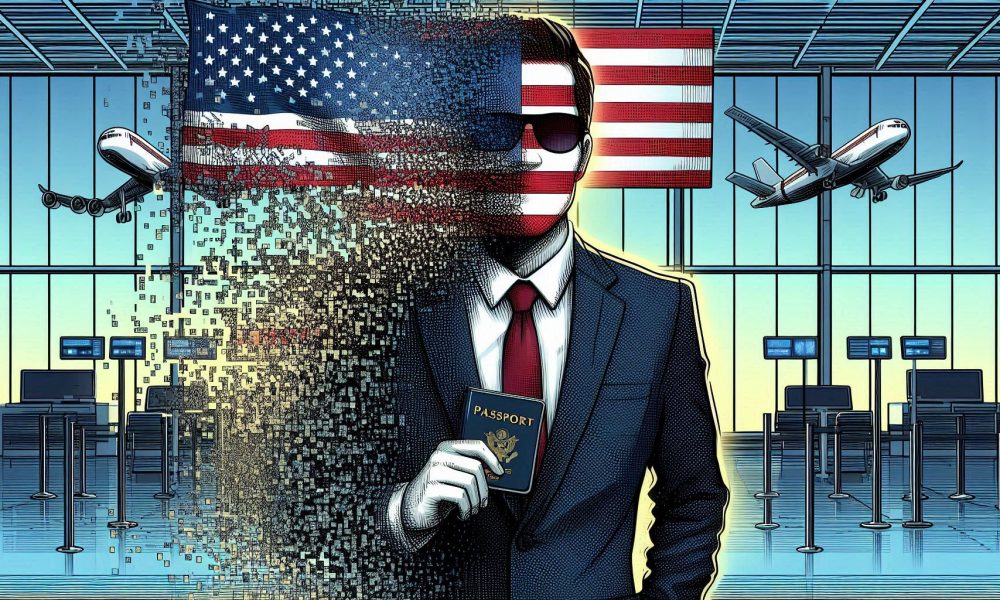
The End of Passport Privilege in a Digitally Policed World
VANCOUVER, British Columbia — June 5, 2025 — Once, a passport was the universal key to global travel, and visa-free entry was considered the ultimate marker of citizenship privilege. In 2025, however, the freedom to cross borders is no longer defined by what’s printed in your passport, but by what your face, fingerprints, and metadata say about you.
Biometric surveillance technologies—once hailed as tools for efficiency and safety—are now quietly undermining visa-free mobility. Governments increasingly rely on facial recognition, iris scans, gait analysis, and behavioural profiling to screen, deny, or flag travellers who technically have the right to enter.
A new report from Amicus International Consulting warns that while countries may advertise visa-free access on paper, the reality at biometric borders tells a very different story—one shaped by AI, suspicion, and geopolitics.
Visa-Free Travel in 2025: A Shrinking Privilege
Visa-free access, in its classical sense, allows passport holders to enter a country without needing to apply for a visa beforehand. In 2025, more than 60 countries will continue to offer this option to travellers from the U.S., EU, Canada, Japan, Singapore, and other high-ranking passport holders.
Yet, according to Amicus’ biometric border research division:
One in five visa-free travellers is subjected to secondary screening in the EU or the U.S.
Over 8 million travellers globally were refused entry despite valid passports in 2024, most due to digital or biometric red flags.
Facial recognition errors, particularly among minority groups, contribute to false positives in visa-free entry systems.
Visa-free, it turns out, does not mean friction-free.
Case Study: The Australian Tech Entrepreneur Blocked in Paris
In late 2024, an Australian tech CEO was scheduled to keynote a cybersecurity summit in Paris. His passport allowed visa-free access to France. However, upon arrival at Charles de Gaulle Airport, facial recognition flagged him due to prior visits to Tehran and Moscow—destinations on France’s high-risk list.
Despite having no criminal record and travelling for a legitimate business purpose, he was detained for 11 hours, denied entry, and placed on a “monitor list” that now flags all his Schengen entries.
His experience illustrates how biometrics override legal entitlement at modern borders.
The Rise of “Silent Denials” in Automated Border Control
A growing number of countries now employ e-Gates—automated booths where travellers scan passports and submit to facial scans or fingerprint matching. These systems are powered by AI databases that:
Cross-check against INTERPOL and terrorist watchlists
Analyze travel history and connections
Score behavioural risk based on prior entries, social media, and even email metadata
If a traveler “scores high” for risk—even wrongly—they may be denied entry without ever knowing why. No stamp, no formal rejection, no appeal.
Amicus consultants refer to this as a “silent denial”—the digital equivalent of being ghosted by a government.
Biometrics and Bias: Who Gets Flagged?
While biometric systems promise impartiality, studies show they’re riddled with bias and errors:
Facial recognition has a 30% higher error rate for people of African, Middle Eastern, or South Asian descent.
Women and children are more likely to be misidentified due to age-related changes in facial features.
People with facial injuries, disabilities, or religious attire are frequently misflagged.
This has led to an increase in wrongful detentions, deportations, and permanent travel bans—all occurring without human review in some jurisdictions.
Case Study: A Pakistani Doctor Denied Entry in Canada
Dr. S., a physician based in Dubai, flew to Toronto for a family wedding in June 2024. Though Pakistani nationals require a visa, he held permanent residency in the UAE and a Canadian multi-entry visa.
At Pearson Airport, biometric profiling flagged his name as a “potential dual-use knowledge risk”—a designation sometimes applied to those in nuclear or biological sciences.
Despite no formal accusation, he was turned away, his visa was cancelled, and he was banned from reapplying for 10 years. The real trigger? His LinkedIn profile mentioned consulting for a Middle Eastern pharma firm under U.S. watch.
The Dark Web and Synthetic Biometric Passports
The push for biometric enforcement has sparked a black-market boom in identity manipulation.
On the dark web, Amicus investigators have documented:
Synthetic biometric passports—cloned from stolen facial data—selling for $50,000+
Altered iris scan datasets used to bypass retina-match systems
Fake fingerprints produced using 3D printers and wearable gels
These products facilitate illicit border crossing but also carry the risk of severe consequences. Several travellers were caught in 2024 using semi-legitimate second passports with clean biometrics but fraudulent backstories.
Case Study: The Iranian Dissident With Two Faces
In 2023, a political dissident fled Iran using a Dominica CBI (Citizenship by Investment) passport. While his second passport was legitimate, his biometric profile had been flagged under his Iranian identity.
Upon entering Germany, his facial recognition scan matched his old IRGC-tracked image, and he was detained despite presenting valid documents.
He was eventually released after an EU court challenge, but his case revealed how the body—not the passport—is now the primary form of identity at borders.
Artificial Intelligence and Risk Scoring: A Secret Border Weapon
Advanced countries now assign invisible scores to travellers:
Travel to certain countries = higher risk
Solo male travel = moderate risk
No return flight = elevated suspicion
Recent asylum applications = red flag
Encrypted email usage = potential evasion behaviour
AI learns and evolves through deep learning. If a high-profile incident occurs, systems retroactively flag travellers with similar behaviour patterns.
Most travellers never see their score, can’t challenge it, and don’t know how to improve it. It exists outside the realm of law and inside the dark data sphere of immigration enforcement.
Amicus International’s Solutions: Legal Travel in a Digital Surveillance World
For high-risk travellers, whistleblowers, journalists, and those from sanctioned countries, Amicus offers legal, secure pathways to regain mobility, including:
Second passports through Caribbean, EU, and South American citizenship programs
Ancestral citizenship for those with European or Jewish heritage
Biometric re-registration services to legally update facial data after gender transition or injury
Strategic identity partitioning to separate professional and political lives
Private travel planning through border-friendly jurisdictions
Amicus ensures legal compliance while minimizing biometric triggers that result in denial, detention, or surveillance.
Case Study: Russian Tech Founder Gains Unrestricted Access
A Russian software executive found himself banned from entering EU conferences after his company was linked to a state-funded cybersecurity project. Although he held a Cyprus Golden Visa, his biometric risk profile prevented him from crossing multiple Schengen borders.
In 2024, Amicus facilitated an Antiguan second passport, biometric recapture, and legal name change. Today, he attends tech events across Switzerland, Singapore, and Canada without interference.
The Ethical Debate: Is Tech-Driven Mobility Worth the Risk?
Supporters of biometric border control argue that it enhances safety, reduces fraud, and makes airports more efficient. But critics say it also:
Punishes travellers based on algorithms, not facts
Creates a system where people are judged before speaking to a human
Targets political dissidents and minorities under the guise of “security”
Makes visa-free travel a selective privilege rather than a universal right
Amicus’ position is clear: Mobility must remain a protected right, not a reward for digital conformity.
Recommendations for Travellers in 2025
Know your biometric footprint. Have you registered in any global travel databases (e.g., U.S. Customs and Border Protection, EU ETIAS)?
Check your travel history. Destinations like Iran, North Korea, or Russia may trigger AI alerts.
Avoid surveillance triggers. Excessive encryption, anonymizers, or a lack of return tickets may flag you.
Consider a second citizenship. If you face mobility barriers due to political or geographical circumstances, a legal second passport can open new doors.
Seek legal guidance. Appeals and redress processes exist, but often require expertise to access.
Conclusion: Freedom to Move Is Now Negotiated Digitally
In 2025, biometric borders are redefining what it means to be free. No longer is visa-free travel truly unrestricted. Your body, your past behaviour, and the hidden algorithms behind border control systems now decide where you can go.
Amicus International Consulting remains dedicated to helping clients reclaim their freedom of movement—ethically, legally, and strategically.
Contact Information
Phone: +1 (604) 200-5402
Email: [email protected]
Website: www.amicusint.ca




