
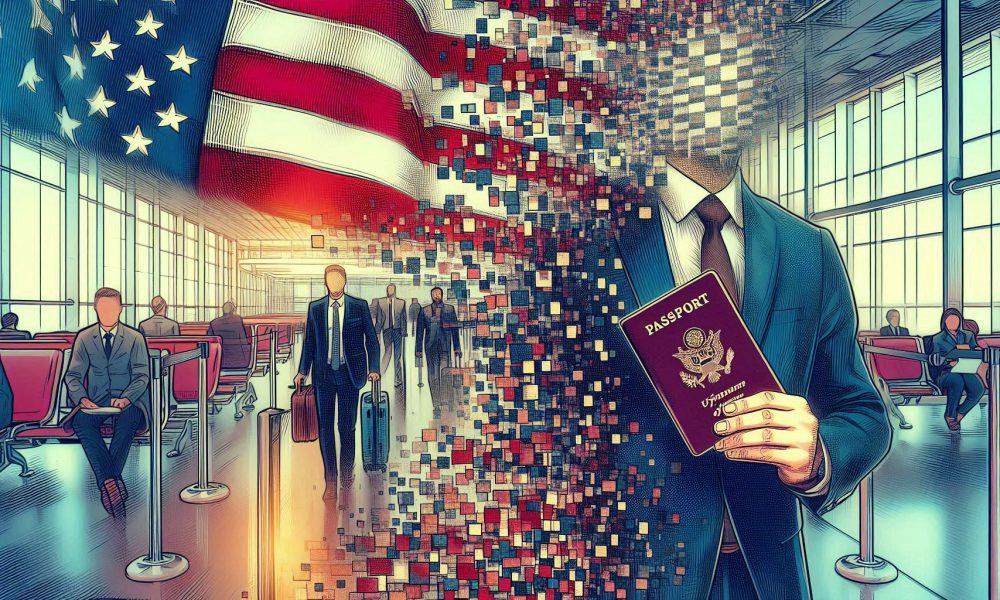
The Erosion of Intellectual Mobility in a Digitally Surveilled, Politically Polarized World
VANCOUVER, British Columbia — June 5, 2025 — Once bastions of free thought and global dialogue, international academic conferences have now become geopolitical battlegrounds. As borders harden and digital scrutiny intensifies, scholars from certain countries—or those with research areas deemed controversial—are increasingly being denied visas, flagged at airports, or banned outright from attending international gatherings.
According to new findings released by Amicus International Consulting, the mobility of academics is no longer determined by their credentials but by their nationality, ideology, and digital footprint. The phenomenon of “academic exile” has returned—not as an intellectual concept, but as a lived reality.
From Scholar to Suspect: The New Reality of Academic Travel in 2025
Academia thrives on global exchange. But in the past three years, Amicus has documented an alarming rise in visa denials and border rejections targeting researchers from specific regions, especially the Middle East, China, Russia, Venezuela, Iran, and Cuba.
Many of these denials cite vague justifications:
“Security concern”
“Insufficient ties to home country”
“Unspecified immigration risk”
“Concerns about dual-use research”
Often, these terms are applied without transparency, appeal, or review, effectively barring participation in global academic life.
Case Study: A Biologist Barred from Brazil
In 2023, Dr. L., a molecular biologist from Lebanon, was invited to present groundbreaking cancer research at a global oncology conference in São Paulo. Despite receiving an official letter of invitation, sponsorship, and having a history of international collaboration, her visa was denied without explanation.
Later FOIA requests revealed that a U.S.-Brazil intelligence-sharing program flagged her name due to alleged familial connections to a listed organization—an accusation never proven or formally brought against her.
The decision not only derailed her career but also prevented global audiences from engaging with potentially life-saving research.
A Chilling Effect: Scholars Silenced by Algorithms
Increasingly, AI-powered border screening systems play a central role in denying academic access. These systems scrape publicly available data, cross-reference visa databases, and even analyze social media posts for perceived political affiliation or ideological threat.
According to Amicus data, over 41% of scholars denied entry between 2021 and 2024 had no prior visa violations, criminal records, or immigration history. Instead, their “r” status was determined by:
Attendance at politically sensitive conferences
Publications on controversial topics like surveillance, foreign policy, or human rights
Online criticism of host governments
Cultural or ethnic association with sanctioned regions
Case Study: The Political Scientist Rejected by the UK
Dr. Z, a political scientist from India, was scheduled to present a paper at the London School of Economics on digital authoritarianism in South Asia. Despite previously studying in the UK and holding multiple valid travel visas, he was denied entry at Heathrow in January 2024.
The reason? A “d”screpancy in travel purpose,” “espite possessing a formal academic invitation. A whistleblower later disclosed that his prior criticism of UK-India surveillance cooperation had triggered a biometric flag.
He was detained for 12 hours, deported, and banned from reentry for five years—without legal recourse.
The Political Weaponization of Conference Visas
Amicus has identified a troubling pattern: governments using visa controls to control the narrative and suppress dissent. Scholars working on topics like:
Western military interventions
Israeli-Palestinian conflict
Chinese surveillance technologies
Russian-Ukrainian relations
Sanctions and global banking
…are disproportionately targeted.
Even countries that claim open academic policies—such as the U.S., the UK, and EU member states—have quietly implemented entry filters for speakers they deem controve”sial or “potentially desta”ilizing.”
The Rise of Virtual Conferences: A Solution or a Digital Trap?
The rise of virtual conferencing platforms was initially hailed as a solution to the barriers of the past. However, they’ve also introduced new risks:
Scholars from high-risk countries are often digitally excluded or shadow-banned from platforms due to sanctions
Data-sharing with intelligence agencies has led to the surveillance of academic speech during panels
Specific conference organizers” geo-block “IPs from “unfriendly” nations, effectively banning participation without disclosure.e
Amicus warns that virtual spaces can serve as monitoring tools, not just alternatives for in-person gathering.
Case Study: The Belarusian Mathematician Silenced Digitally
In 2024, a Belarusian mathematician attempting to join a Swiss-hosted academic Zoom conference was automatically barred because his IP address originated from Minsk. The hosting software, bound by EU export regulations, had flagged his location as restricted.
Attempts to use a VPN were detected, resulting in a permanent suspension of his account. Despite having no political ties, his academic access was effectively revoked.
A New Map of Intellectual Borders
As geopolitical tension escalates, traditional academic hubs are drawing invisible boundaries around who can speak, collaborate, or even attend.
China is tightening its regulations on outbound academic travel in response to accusations of foreign spying.
Iranian and Syrian scholars are barred from participating in federally funded research at U.S. universities.
Russian academic exchange has collapsed under the weight of sanctions
Palestinian scholars face increasing rejection from the U.S., UK, and Israeli institutions
African researchers are frequently denied access to conferences in the EU and Canada, citing “risk of overstay.”
This bifurcation of International ‘sverse decades of global academic cooperation.
Amicus International’s Response: Protecting Intellectual Freedom
To defend scholars facing politically motivated exclusion, Amicus International Consulting offers:
Academic visa appeals and documentation support
Biometric and metadata audits to identify causes of hidden bans
Second citizenships through ancestry or investment for unrestricted travel
Anonymous travel planning for scholars under political threat
Host-country coordination with legal and diplomatic advocacy for academic freedom
Amicus has helped over 400 scholars regain international mobility between 2021 and 2025.
Case Study: The Syrian Engineer Reunited with Academia
In 2023, a Syrian electrical engineer working in Germany was denied a U.S. visa to attend the MIT Energy Summit. Amicus assisted him in obtaining citizenship in Antigua and Barbuda through an investment, enabling visa-free access to the Schengen zone, the UK, and eventual entry into the United States.
He attended the summit the following year, not as a Syrian national, but as a Caribbean citizen. His research now contributes to global renewable energy solutions.
Conclusion: The Right to Think, Speak, and Travel
In 2025, academic freedom is under siege. As borders tighten and technology targets scholars with increasing precision, the right to share knowledge across borders is being eroded in silence.
The world must ask: What is the cost of excluding brilliant minds from global discourse? When visa policies become tools of censorship, humanity loses, not just individuals.
Amicus International Consulting remains committed to reclaiming mobility for those silenced by politics and fear.
Contact Information
Phone: +1 (604) 200-5402
Email: [email protected]
Website: www.amicusint.ca




