
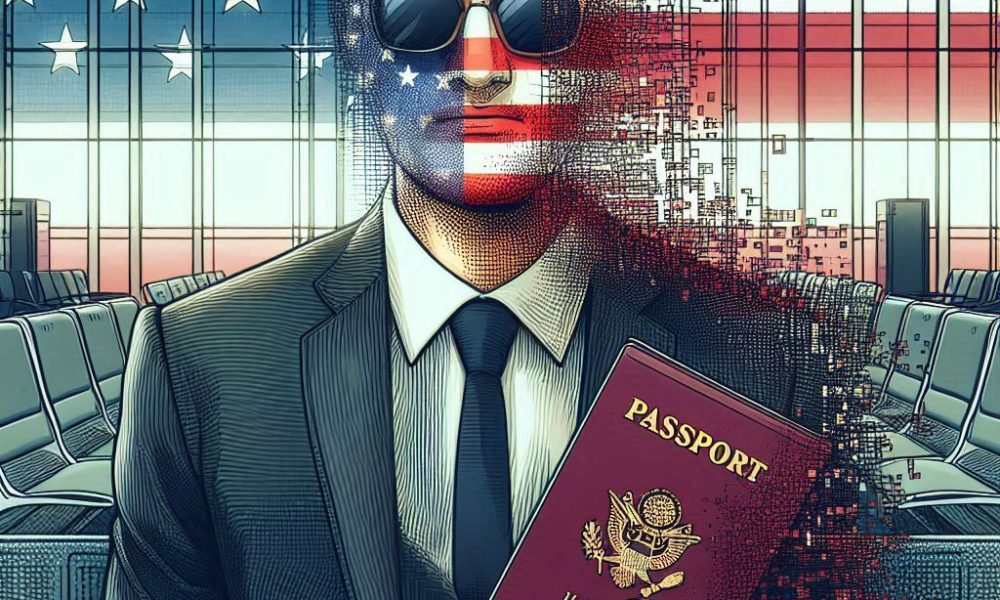
Biometrics, Geopolitics, and the Rise of the New Global Mobility Divide
VANCOUVER, British Columbia — June 5, 2025 — In an era where freedom of movement is increasingly dictated by biometric scans, AI-powered risk scoring, and geopolitical alignments, the concept of “passport privilege” has taken on a new, more fragile meaning. According to a detailed global mobility report released today by Amicus International Consulting, the concept of passport power has been fundamentally reshaped by pandemic-era restrictions, diplomatic rifts, and a silent surveillance arms race at borders.
Who can travel without a visa in 2025? The answer is no longer purely a matter of nationality. It now depends on what you’ve tweeted, where you’ve travelled, who your family is, and which database your name appears in.
This press release unpacks the evolving hierarchy of passport strength, illustrates the political mechanics behind border controls, and explores the consequences for those caught in the global travel divide.
The Passport Hierarchy: Rankings vs. Reality
Traditionally, passport power was measured by the number of countries a citizen could enter without a visa or with a visa on arrival. In 2025, however, this numerical measure tells only half the story.
Japan, Singapore, Germany, and South Korea remain top of the mobility rankings on paper. However, even citizens from these countries are discovering that visa-free access doesn’t necessarily mean frictionless entry.
According to Amicus’ findings:
28% of visa-free travellers from G7 countries were subject to secondary screening or digital interrogation in the past 12 months.
Biometric and metadata profiling now affect over 70% of visa-exempt entries into the United States, Canada, and the United Kingdom.
Countries under economic sanctions, data-sharing agreements, or security alliances often see individuals refused entry without explanation, even when their passports are ranked highly.
Case Study: German Academic Blocked in Atlanta
A German national travelling for a neuroscience conference was detained at Hartsfield-Jackson Atlanta International Airport in early 2024. Though Germany holds one of the world’s strongest passports, the traveller was flagged because he had previously attended a medical symposium in Tehran. U.S. Customs flagged his itinerary as “suspicious” due to proximity to sanctioned jurisdictions.
After hours of questioning and phone searches, he was deported without formal charges or appeal. His visa waiver (ESTA) was revoked for five years.
The Rise of AI Border Control
From Schengen states to Singapore, the passport alone is no longer your travel credential. Travellers are now assessed based on:
Biometric matching from CCTV footage and facial recognition
Predictive analytics of their travel history
Purchase patterns captured from airline bookings
Digital identity reviews based on social media metadata
“Digital trails” through past visa applications and cloud-stored documents
These new screening measures are often outsourced to third-party security firms or shared across platforms, such as EU ETIAS, U.S. CBP’s APIS, and INTERPOL’s SLTD (Stolen and Lost Travel Documents).
As one Amicus consultant states:
“In 2025, your passport isn’t just a document. It’s a trigger that activates dozens of invisible systems deciding whether you get on the plane—or not.”
Passport Privilege in Decline: Who’s Losing Ground?
Several countries have seen their passport power eroded in recent years, not due to the document itself, but because of diplomatic deterioration and security perceptions:
Russia: Its passport has plummeted in mobility since 2022; Russian travellers are heavily geopolitically restricted across the EU, the U.K., and North America.
China: Growing geopolitical tensions and concerns about espionage have led to increased visa rejections, particularly for students and tech professionals.
Iran and Syria: Already burdened by sanctions, citizens now face additional AI scrutiny, regardless of the purpose of their travel.
Nigeria and Pakistan: The increasing use of fraud detection technologies has led to the group-based pre-denial of visa applications based on statistical risk.
Venezuela and Afghanistan: The lack of functioning passport agencies means citizens may carry expired or invalid documents, rendering mobility impossible.
In contrast, neutral states such as Switzerland, Malta, Grenada, and Singapore have remained mainly insulated from these restrictions, making them attractive options for obtaining a second passport.
Case Study: Dual Citizen Detained in Dubai
A Venezuelan-American dual citizen travelling on his U.S. passport was detained at Dubai International Airport in late 2023. Though he presented a valid American passport, Emirati border agents linked his name to a Venezuelan government payroll database that had been leaked to international security networks.
He was held for 72 hours and interrogated about political affiliations, despite having lived in the U.S. for more than 20 years. No travel was possible on either of his passports until his case was “cleared.”
His case shows how metadata profiling now overrides passport strength, even for citizens of supposedly immune countries.
Dark Web Identities: The Shadow Market of Mobility
For those blocked by their nationality, family ties, or digital footprint, illegal markets offer cloned, synthetic, or forged identities for travel.
According to Amicus’s monitoring of encrypted marketplaces:
A forged EU passport can cost between $6,000 and $20,000
A fully cloned biometric passport, embedded with real RFID chips, now sells for $40,000 to $75,000
Synthetic identities—built from real, deceased individuals’ data—are being used for asylum claims, visa applications, and financial mobility.ty
Many of these identities pass initial scrutiny but fail when cross-verified by e-Gates using biometric watchlists.
Still, they remain in demand among political dissidents, wanted fugitives, and businesspeople under secondary sanctions.
Second Passports: A Legal Escape Route
In contrast to black-market options, Amicus helps clients acquire legal second citizenship through:
Citizenship by Investment (CBI) programs in Antigua, Dominica, Malta, and Turkey
Ancestral citizenship claims (for clients with Italian, Irish, or Jewish heritage)
Residency-to-citizenship routes in Panama, Paraguay, and Uruguay
These options are attractive to clients seeking:
Access to global banking is not linked to U.S. or EU sanctions
Travel to visa-free regions without triggering biometric scrutiny
Anonymity from politically motivated watchlists
Case Study: The Crypto Entrepreneur from Belarus
A crypto exchange founder from Belarus was placed under a U.S. Treasury Department sanctions watch in 2022. Though not charged with a crime, he was unable to access international payment processors or travel to more than 40 countries.
In 2023, Amicus secured a Grenadian passport for him through the CBI program, which enabled visa-free access to the EU and the Schengen Area. Using that passport and strategic travel planning, he now lives in Portugal and banks offshore—legally.
Passport Rankings Are Misleading in 2025
Many popular “passport indexes” still rate travel freedom based on surface-level statistics, such as Geopolitical Risk’s visa-free destinations. But they don’t account for:
Secondary screenings and silent refusals
Metadata and digital profiling
Biometric entry risk scoring
Geo-political entanglements and blocklist sharing
For example, a South Korean passport may provide access to 192 countries, but a journalist writing about North Korea may still be refused entry in the U.S., Canada, or Australia.
Amicus: Restoring True Mobility for the 21st Century
Amicus International Consulting provides advanced mobility services, including:
Passport strategy for clients in sanctioned or high-risk categories
Second passport acquisition and ancestral citizenship processing
Biometric obfuscation and privacy protection
Visa denial appeals and political travel clearance support
Secure travel planning through non-aligned hubs
In 2024 alone, Amicus helped over 1,500 clients regain mobility through lawful identity optimization and realignment of their travel structure.
Conclusion: Your Passport Doesn’t Tell the Whole Story
In 2025, freedom of movement is no longer guaranteed by a passport’s colour or country of issue. Instead, it depends on how much data you’ve shared, where you’ve travelled, who you’re connected to, and whether your identity survives the biometric scrutiny applied at every checkpoint.
Whether by legal strategy, second citizenship, or privacy-first travel planning, Amicus International remains committed to protecting the fundamental human right to mobility.
Contact Information
Phone: +1 (604) 200-5402
Email: [email protected]
Website: www.amicusint.ca




